

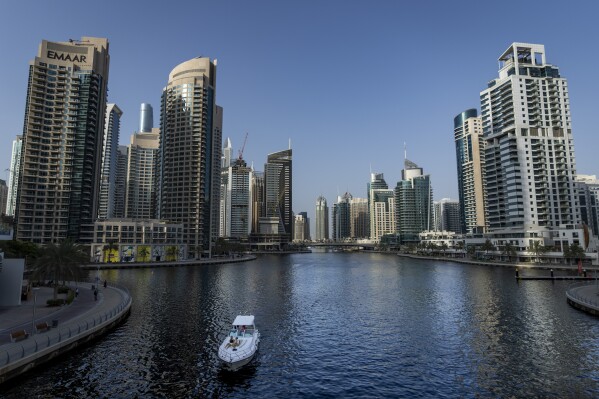
For decades, the economies of the Gulf were defined primarily by hydrocarbons. Oil and natural gas transformed Saudi Arabia, the United Arab Emirates, and Qatar into some of the world’s most prosperous nations, funding infrastructure, public services, and sovereign wealth funds that now rank among the largest globally.
Today, however, a new chapter is unfolding across the Arabian Peninsula.
Driven by shifting global energy dynamics, technological disruption, demographic changes, and increasing competition for capital and talent, Gulf governments are pursuing ambitious strategies to diversify their economies and establish themselves as global centers for innovation, entrepreneurship, advanced manufacturing, artificial intelligence, finance, and emerging technologies.
At the heart of this transformation lies a growing competition among Saudi Arabia, the UAE, and Qatar—three nations with distinct strengths, investment strategies, and visions for the future. Together, they are shaping what many analysts now describe as the “New Gulf Economy”: a regional economic model built not solely on natural resources but on knowledge, innovation, connectivity, and global influence.
A Region at an Economic Crossroads
The Gulf Cooperation Council (GCC) states collectively account for trillions of dollars in economic output and sovereign wealth assets. Yet policymakers across the region recognize a fundamental reality: long-term prosperity cannot rely indefinitely on hydrocarbons.
While energy exports remain critical, the Gulf’s leaders increasingly view technology, innovation, and human capital as the engines of future growth.
The urgency is clear.
Rapid advances in artificial intelligence, automation, renewable energy, and digital finance are transforming industries worldwide. At the same time, intensifying competition among global economic centers—from Silicon Valley and Singapore to Shenzhen and London—has heightened the race to attract investment, startups, and skilled professionals.
The Gulf’s response has been both ambitious and unprecedented.
Governments are investing hundreds of billions of dollars in infrastructure, technology ecosystems, innovation districts, research centers, educational institutions, and venture capital initiatives aimed at positioning the region among the world’s leading knowledge economies.
Saudi Arabia’s Trillion-Dollar Transformation
No country exemplifies this shift more dramatically than Saudi Arabia.
Under Vision 2030, launched by Crown Prince Mohammed bin Salman, the Kingdom is pursuing one of the most extensive economic transformation programs in modern history.
The strategy seeks to reduce dependence on oil revenues while expanding sectors including:
- Artificial intelligence
- Advanced manufacturing
- Tourism
- Logistics
- Renewable energy
- Biotechnology
- Digital services
- Financial technology
Central to this transformation is the Public Investment Fund (PIF), which has emerged as one of the world’s most influential sovereign wealth funds, managing assets worth hundreds of billions of dollars and investing across strategic sectors both domestically and internationally.
Saudi Arabia’s flagship projects—including NEOM, The Line, Oxagon, Diriyah Gate, and King Salman International Airport—are designed to attract global talent, technology firms, and foreign direct investment.
Riyadh, in particular, is rapidly positioning itself as a regional business capital. Multinational corporations are increasingly establishing regional headquarters in the Kingdom as Saudi authorities implement reforms aimed at improving the business environment and encouraging private-sector growth.
Artificial intelligence has become a cornerstone of the Kingdom’s ambitions. Through national AI strategies, data infrastructure investments, and partnerships with global technology companies, Saudi Arabia seeks to become a major player in the global digital economy.
The UAE’s Innovation-Driven Advantage
While Saudi Arabia is leveraging scale and capital, the United Arab Emirates has built its reputation on agility, openness, and global connectivity.
Over the past two decades, the UAE has transformed itself into one of the world’s most business-friendly environments, attracting multinational corporations, startups, investors, and skilled professionals from around the globe.
Dubai and Abu Dhabi have emerged as regional hubs for:
- Technology
- Finance
- Aviation
- Logistics
- Digital commerce
- Artificial intelligence
The UAE was among the first countries globally to appoint a Minister of Artificial Intelligence and has consistently pursued policies aimed at accelerating digital transformation.
Dubai’s startup ecosystem has become one of the most mature in the Middle East, supported by free zones, venture capital networks, accelerator programs, and a regulatory framework designed to encourage innovation.
Meanwhile, Abu Dhabi is leveraging institutions such as MGX, G42, Mubadala, and the Abu Dhabi Investment Authority (ADIA) to drive investments in artificial intelligence, advanced computing, semiconductors, biotechnology, and next-generation technologies.
The UAE’s strategic geographic position also provides a significant competitive advantage. Located at the intersection of Europe, Asia, and Africa, the country serves as a gateway for trade, finance, and global business operations.
As a result, many international firms view the UAE not merely as a regional market but as a global platform for expansion.
Qatar’s High-Value Diversification Strategy
Qatar’s economic transformation follows a different path.
Supported by one of the world’s largest natural gas reserves, the country possesses substantial financial resources and a relatively small population, enabling a focused approach to economic diversification.
Following the success of the FIFA World Cup 2022, Qatar has accelerated efforts to leverage its enhanced global profile and world-class infrastructure.
The country’s strategy centers on developing high-value sectors including:
- Advanced technology
- Financial services
- Education
- Research and development
- Logistics
- Sustainable energy
Institutions such as Qatar Investment Authority (QIA) continue to expand the country’s international economic footprint through strategic investments across technology, infrastructure, healthcare, and financial markets.
Qatar is also investing heavily in research and innovation through organizations such as the Qatar Foundation, Qatar Science & Technology Park, and Education City, which host leading international universities and research institutions.
In aviation and logistics, Hamad International Airport and Hamad Port have become critical assets supporting Qatar’s ambitions to serve as a regional and global transportation hub.
While Qatar’s approach may be less visible than Saudi Arabia’s mega-projects or the UAE’s startup ecosystem, its emphasis on high-value innovation and knowledge-based growth remains a central pillar of its long-term development strategy.
Artificial Intelligence: The Gulf’s New Strategic Resource
If oil defined the Gulf’s rise during the twentieth century, artificial intelligence may define its trajectory in the twenty-first.
Across the region, governments are racing to establish AI ecosystems capable of attracting global investment and talent.
Massive investments are being directed toward:
- Data centers
- Cloud infrastructure
- AI research
- Semiconductor technologies
- Digital government services
- Smart city development
Saudi Arabia, the UAE, and Qatar increasingly view artificial intelligence as both an economic opportunity and a strategic capability.
Beyond boosting productivity and economic growth, AI is expected to influence national security, healthcare, education, energy management, and public administration.
The Gulf’s ability to secure advanced computing infrastructure, develop local talent, and build globally competitive AI ecosystems could significantly shape its future economic standing.
The Battle for Global Talent
Innovation economies are built on people.
Recognizing this reality, Gulf governments are implementing aggressive strategies to attract and retain highly skilled professionals.
Long-term residency programs, golden visas, entrepreneurial incentives, and reforms aimed at improving quality of life are helping make the region more attractive to global talent.
Cities such as Riyadh, Dubai, Abu Dhabi, and Doha increasingly compete not only with each other but also with major international centers including London, Singapore, Toronto, and New York.
Universities, research institutions, and private-sector employers are playing a growing role in developing local talent while attracting international expertise.
The challenge now is ensuring that education systems, workforce development initiatives, and labor market reforms keep pace with the demands of rapidly evolving industries.
Sovereign Wealth Funds as Global Economic Catalysts
One of the Gulf’s most powerful competitive advantages lies in its sovereign wealth funds.
Collectively managing trillions of dollars in assets, these institutions provide the financial muscle necessary to support long-term economic transformation.
Key players include:
- Public Investment Fund (Saudi Arabia)
- Abu Dhabi Investment Authority
- Mubadala
- MGX
- Qatar Investment Authority
These funds are not merely passive investors.
Increasingly, they function as strategic economic instruments that shape national development priorities, attract foreign partnerships, and accelerate technological advancement.
Their investments in artificial intelligence, clean energy, healthcare, infrastructure, and advanced manufacturing are helping position the Gulf at the center of emerging global industries.
Beyond Competition: A Regional Innovation Ecosystem
Although competition among Saudi Arabia, the UAE, and Qatar is intensifying, the broader picture is more collaborative than confrontational.
Cross-border investment flows, regional infrastructure projects, and economic integration initiatives continue to strengthen the Gulf’s collective position.
As global supply chains evolve and geopolitical dynamics shift, the region is increasingly viewed as a stable, capital-rich, and strategically located hub connecting East and West.
Rather than producing a single winner, the Gulf’s innovation race may ultimately create a more diversified and resilient regional ecosystem where each country develops distinct competitive advantages.
Saudi Arabia offers scale and ambition.
The UAE offers connectivity and entrepreneurial dynamism.
Qatar offers financial strength and high-value specialization.
Together, they are reshaping the economic landscape of the Middle East.
The Road Ahead
The transformation underway across the Gulf represents far more than economic diversification. It is a fundamental reimagining of how regional prosperity will be generated in the decades ahead.
The success of this transition will depend on the ability of Gulf nations to foster innovation, attract talent, develop human capital, and build globally competitive industries capable of thriving in a rapidly changing world.
The stakes are enormous.
As artificial intelligence, advanced manufacturing, biotechnology, renewable energy, and digital finance redefine the global economy, the Gulf is positioning itself not merely as a participant but as a major architect of the future.
The era when the region’s fortunes were measured solely by oil prices is gradually giving way to a new reality.
The next chapter of Gulf growth will be written by innovation—and Saudi Arabia, the UAE, and Qatar are determined to lead the way. ■




Leave a Reply