

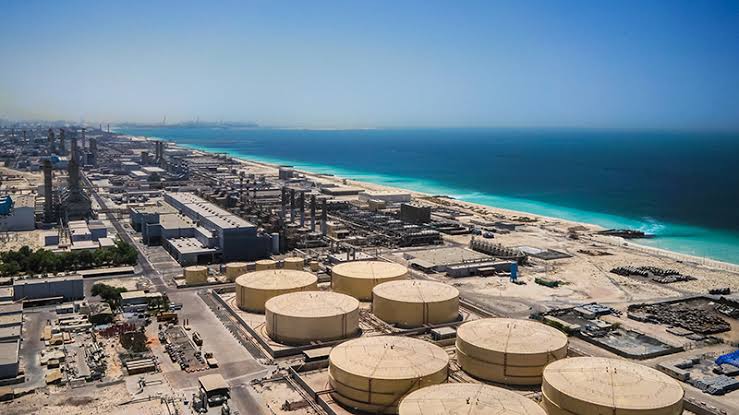
Water security is one of the most important long-term challenges facing the Gulf region. Countries such as Saudi Arabia, the United Arab Emirates, Qatar, Kuwait, Bahrain, and Oman receive very limited rainfall, possess few permanent freshwater sources, and face rapidly growing demand from cities, industries, agriculture, and tourism.
To overcome these constraints, Gulf states have built some of the world’s largest desalination systems. These facilities convert seawater into freshwater suitable for drinking, municipal use, and industrial consumption.
Desalination has therefore become more than a utility service. It is now a strategic component of national security, economic stability, urban development, and climate resilience across the Gulf.
What Is Desalination?
Desalination is the process of removing salt and other minerals from seawater or brackish water to produce freshwater.
Most desalination plants draw seawater from coastal areas, filter out debris and biological material, remove dissolved salts, treat the resulting water, and then distribute it through municipal supply networks.
The process also produces a concentrated saltwater by-product known as brine, which must be safely managed or discharged.
For Gulf countries, desalination provides a relatively dependable water source that is less dependent on rainfall, rivers, or groundwater reserves.
Why Is Desalination So Important to the Gulf?
The Gulf has some of the driest climatic conditions in the world. Rainfall is generally low and irregular, while evaporation rates are extremely high.
Most Gulf countries also lack major rivers and naturally replenished freshwater systems. Groundwater reserves exist, but many are non-renewable, overused, saline, or unsuitable for meeting the long-term needs of rapidly expanding populations.
At the same time, water demand has increased because of:
- Urban population growth
- Industrial development
- Expanding tourism sectors
- Large infrastructure projects
- Higher household consumption
- Agricultural activity
- Rising cooling and electricity demand
Desalination allows governments to meet these needs without relying entirely on limited groundwater resources.
In several Gulf states, desalinated water supplies a substantial share of municipal drinking water. This makes desalination infrastructure essential to daily life in major cities such as Riyadh, Dubai, Abu Dhabi, Doha, Kuwait City, Manama, and Muscat.
How Does Desalination Work?
There are two main categories of desalination technology: thermal desalination and membrane desalination.
Thermal Desalination
Thermal desalination uses heat to evaporate seawater. The vapor is then condensed into freshwater, leaving salts and minerals behind.
The two most common thermal methods are multi-stage flash distillation and multiple-effect distillation.
Multi-Stage Flash Distillation
Multi-stage flash distillation heats seawater and passes it through a series of chambers operating at progressively lower pressures.
As the pressure falls, part of the seawater rapidly evaporates or “flashes” into steam. The steam is then condensed into freshwater.
This technology has historically been widely used in the Gulf because it can be integrated with power-generation plants.
Multiple-Effect Distillation
Multiple-effect distillation uses several chambers, or effects, to repeatedly evaporate and condense water.
Heat from one stage is reused in the next, making the process more energy-efficient than some older thermal systems.
Thermal desalination is reliable and capable of processing seawater with high salinity, but it requires significant energy and infrastructure.
Reverse Osmosis Desalination
Reverse osmosis is a membrane-based process that has become increasingly important across the Gulf.
In a reverse osmosis plant, seawater is forced at high pressure through semi-permeable membranes. These membranes allow water molecules to pass through while blocking most salts, contaminants, and impurities.
The main stages include:
- Seawater intake
- Pre-treatment and filtration
- High-pressure pumping
- Membrane separation
- Post-treatment
- Storage and distribution
Reverse osmosis generally uses less energy than traditional thermal desalination and can be paired more easily with renewable electricity.
However, membrane systems require careful pre-treatment because sediment, microorganisms, and pollutants can damage or clog the membranes.
Thermal Desalination Versus Reverse Osmosis
Thermal desalination was historically favored in many Gulf countries because desalination plants were often connected to large oil- or gas-fired power stations.
This arrangement, known as cogeneration, allowed plants to produce electricity and freshwater together.
However, reverse osmosis has become increasingly attractive because it usually consumes less energy, offers greater operational flexibility, and can be developed independently from conventional power plants.
Reverse osmosis plants can also adjust output more easily according to demand, making them more suitable for increasingly diversified electricity systems.
As Gulf states expand solar and other renewable-energy capacity, reverse osmosis is likely to play a larger role in future water infrastructure.
The Cost of Desalination
Desalination is more expensive than drawing water from naturally replenished rivers, lakes, or shallow groundwater sources.
Its costs include:
- Plant construction
- Seawater intake systems
- Energy consumption
- Membrane replacement
- Chemical treatment
- Skilled maintenance
- Brine management
- Water transportation and distribution
Energy is one of the largest operating costs.
Thermal desalination requires substantial heat, while reverse osmosis depends on high-pressure pumping. Electricity and fuel prices therefore have a direct effect on the cost of producing desalinated water.
Costs can also rise when plants are located far from population centers. Inland cities may require long-distance pipelines and pumping stations to transport water from coastal desalination facilities.
Despite these costs, Gulf governments continue to invest in desalination because the alternative—insufficient water supply—would create far greater economic, political, and social risks.
Is Desalination Environmentally Sustainable?
Desalination provides essential water security, but it also creates environmental challenges.
The main concerns include energy consumption, greenhouse-gas emissions, marine ecosystem damage, chemical discharge, and brine disposal.
Energy Consumption and Carbon Emissions
Desalination is energy-intensive.
When plants rely on oil- or gas-generated electricity, water production contributes indirectly to carbon emissions.
This creates a difficult relationship between water security and climate policy. Gulf countries need desalination to support their populations, but conventional desalination can increase fossil-fuel consumption.
Improving energy efficiency and integrating renewable power are therefore central to making desalination more sustainable.
Brine Discharge
Brine is concentrated saltwater left after freshwater has been extracted.
It may contain high salt concentrations, treatment chemicals, metals, and residues from plant operations.
When released into the sea without sufficient dilution or management, brine can increase local salinity and affect marine organisms.
The Gulf is particularly sensitive because it is a relatively shallow and enclosed body of water with high natural salinity and limited water circulation.
Poorly managed brine discharge may affect seagrass, coral habitats, fish populations, and other marine ecosystems.
Seawater Intake Risks
Desalination plants require large volumes of seawater.
Traditional intake systems can trap or kill fish larvae, plankton, and other small marine organisms.
More environmentally responsible plants may use subsurface intakes, improved screening systems, lower intake velocities, or carefully selected intake locations.
Chemical Pollution
Desalination plants use chemicals to prevent corrosion, scaling, membrane fouling, and biological growth.
These may include chlorine, antiscalants, coagulants, and cleaning agents.
Environmental risks can be reduced through improved treatment, monitoring, chemical recovery, and safer discharge systems.
Renewable-Powered Desalination
One of the most important developments in Gulf water infrastructure is the growing relationship between desalination and renewable energy.
Solar power is particularly attractive because Gulf countries possess high levels of solar irradiation and large areas suitable for utility-scale projects.
Renewable electricity can power reverse osmosis plants directly or feed electricity into national grids that supply desalination facilities.
This can reduce fuel consumption, lower operating emissions, and separate water production from fluctuations in oil and gas demand.
Solar-Powered Reverse Osmosis
Solar-powered reverse osmosis uses electricity generated by photovoltaic panels to operate pumps and membrane systems.
It can be deployed at different scales, from large coastal plants to smaller facilities serving remote communities, islands, industrial sites, and agricultural areas.
The main challenge is intermittency. Solar electricity production varies throughout the day and depends on weather conditions.
This can be addressed through:
- Battery storage
- Water-storage reservoirs
- Grid connections
- Hybrid energy systems
- Flexible plant operations
Water itself can also act as a form of storage. A plant may produce more water during periods of strong solar generation and store it for later use.
Concentrated Solar Power and Thermal Desalination
Concentrated solar power uses mirrors to collect solar heat.
In principle, this heat can support thermal desalination processes or generate electricity for reverse osmosis plants.
However, large-scale deployment depends on cost, operational complexity, storage requirements, and competition from increasingly affordable photovoltaic systems.
Nuclear-Powered Desalination
Nuclear energy can also provide electricity and heat for desalination.
For countries operating civilian nuclear-power programs, nuclear-powered desalination may offer a stable, low-carbon water-production option.
However, it requires significant capital investment, highly specialized regulation, strong safety systems, and long-term infrastructure planning.
How Gulf States Are Improving Desalination Efficiency
The future of desalination will depend not only on building more plants, but also on producing more water with less energy and lower environmental impact.
Key areas of development include:
Energy-Recovery Devices
Modern reverse osmosis plants use energy-recovery systems to capture pressure from the concentrated brine stream and reuse it in the desalination process.
This significantly reduces electricity consumption.
More Efficient Membranes
New membrane materials are being designed to improve salt removal, reduce fouling, and operate at lower pressures.
Better membranes can lower costs and extend plant operating life.
Artificial Intelligence and Digital Monitoring
Digital systems can monitor water quality, pressure, energy use, membrane performance, and equipment condition in real time.
Artificial intelligence can help predict maintenance needs, identify inefficiencies, and optimize plant operations.
Improved Brine Management
Researchers and companies are exploring ways to treat brine as an economic resource rather than simply a waste product.
Brine may contain commercially useful minerals, including magnesium, lithium, calcium, bromine, and industrial salts.
Recovering these materials could reduce environmental harm while creating new revenue streams.
Hybrid Desalination Systems
Hybrid systems combine thermal and membrane technologies or integrate desalination with renewable electricity, energy storage, and industrial processes.
These systems can improve flexibility and reduce dependence on a single technology.
Desalination and National Security
Desalination infrastructure is strategically important, but its concentration along the coast also creates vulnerabilities.
Plants, pipelines, power stations, pumping systems, and distribution networks may be exposed to:
- Military conflict
- Missile or drone attacks
- Cyberattacks
- Oil spills
- Red tides and harmful algal blooms
- Industrial pollution
- Power outages
- Extreme weather
- Equipment failures
A disruption at a major facility could affect water supplies to millions of people.
For this reason, Gulf governments are increasingly focused on infrastructure protection, emergency water storage, cybersecurity, supply diversification, and system redundancy.
The Need for Strategic Water Storage
Desalination plants generally produce water continuously, while cities consume water throughout the day.
Maintaining large strategic reserves can help governments manage temporary plant shutdowns or supply disruptions.
Storage may include surface reservoirs, underground facilities, municipal tanks, and aquifer-storage systems.
The greater the region’s reliance on desalination, the more important emergency storage becomes.
Can Desalination Solve All Gulf Water Problems?
Desalination is essential, but it is not a complete solution.
Expanding supply without managing demand can encourage wasteful water consumption and place additional pressure on energy systems.
A comprehensive Gulf water-security strategy should combine desalination with:
- Water conservation
- Leakage reduction
- Wastewater recycling
- Smart metering
- Efficient irrigation
- Sustainable pricing
- Public awareness
- Groundwater protection
- Regional emergency planning
Treated wastewater can be used for landscaping, agriculture, district cooling, industrial processes, and groundwater recharge.
This allows high-quality desalinated water to be reserved for drinking and other essential uses.
The Future of Desalination in the Gulf
Desalination will remain central to Gulf water security for decades.
Population growth, climate change, industrial expansion, and urban development will continue to increase demand for reliable freshwater supplies.
However, the next generation of desalination plants is likely to look different from the large fossil-fuel-dependent systems of the past.
Future facilities are expected to rely more heavily on reverse osmosis, renewable electricity, digital control systems, energy recovery, advanced membranes, and environmentally responsible brine management.
The region’s challenge is therefore not whether to use desalination, but how to make it more efficient, resilient, affordable, and sustainable.
Conclusion
Desalination is critical to Gulf water security because the region has limited natural freshwater resources and growing demand from cities, industries, and expanding economies.
It provides a reliable source of drinking water, reduces pressure on groundwater reserves, and supports long-term economic development.
At the same time, desalination creates significant financial, environmental, and security challenges. High energy use, carbon emissions, brine discharge, marine impacts, and infrastructure vulnerabilities must all be addressed.
The Gulf’s transition toward renewable-powered reverse osmosis, advanced water treatment, improved storage, and stronger environmental safeguards will determine whether desalination can remain sustainable in the decades ahead.
For the Gulf states, water security will increasingly depend not only on producing more freshwater, but on building a smarter, cleaner, and more resilient water system.




Leave a Reply