

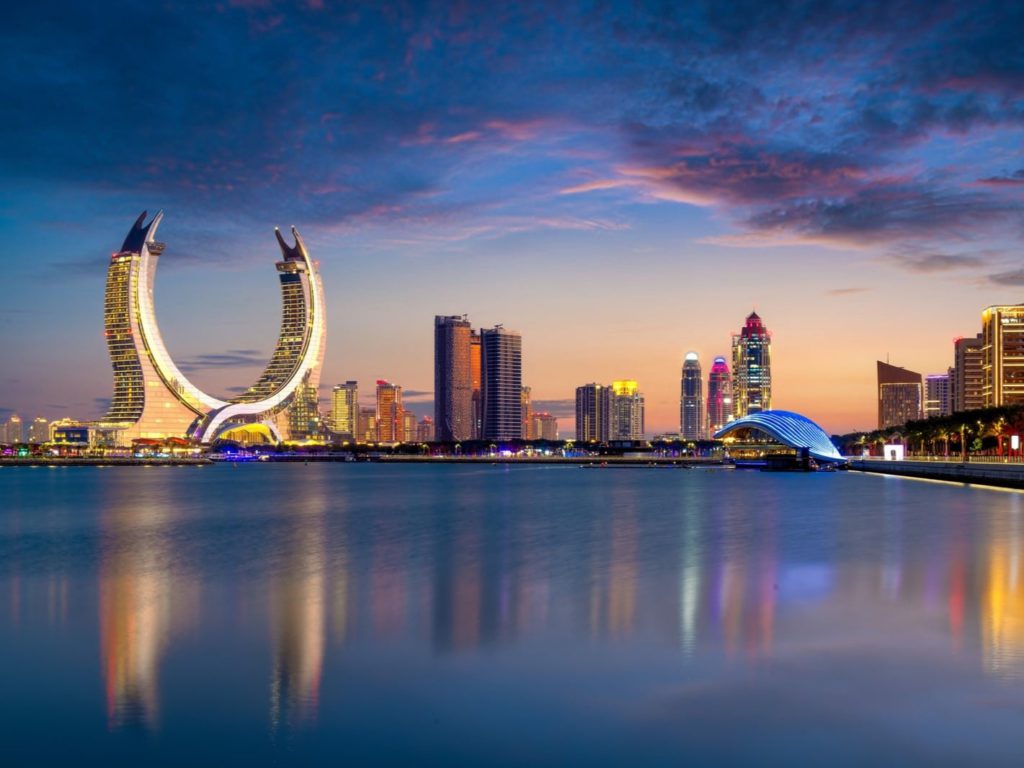
Over the past two decades, Gulf states have invested hundreds of billions of dollars in airports, ports, industrial zones, financial centres, and tourism infrastructure. Yet few projects embody a country’s long-term ambitions as comprehensively as Lusail City.
Situated north of Doha, Lusail is not simply another real estate development or waterfront district. It is a purpose-built city designed from the ground up to become a new economic, residential, commercial, entertainment, and technological centre for Qatar. Covering approximately 38 square kilometres, the project represents one of the largest urban development initiatives ever undertaken in the Middle East and serves as a cornerstone of Qatar National Vision 2030.
For Qatar, Lusail is more than a city—it is a strategic investment in the country’s post-hydrocarbon future.
Why Was Lusail City Created?
Like many Gulf economies, Qatar faces a long-term challenge: reducing dependence on oil and natural gas revenues while creating sustainable sources of economic growth.
Recognising this challenge, the Qatari government launched Lusail through Qatari Diar as a next-generation urban centre capable of supporting economic diversification, foreign investment, tourism, financial services, technology, and high-end residential development. The project was conceived as a key component of the country’s transformation strategy under Qatar National Vision 2030.
Rather than expanding Doha organically, Qatar chose to create an entirely new city with integrated planning, modern infrastructure, smart technologies, and future-ready transport systems.
The result is a city designed not for current needs alone, but for the demands of the next fifty years.
The Scale of the Project
The sheer scale of Lusail distinguishes it from most urban developments in the region.
Key figures include:
- Area: Approximately 38 sq km
- Districts: 19 integrated districts
- Islands: Four major waterfront islands
- Expected Residents: More than 200,000
- Expected Workforce: Around 170,000 professionals
- Daily Visitors: Approximately 80,000
- Total Active Population: Nearly 450,000 people upon completion
In practical terms, Lusail is being built to accommodate a population larger than many regional cities.
Building a Smart City From Scratch
One of Lusail’s most significant features is its smart-city architecture.
Unlike older cities where digital infrastructure is retrofitted into existing systems, Lusail was designed with smart technology integrated from the planning stage.
The city incorporates:
- Intelligent utility management
- Smart energy systems
- Advanced telecommunications infrastructure
- Smart traffic management
- Sustainable water management
- District cooling networks
- Connected public transportation systems
- Digital monitoring of urban services
The objective is to improve efficiency, reduce resource consumption, lower environmental impact, and enhance residents’ quality of life. Researchers frequently cite Lusail as one of the most advanced smart-city initiatives in the developing world.
Transportation: The Backbone of the Vision
A city of this scale requires a world-class transportation system.
Lusail has been developed around a transit-oriented urban model that prioritises public transportation, pedestrian mobility, and reduced reliance on private vehicles.
The city’s transportation infrastructure includes:
Lusail Tram Network
The Lusail Tram serves as the primary intra-city transit system, connecting residential districts, business centres, retail areas, and entertainment destinations.
Doha Metro Integration
Lusail is directly connected to Doha through the Doha Metro, enabling efficient movement between Qatar’s two most important urban centres.
Pedestrian and Cycling Networks
Extensive pedestrian pathways and cycling routes are integrated into the city’s master plan, reflecting growing emphasis on sustainable urban mobility.
Water Transportation
The city also plans to utilise marina-based water transport services, creating alternative mobility options along its extensive waterfront developments.
This multi-modal approach aligns with global urban planning trends seen in cities such as Singapore, Copenhagen, and Dubai.
The Economic Engine Behind Lusail
Lusail is designed to become one of Qatar’s primary economic centres.
Several districts have been specifically developed to attract financial institutions, multinational corporations, technology companies, and regional headquarters.
Lusail Financial District
The city contains major commercial zones intended to serve as business hubs for domestic and international firms.
Energy City Qatar
One of the most strategically significant components of the development is Energy City Qatar, envisioned as a dedicated business hub for energy, technology, and industrial companies.
Lusail Plaza Towers
The recently completed Lusail Plaza Towers have emerged as the city’s corporate landmark. Designed by Foster + Partners, the complex hosts major institutions including Qatar National Bank, Qatar Central Bank, Qatar Investment Authority, and Qatari Diar.
Together, these developments aim to shift economic activity beyond Doha’s traditional business districts and create a new commercial nucleus for the country.
Tourism and Lifestyle: Beyond Business
Lusail is equally important from a tourism and lifestyle perspective.
The city’s master plan incorporates:
- Luxury marinas
- Waterfront promenades
- High-end retail centres
- Entertainment districts
- Hospitality developments
- Beachfront communities
- Cultural attractions
- Leisure destinations
Among the most notable developments is Place Vendôme, one of Qatar’s largest luxury retail destinations, along with the Marina District and Qetaifan Islands, which are intended to strengthen Qatar’s tourism ecosystem and attract international visitors.
The World Cup Effect
No discussion of Lusail is complete without examining its role in the FIFA World Cup Qatar 2022.
Lusail Stadium became the symbolic centrepiece of the tournament, hosting the World Cup Final and serving as a global showcase for Qatar’s infrastructure ambitions. The stadium quickly became one of the most recognisable landmarks in the Middle East.
Importantly, Qatar’s strategy was not limited to hosting a sporting event.
Instead, the World Cup accelerated infrastructure delivery while creating long-term assets that would continue generating economic and social value after the tournament ended.
This approach has positioned Lusail as one of the most tangible examples of World Cup legacy planning globally.
Sustainability and the Future
Perhaps the most important aspect of Lusail is its role as a sustainability experiment.
Urban planners increasingly face a difficult challenge: accommodating population growth while reducing environmental impact.
Lusail attempts to address this challenge through:
- Energy-efficient buildings
- Smart grids
- District cooling
- Reduced travel distances
- Mixed-use urban planning
- Transit-oriented development
- Sustainable mobility infrastructure
By integrating residential, commercial, retail, and recreational functions within connected districts, the city aims to minimise unnecessary commuting and improve overall urban efficiency.
Strategic Significance for Qatar
Lusail’s importance extends far beyond urban development.
The project represents:
- Qatar’s largest master-planned city
- A flagship smart-city initiative
- A cornerstone of Qatar National Vision 2030
- A platform for economic diversification
- A future financial and business centre
- A major tourism destination
- A showcase of sustainable urban planning
- A post-World Cup legacy project
In many ways, Lusail reflects Qatar’s broader national strategy: leveraging current energy wealth to build a diversified, knowledge-driven, globally connected economy.




Leave a Reply