

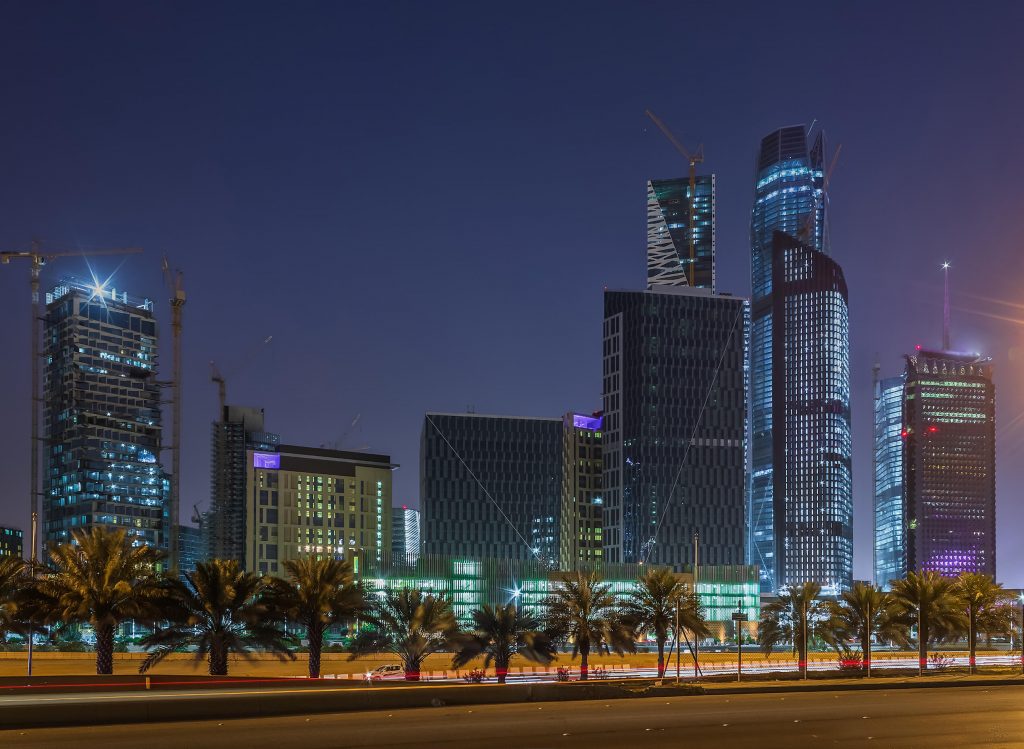
The King Abdullah Financial District (KAFD) stands as one of the most ambitious urban and economic developments in the Middle East. Located in Riyadh, Saudi Arabia’s capital and largest city, KAFD is designed to function as a world-class financial hub that supports the Kingdom’s transformation under Vision 2030. More than a cluster of skyscrapers, KAFD represents a carefully planned ecosystem integrating finance, business, lifestyle, sustainability, and smart mobility.
As Saudi Arabia seeks to diversify its economy away from hydrocarbons, KAFD plays a central role in attracting global investment, multinational corporations, fintech innovators, and professional services firms. With advanced infrastructure, integrated transport, and a regulatory environment tailored to international finance, the district positions Riyadh as a competitive alternative to established financial centers such as London, Singapore, and Dubai.
Strategic Vision Behind KAFD
KAFD was conceived to meet a clear national objective: transforming Riyadh into a global financial capital. The project aligns directly with Saudi Arabia’s broader economic diversification agenda by strengthening the financial services sector, expanding private-sector participation, and fostering high-value employment.
Key strategic goals of KAFD include:
-
Establishing Riyadh as a regional headquarters destination for global financial institutions
-
Supporting capital markets, asset management, insurance, and fintech ecosystems
-
Enhancing Saudi Arabia’s competitiveness in global financial rankings
-
Creating a live-work-play environment attractive to international talent
The district’s development reflects long-term urban planning principles, ensuring that economic growth is matched with livability, sustainability, and resilience.
Location and Urban Integration
Situated in northern Riyadh along King Fahd Road, KAFD occupies a prime location with direct access to major highways and proximity to residential districts, government institutions, and business centers. This strategic placement allows seamless integration with the wider city while maintaining its identity as a distinct financial zone.
The master plan emphasizes walkability and connectivity. Unlike traditional business districts designed primarily for vehicles, KAFD prioritizes pedestrians through shaded walkways, elevated skybridges, and integrated public spaces. The district’s compact layout encourages interaction between offices, retail areas, hotels, and cultural venues, fostering a dynamic urban environment.
Architectural Identity and Urban Design
KAFD’s architectural language is one of its defining features. The district comprises more than 90 buildings, including office towers, residential units, hotels, and mixed-use structures. Internationally renowned architects and urban designers contributed to the master plan, ensuring architectural coherence while allowing individual buildings to express unique identities.
Design principles include:
-
Contemporary forms inspired by desert geometry and Islamic patterns
-
High-performance façades optimized for Riyadh’s climate
-
Integrated shading systems to reduce heat gain
-
Human-scale public spaces that encourage social interaction
Iconic towers within KAFD have already become landmarks on Riyadh’s skyline, symbolizing Saudi Arabia’s modernization and ambition.
Core Functions of the King Abdullah Financial District
Financial Services and Banking
At its core, KAFD is designed to host domestic and international financial institutions. Banks, investment firms, insurance companies, and asset managers operate within a regulatory and physical environment optimized for efficiency and global connectivity.
The presence of leading financial regulators and institutions strengthens trust and transparency, positioning KAFD as a credible hub for regional and international finance.
Capital Markets and Fintech
KAFD supports the growth of Saudi Arabia’s capital markets by providing infrastructure for exchanges, advisory firms, and fintech startups. The district’s digital readiness, combined with progressive regulatory frameworks, encourages innovation in areas such as digital payments, blockchain, and financial analytics.
This ecosystem aligns with Saudi Arabia’s ambition to become a fintech leader in the Middle East.
A Mixed-Use District: Beyond Finance
Unlike traditional financial districts that become dormant after office hours, KAFD is designed as a vibrant mixed-use destination.
Residential Living
High-quality residential developments within KAFD cater to professionals seeking proximity to workplaces and lifestyle amenities. These residences offer modern design, security, and access to green spaces, supporting a balanced urban lifestyle.
Hospitality and Retail
Luxury hotels, serviced apartments, and fine-dining establishments serve business travelers and residents alike. Retail zones feature international brands, cafes, and lifestyle outlets, transforming KAFD into a destination rather than merely a workplace.
Cultural and Public Spaces
Public plazas, art installations, and event spaces contribute to KAFD’s cultural dimension. These areas host exhibitions, business forums, and community events, reinforcing the district’s role as a social and intellectual hub.
Sustainability and Environmental Design
Sustainability is embedded in KAFD’s planning and operations. The district follows advanced environmental standards aimed at reducing energy consumption, water usage, and carbon emissions.
Key sustainability features include:
-
High-efficiency building systems
-
District cooling to reduce energy demand
-
Water recycling and conservation technologies
-
Extensive landscaping with native and climate-resilient plants
Many buildings within KAFD are designed to meet international green building certifications, reflecting Saudi Arabia’s commitment to environmentally responsible development.
Smart Mobility and Transport Connectivity
One of KAFD’s most significant advantages is its integration with Riyadh’s public transport network. The KAFD Metro Station is a key interchange on the Riyadh Metro system, connecting multiple lines and enabling efficient movement across the city.
Mobility features include:
-
Direct metro connectivity reducing reliance on private vehicles
-
Pedestrian-friendly infrastructure with climate-controlled walkways
-
Smart traffic management systems
-
Integration with future autonomous and electric mobility solutions
This focus on mobility supports sustainability goals while enhancing accessibility for workers, residents, and visitors.
Role in Saudi Vision 2030
KAFD is a cornerstone project within Saudi Vision 2030, directly contributing to several strategic objectives:
-
Economic diversification through financial services growth
-
Job creation for Saudi nationals in high-value sectors
-
Attraction of foreign direct investment (FDI)
-
Development of Riyadh as a top global city
By hosting regional headquarters of multinational firms, KAFD supports the Kingdom’s Regional Headquarters Program, further strengthening Saudi Arabia’s global economic integration.
Economic Impact and Investment Potential
The economic impact of KAFD extends beyond its physical boundaries. By clustering financial and professional services, the district generates productivity gains, knowledge spillovers, and innovation.
Key economic benefits include:
-
Increased contribution of finance to national GDP
-
Growth of supporting sectors such as legal, consulting, and technology
-
Enhanced investor confidence in Saudi markets
-
Long-term value creation through real estate and infrastructure assets
For investors, KAFD offers a stable, government-backed environment with long-term growth prospects aligned with national policy priorities.
Governance and Institutional Presence
KAFD hosts several key institutions that reinforce its credibility as a financial hub. The presence of regulators, policy bodies, and major corporations ensures alignment between regulation, market activity, and innovation.
This institutional density reduces transaction costs, accelerates decision-making, and enhances the district’s attractiveness to global firms seeking efficiency and regulatory clarity.
International Positioning and Competitiveness
KAFD is positioned to compete with established financial centers while offering distinct advantages:
-
Strategic location bridging Asia, Europe, and Africa
-
Competitive operating costs compared to Western hubs
-
Strong government support and policy alignment
-
Rapidly growing domestic market
As global capital increasingly looks toward emerging markets, KAFD’s role as a gateway to the Middle East becomes more pronounced.
Lifestyle, Talent, and Quality of Life
Attracting global talent requires more than office space. KAFD addresses this challenge through high-quality urban living, cultural offerings, and connectivity.
Professionals working in KAFD benefit from:
-
Short commute times
-
Access to wellness facilities and green spaces
-
Proximity to international schools and healthcare
-
A cosmopolitan environment aligned with global standards
These factors enhance Riyadh’s appeal as a destination for expatriates and returning Saudi professionals.
Digital Infrastructure and Smart City Capabilities
KAFD is built on advanced digital infrastructure supporting high-speed connectivity, data security, and smart building management. These capabilities enable:
-
Efficient facility operations
-
Enhanced cybersecurity for financial institutions
-
Data-driven urban management
-
Seamless integration of fintech and digital services
This digital backbone positions KAFD as a future-ready district capable of adapting to technological change.
Challenges and Future Outlook
Like any large-scale development, KAFD faces challenges, including market cycles, global economic uncertainty, and competition from other financial centers. However, strong government commitment, phased development, and alignment with national priorities mitigate these risks.
Looking ahead, KAFD is expected to:
-
Attract additional multinational headquarters
-
Expand fintech and innovation clusters
-
Host international financial events and forums
-
Evolve as a model for sustainable urban finance districts
As Riyadh continues its rapid transformation, KAFD will remain a focal point of economic and urban progress.
Conclusion: A Landmark for Saudi Arabia’s Financial Future
The King Abdullah Financial District is more than an architectural achievement; it is a strategic instrument shaping Saudi Arabia’s economic future. By combining world-class financial infrastructure with sustainability, smart mobility, and urban livability, KAFD exemplifies the Kingdom’s Vision 2030 ambitions.
As global finance evolves and emerging markets gain prominence, KAFD positions Riyadh at the center of regional and international financial networks. For investors, businesses, professionals, and policymakers, the district represents a compelling model of how integrated planning and national vision can redefine a city’s global role.



Leave a Reply