

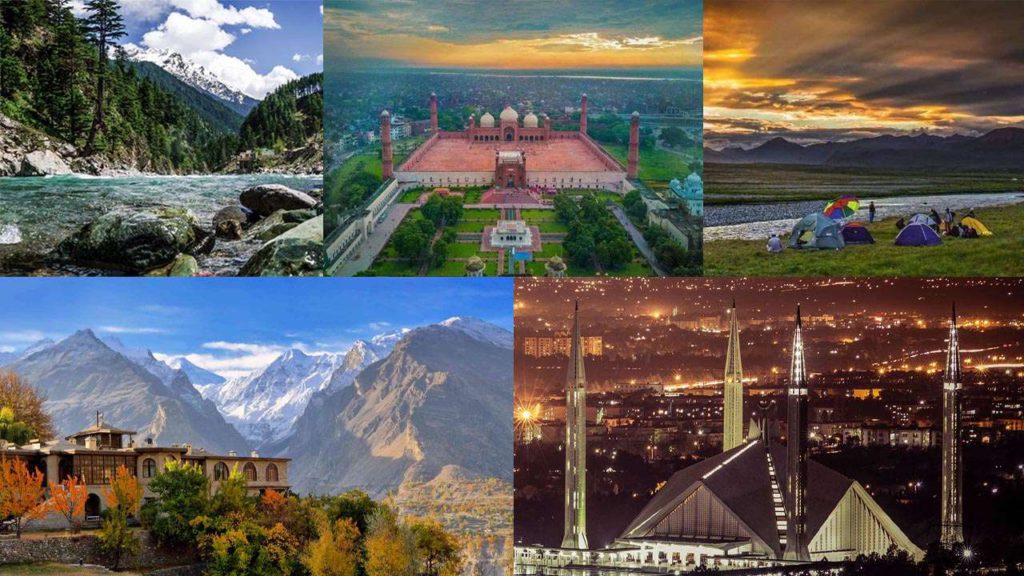
Today, in 2026, Pakistan is globally known as a “Peacemaker” who not only stops the destruction of a whole civilization but saves the whole world from the brink of World War III. A war that caused massive casualties in a few minutes, leaving the world unable to recover forever. But 25 years ago, the scenario was completely different. Pakistan was branded as part of destruction which it never caused. According to World Bank data, a year before “War on Terror” Pakistan welcomed 557,000 international tourists. And the tourism sector was growing 8 percent annually between 1995 and 2000. But the number went down to 498,000 till 2002. And the graph continued to decline for the next decade and half to 300,000 per year less than the arrivals of mid-sized European countries. For over a decade and half, Pakistan struggled in the tourism sector that contributed 6% of the state’s GDP. But, what we witnessed today is not an overnight success but a gradual narrative reclamation. It’s a two decade journey shaped by several factors with “Tourism” playing a central role.
The image crisis: How 9/11 built a wall around Pakistan
The Melodies Mountains which were famous for tourists were back then called as “safe havens” for terrorists. Pakistan’s position in the post 9/11 world was deeply complex; simultaneously a US ally and a country where militant networks were operated with troubling degrees of freedom. Western media consistently framed the land of Pakistan through the lens of terrorism, extremism, insecurity and instability. This wall around Pakistan hides the 4500 year old cultural identity of Mohenjo-Daro, the world’s most dramatic mountains and the hospitality offered by its people. A 2018 US study on American media coverage of terrorism found that events involving Muslim perpetrators create disproportionately more coverage than comparable events involving non-Muslim perpetrators. And eventually, this creates a systematic bias that countries like Pakistan could not overcome through official communication channels.
Rebranding Pakistan’s Soft Image through Tourism
Domestically, Pakistan struggled from several terrorist attacks as a result of military operations against terror groups. Internationally, this created a perception of the country as unstable or unsafe. But to rebrand Pakistan Soft Image, the Pakistan Government took several initiatives. In 2018, Pakistan introduced an online visa system extending simplified access to 191 countries. As a result, 3.5 million tourists visited Pakistan which is considered the highest record ever. Then in April 2019, Pakistan held its first International Tourism Summit in Islamabad and invited international vloggers including Eva zu Beck, Rosie Gabrielle, Mark Wiens, and Trevor James.
Moreover, with the joint effort of the World Bank, KPK Government and Nestle Company, Pakistan launched Travel Responsibility for Experiencing Eco-Tourism (TREK) in 2021. It was focused on waste management, environmental education and infrastructure improvement. As a result, more than one million individuals were trained through related hospitality and tourism programs across KPK and Gilgit-Baltistan. Later on, in 2023, Pakistan first national tourism brand, launched at PM House in Islamabad on August 4, 2023. Titled as, SALAM Pakistan National Brand which was specifically designed to show Pakistan as a safe, hospitable and culturally rich country. SALAM stands for: Landscapes, Adventure, Wildlife, Religious sites, Food and Crafts. As a result, the UNWTO named Pakistan a best-performing destination for the year 2023.
In 2024, Pakistan made a milestone achievement by enhancing its tourism policy by allowing people from 126 countries to get a Free Visa before arrival, valid for 90 days. This step shows massive change post pandemic and eventually large number of tourists visited Pakistan. Then, in 2025, Pakistan launched the “Explore Pakistan” Campaign which unified provincial tourism messaging under one national identity for the first time, featuring cinematic content, diaspora focusing marketing and a multilingual portal with 480 mapped attractions. As a result, over 1 million international tourists visited Pakistan. BBC and CNN listed Gilgit-Baltistan among the world’s top 25 tourist destinations. The Explore Pakistan Campaign multilingual portal delivered a 19% rise in web traffic from the United Kingdom and Canada in the first half of 2025. These rebranding efforts result in massive improvement in Pakistan’s image globally. And build strong people to people relations beyond official diplomatic relations.
Comparative Snapshot of Pakistan’s Tourism Before and After 9/11
| Year | Phase/ Effort | Results |
| 1995 – 2000 | Pre-9/11 growth phase | 8% Annual Tourism growth, ~557,000 international tourist visited |
| 2001 – 2002 | Post 9/11 image crisis | Decline to ~498,000 tourists |
| 2003 – 2016 | Crisis and Stagnation phase | Extreme low ranking in WEF index |
| 2017 | Military led security improvement | nearly ~1.75 million tourists |
| 2018 | E-Visa policy introduced | nearly ~3.5 million tourists visited Pakistan |
| 2019 | “Visit Pakistan” and “Salam Pakistan” campaign, international vlogger and media exposure | ~992 M revenue, ~6% GDP |
| 2022 – 2023 | Post COVID recovery policies | 115% rise tourist growth |
| 2023 | UNWTO World Tourism Barometer recognition | ~1million tourists, ~1.3B revenue |
| 2024 | Digital visa and visa on arrival policy | build soft image and positive inbound trend |
| 2025 | “Explore Pakistan Campaign” | >1 million tourists, Northern Areas featured globally by CNN and BBC |
| 2025 – 2030 | Tourism growth projections with World Bank | ~11% Annual growth |
This statistical report snapshot shows that Pakistan is not just recovering its tourism sector; it’s rebuilding global communication. Every additional tourist number is a unit of people to people contact that builds entirely new perceptions about Pakistan.
Structural Gaps and Persistent Challenges in Pakistan’s Tourism Strategy
Firstly, despite the 20 rank improvement, Pakistan still stands 101st out of 119 countries on the World Economic Forum’s Travel and Tourism Development Index. Only Bangladesh ranks lower than Pakistan within Asia-Pacific. This index measures structural factors e.g. safety and security perception, health, hygiene and transport. Then again, according to World Economic forum report (2019), Pakistan ranked 134th in safety and security globally out of 140 countries. These are not just cosmetic problems. They reflect deep structural gaps in governance and institutional capacity. These problems cannot be resolved through branding or campaigns.
Secondly, Pakistan’s image rehabilitation efforts are real but fragile at the same time. According to U.S Department Report (2023), a wave of terrorist attacks dropped international tourists’ arrival by over 400,000 in a single year. Moreover, TTP resurgence since 2021, security incidents in KPK and ongoing Western Travel Advisors recommendations to their citizens show that threat is not historical. It still exists and it’s ongoing.
Lastly, PTDC was established in 1970 but Pakistan launched its first national tourism brand in 2023. The gap between those two years is nearly 53 years of institutional neglect. In addition, each new government launches its new initiatives and almost none survive the next election cycle. This is a structural failure of the system which no individual policy can overcome on its own.
The Way Forward
Pakistan’s next step is not just to promote tourism but make strong structural improvements by linking tourism with foreign policy. For example, a coordinated approach is needed, where tourism, media and diplomacy work under the same umbrella to support one national narrative. A National Public Diplomacy Council, coherently builds strong opinions by integrating tourism, media and foreign policy all together. Secondly, Pakistan must facilitate prompt services to international journalists, filmmakers and content creators. Because one documentary on platforms like Netflix and BBC can influence global opinion far more than years of promotion in this digital era. Lastly, Pakistan must recognize that the image crisis is not just external but internal as well. Constant Negative self-perception shapes Pakistan image globally as well. So, it’s necessary to build strong self-perception through education, awareness and public discussions.
Conclusion
The image crisis of 2001 is not completely over. But the Pakistan of 2026 is no longer a threat to global peace but a Peacemaker. Today, Pakistan is rewriting its own story. Every tourist who visited Pakistan and left with the claim “it was nothing like I expected” doing diplomatic work faster than diplomatic channels. Each vlogger, each mountaineer and each tourist is a moment of people to people contact that earns Pakistan more goodwill than a hundred press releases. Pakistan is in the phase of “Change” but weak institutions, political instability or constant negative self-perception can reverse the direction of change backwards.
Alina Sajid
Alina Sajid is an International Relation student at Fatima Jinnah Women University, Rawalpindi with strong interest in public diplomacy and South Asian geopolitics. She has gained practical experience through internships with the Ministry of Foreign Affairs, Inter-Service Public Relations (ISPR) and Lincoln Corner Pakistan, where she worked on research, strategic communication and public outreach related projects. She is also actively engaged in youth-led society development initiatives focused on community engagement, awareness campaigns, and social impact projects

Leave a Reply