

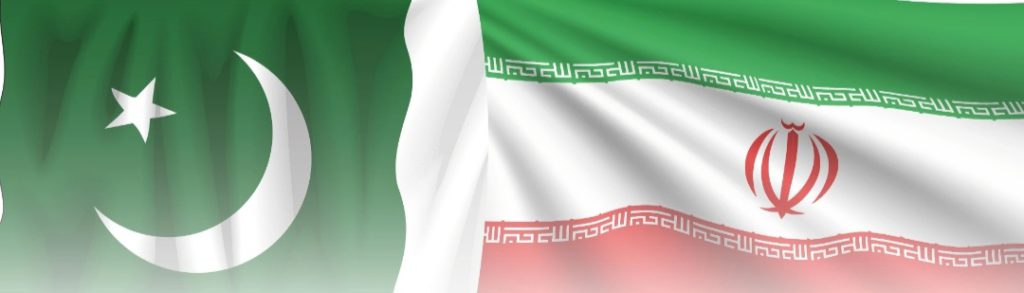
A world having shifting alliances, grid locked diplomacy and rising tensions, power is no longer dependent on missiles, economies or military alliances. Rather, a more subtle but persistent influence is taking center stage, which is culture. Cultural diplomacy is becoming a critical element in global affairs. Observers from think tanks like the Brookings Institution and the Carnegie Endowment for International Peace have taken to identifying soft power as a major aspect of modern world diplomacy.
On the surface, Iran and Pakistan allocate geopolitical and cultural similarities. They allocate a rich civilization history and an Islamic heritage. But their way of engaging culture in their diplomatic strategies unveils an absolute disparity and acts as a symbol for the transformation of global affairs. Iran and Afghanistan’s diplomatic journeys are playing an important role in understanding this major shift in global affairs. They are remodelling the nature of power in a shattered globe.
Iran is playing an assertive, ambitious and ideological game. In spite of its sanctions and isolation, Tehran has fostered its intellectual and cultural influence. Tehran’s efforts are extensive and calculated. Bodies like Relations Organization and Islamic culture funded cultural events such as Fajr International Film Festival and academic programs. These organisations are not only the symbol of culture but also act as an asserting authority.
Some observers believe that the soft power of Iran is interlinked with its ideological messaging that emphasises independence, resistance and a different model of modernity. This is consistent with claims made in world politics literature that cultural diplomacy can be used not only to appeal, but also challenge the existing power order. Cultural is a means of craving out a space in a system for Iran in which it is otherwise limited.
In comparison to Iran, Pakistan is more of a facilitative pattern. It uses its status as a cultural centre of crossroads between Central Asia, South Asia and the Middle East. Having common historical ties, religious background and language overlaps especially with Iran offers Pakistan a ground to engage with each other on the basis of trust. The literature published through websites like the Institute of Strategic Studies Islamabad on regional diplomacy points to the fact that cultural affinity has always been the basis of relations between the two countries.
This difference is being observed in recent years. With the heightened tensions in the world, Pakistan played a very crucial role and has secretly intervened as a mediator. International media outlets like Reuters have reported that In 2026 Pakistan was involved in brokering dialogues among Iran and other International actors.
By providing a platform to communicate, Islamabad has proved to have the capacity of transforming cultural acquaintance into diplomatic authority. Iran has its use of culture to make itself heard whereas Pakistan has its use of culture to be with others. The aim of one state is to form narrative whereas the aim of the other state is to facilitate dialogue. Scholars like Joseph Nye, who was the first to coin the term soft power, have stressed that power in the contemporary context of diplomacy relies not as much on force but more on mutual trust and cooperation. This is the same reasoning as seen in the recent diplomatic engagement of Pakistan. Pakistan establish itself as a legitimate mediator.
This does not downplay the efforts of Iran. Its cultural diplomacy shows that it is a major player irrespective of structural limitation. The capacity of Iran to maintain influence in the world through narrative and unity is indicative of what most thinkers refer to as resilient soft power. Nevertheless, it is very ideological clarity, which played a key role in contributing to the power of Iranian stance, that can restrain its adaptability. A world that requires compromise and collaboration, rigidity can be perceive as a limitation.
On the other hand, the model of Pakistan in turns succeeds on flexibility. The intentions of Pakistan is not to take control of the discussion but to support it. This inclines Pakistan with the wider trends found in the policy research in which middle powers are becoming more appreciated in terms of their meditating capabilities. Recent participation of Pakistan especially with Iran highlights how culture closeness can result in an enhanced credibility in delicate discussions.
This comparison is not just a comparison between two states, but a reflection of a greater change which had been experienced in world politics. Power is now stratified, relational and strongly controlled by understanding. Cultural diplomacy is now taking centre stage in the manner states establish influence and legitimacy.
Iran and Pakistan demonstrate this trend. Iran shows how the long-term strength of identity as an instrument of diplomacy is demonstrated, whereas Pakistan emphasizes the strategic importance of cultural connectivity. They question the old school of thought that hard power is the sole determinant of global status.
To both observers and policy makers, the lesson is becoming more apparent. The skill of developing understanding will be as important as the skill of displaying power as the world challenges become more intricate: regional wars, ideological rifts. Cultural diplomacy provides one means of achieving this, not as an alternative to traditional diplomacy, but as the complement that is indispensable.
The proximity of both states is particularly educative in this dynamic environment. One of them is based on assertion and the other on facilitation. Where there is confrontation, identity-based diplomacy might not cede. During points of negotiation, though, the skill to connect can be the determining factor.
In short, diplomacy is not merely a matter of speaking but it is speaking and being heard. And in a world that grows progressively tired of war, the culture speakers can end up having the most weight.
Maryum Safdar
Maryum Safdar is an undergraduate Student of International Relations with a keen interest in the field of public diplomacy, foreign policy, humanitarian affairs, security studies and international developments.
Leave a Reply