

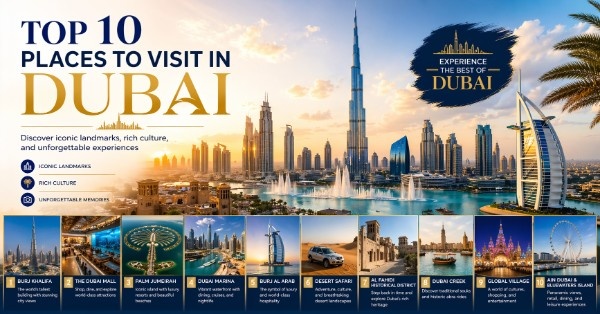
Dubai has emerged as one of the world’s most sophisticated tourism destinations, defined by its ability to integrate architectural innovation, luxury hospitality, and cultural authenticity. Positioned at the crossroads of East and West, the city offers a multi-layered travel experience—ranging from record-breaking landmarks to heritage districts and expansive desert landscapes.
This in-depth guide presents the top 10 places to visit in Dubai, with detailed insights into their strategic importance, visitor experience, and unique value within the broader tourism ecosystem.
1. Burj Khalifa – Architectural Supremacy and Strategic Landmark
The Burj Khalifa is not only the tallest building in the world but also a defining symbol of Dubai’s global positioning. Standing at 828 meters, it represents a convergence of engineering excellence and economic ambition. Visitors can access multiple observation decks, including At The Top (Levels 124 and 125) and At The Top SKY (Level 148), each offering immersive viewing experiences enhanced by digital telescopes and guided tours.
The surrounding Downtown Dubai district further elevates the experience, with synchronized Dubai Fountain shows and direct connectivity to The Dubai Mall. From a tourism perspective, the Burj Khalifa serves as a central anchor, drawing millions of visitors annually.
2. The Dubai Mall – Integrated Retail and Entertainment Ecosystem
The Dubai Mall is among the largest shopping and entertainment complexes globally, hosting over 1,200 retail outlets. However, its significance extends beyond commerce. The mall is designed as an integrated lifestyle destination, featuring the Dubai Aquarium & Underwater Zoo, which houses thousands of aquatic species within one of the largest suspended aquariums in the world.
Additional attractions include the Dubai Ice Rink, VR Park, and an extensive array of dining establishments. Its strategic location within Downtown Dubai makes it a key component of the city’s tourism infrastructure, attracting both high-end shoppers and family-oriented visitors.
3. Palm Jumeirah – Engineering Innovation and Luxury Tourism
Palm Jumeirah is a globally recognized example of large-scale land reclamation and urban planning. Shaped like a palm tree, the island hosts a collection of luxury resorts, residential developments, and entertainment venues.
Atlantis The Palm remains a focal point, offering access to Aquaventure Waterpark and marine-themed attractions. The island also features high-end beach clubs and fine dining establishments, positioning it as a hub for premium tourism experiences. From a strategic perspective, Palm Jumeirah reflects Dubai’s capacity to transform coastal geography into high-value tourism assets.
4. Dubai Marina – Contemporary Urban Lifestyle Hub
Dubai Marina exemplifies modern urban development, combining high-rise residential towers with a vibrant waterfront lifestyle. The Marina Walk is lined with restaurants, cafes, and retail outlets, offering a dynamic environment for visitors.
Yacht cruises and dhow dinners provide unique vantage points of the skyline, particularly during evening hours. The district also serves as a gateway to nearby attractions such as JBR Beach and Bluewaters Island, making it a central node in Dubai’s leisure and tourism network.
5. Burj Al Arab – Global Benchmark in Luxury Hospitality
The Burj Al Arab is widely regarded as one of the most luxurious hotels in the world, setting global standards for premium hospitality. Its distinctive sail-shaped design has become synonymous with Dubai’s branding as a luxury destination.
While access is restricted to guests and reservations, curated experiences such as fine dining and guided tours allow visitors to explore its opulent interiors. The property plays a critical role in positioning Dubai within the high-net-worth tourism segment.
6. Desert Safari – Strategic Cultural and Experiential Offering
The desert safari experience provides a critical counterbalance to Dubai’s urban narrative. It offers visitors an opportunity to engage with the region’s natural environment and cultural traditions.
Activities include dune bashing in 4×4 vehicles, sandboarding, camel riding, and falconry demonstrations. Evening safaris often feature traditional performances such as Tanoura dance and belly dancing, accompanied by authentic Emirati cuisine. This segment of tourism highlights Dubai’s ability to package heritage and adventure into a cohesive offering.
7. Al Fahidi Historical District – Cultural Preservation and Identity
Al Fahidi Historical District represents Dubai’s commitment to preserving its cultural heritage. Characterized by traditional wind-tower architecture, the district provides insight into pre-modern urban design adapted to desert conditions.
The area hosts museums, cultural centers, and art galleries, including the Sheikh Mohammed Centre for Cultural Understanding. Visitors can explore narrow alleyways and restored buildings, gaining a deeper understanding of Dubai’s transformation from a trading port to a global metropolis.
8. Dubai Creek – Historical Trade Corridor
Dubai Creek has historically served as the backbone of the city’s economic development. It facilitated trade between East Africa, India, and the Arabian Peninsula, shaping Dubai’s early commercial identity.
Today, the creek remains an active hub, with traditional abras offering transportation between Deira and Bur Dubai. The surrounding areas feature iconic souks, including the Gold Souk and Spice Souk, providing a sensory-rich experience rooted in traditional commerce.
9. Global Village – Cultural Diplomacy Through Tourism
Global Village operates as a seasonal multicultural destination, showcasing pavilions representing countries from around the world. Each pavilion offers products, cuisine, and cultural performances unique to its region.
The attraction serves as a platform for cultural exchange and international engagement, aligning with Dubai’s broader vision of global connectivity. It also features entertainment zones, amusement rides, and live shows, making it a comprehensive destination for families.
10. Ain Dubai & Bluewaters Island – Next-Generation Leisure Infrastructure
Ain Dubai, located on Bluewaters Island, is the world’s largest observation wheel and a testament to Dubai’s continued investment in landmark attractions. The structure offers panoramic views of the Arabian Gulf, Palm Jumeirah, and Dubai Marina.
Bluewaters Island complements this with a mix of retail, dining, and entertainment venues, creating a self-contained leisure ecosystem. The development reflects Dubai’s forward-looking approach to tourism, emphasizing innovation and experiential value.
Conclusion
Dubai’s tourism strategy is defined by diversification, innovation, and global positioning. Each of these destinations contributes to a broader ecosystem that caters to luxury travelers, cultural explorers, and leisure tourists alike. The city’s ability to continuously evolve while maintaining its cultural identity ensures its status as a leading global destination.



Leave a Reply