

As tensions between Iran and the United States pushed the region to the brink of a wider conflict following the February 2026 crisis, concerns over escalation, energy security, and global stability dominated international discourse. With fears ranging from regional spillover to potential great power confrontation, the need for credible mediation and strategic restraint became more urgent than ever. In this evolving landscape, Pakistan’s diplomatic role has drawn increasing attention as it seeks to facilitate dialogue and prevent further escalation.
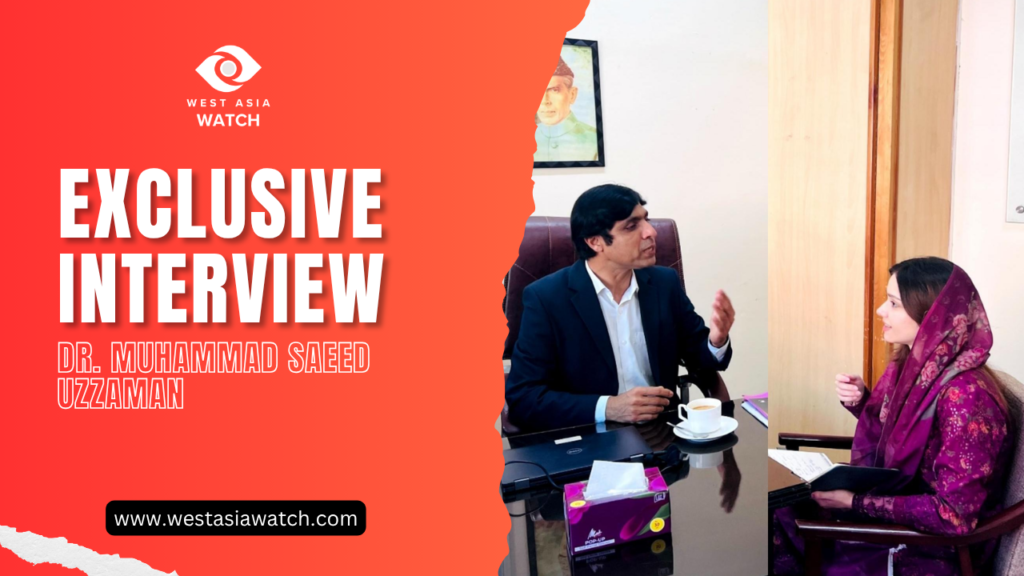
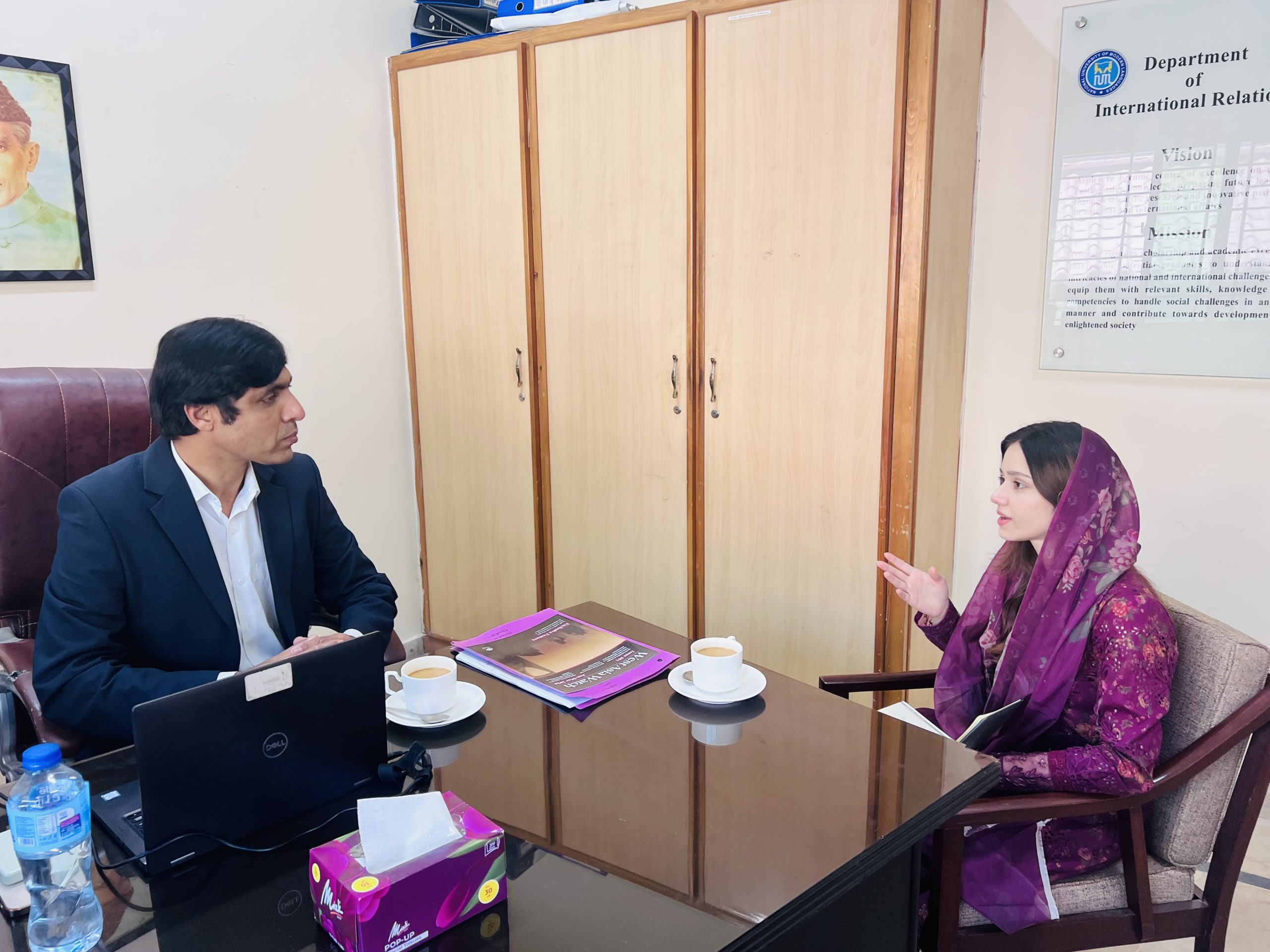
In this context, our Managing Editor, Ms. Parsa Imran, conducted an in-depth interview with Dr. Muhammad Saeed Uzzaman, Head of the Department of International Relations at the National University of Modern Languages (NUML), Rawalpindi Campus. Dr. Uzzaman, whose areas of interest include emerging technologies, military doctrines, strategic studies, India–Pakistan relations, and great power politics, provides a comprehensive and policy-oriented perspective on the crisis, Pakistan’s positioning, and the future trajectory of the Middle East.
1. How do you assess Pakistan’s current role in facilitating dialogue between Iran and the United States, and can it realistically act as a credible intermediary?
If we critically examine the situation since the outbreak of the war on 28 February 2026, it is evident that the conflict rapidly evolved into a highly volatile and globally consequential crisis. The scale of destruction, combined with the risk of regional spillover, created a serious threat to broader stability in the Middle East. At multiple points, there were credible concerns that the conflict could escalate beyond the region, with discussions even emerging around the potential use of nuclear weapons. Some global narratives went as far as suggesting that this trajectory could lead toward a wider, potentially World War III type scenario.
Simultaneously, the blockade of the Strait of Hormuz added a critical economic dimension to the crisis. Given that this chokepoint facilitates a substantial portion of global energy trade, its disruption resulted in billions of dollars in losses, not only for the region but for the global economy. This triggered fears of a wider economic downturn and even a potential global recession. Therefore, the crisis was not only military in nature but also deeply interconnected with global economic stability and energy security.
Amid this environment of chaos and uncertainty, Pakistan emerged as a proactive diplomatic actor. It was among the few countries that took early and visible initiative toward de-escalation. Prime Minister Mian Shehbaz Sharif’s outreach, through direct communication including public messaging addressed to both U.S. leadership and Iranian officials, helped set the stage for diplomatic engagement. This initial effort contributed to the establishment of a ceasefire arrangement, which was a critical first step in halting further escalation.
Following this, the Islamabad talks marked a significant diplomatic breakthrough. These engagements provided a neutral platform for dialogue between the United States and Iran, two states that have remained largely disengaged at the negotiation table for nearly five decades. The continuation of this process into subsequent rounds reflects that the mechanism is not merely symbolic but functionally active.
From this perspective, Pakistan’s role can be assessed as both credible and constructive. It has successfully positioned itself as a facilitator that is acceptable to both parties. While it is important to acknowledge that many complex issues remain unresolved, the fact that the negotiation process is ongoing, structured, and relatively stable indicates that Pakistan’s mediation efforts have, so far, been effective. The real test, however, will lie in sustaining this momentum and translating dialogue into a comprehensive and lasting agreement.
2. What strategic advantages does Pakistan hold that could enable it to contribute effectively to Iran–U.S. de-escalation efforts?
Pakistan’s foremost strategic interest in this crisis is peace, not only for the region but for the wider international system. In the midst of ongoing chaos and destruction, any state that is actively working toward de-escalation and stability gains both strategic relevance and diplomatic credibility. For Pakistan, peace is not just an ideal objective but a core national interest.
If we examine the situation more closely, Pakistan holds several unique strategic advantages. On one hand, it shares approximately 900 kilometers of border with Iran, along with deep historical, cultural, and religious ties. Public sentiment within Pakistan also reflects a degree of affiliation with Iran, particularly when viewed through religious and societal dimensions. On the other hand, Pakistan maintains functional and cooperative relations with the United States. Navigating this conflict in a way that preserves cordial relations with both Tehran and Washington is therefore one of Pakistan’s most critical strategic priorities.
From an economic perspective, Pakistan’s dependence on Gulf energy supplies further reinforces the need for de-escalation. A significant portion, nearly 80 to 90 percent, of Pakistan’s oil and gas imports are linked to this region. Any disruption, particularly due to instability in the Strait of Hormuz, directly impacts domestic energy prices and economic stability. Pakistan cannot afford sustained volatility in global energy markets, making the restoration of secure trade routes and freedom of navigation an urgent necessity.
Additionally, the risk of spillover effects remains a serious concern. Given the shared border with Iran, any escalation could have direct security implications for Pakistan, including cross-border instability and internal security challenges. Preventing such outcomes is therefore another key strategic interest.
At the same time, Pakistan has deliberately avoided becoming a party to the conflict. It maintains strong relationships with Gulf countries such as Saudi Arabia, Qatar, and the United Arab Emirates, particularly a strategic partnership with Saudi Arabia, while also sustaining ties with Iran. This balanced positioning allows Pakistan to act as a neutral and credible intermediary. If Pakistan is able to maintain this neutrality throughout the duration of the conflict, it will not only strengthen its diplomatic standing but also reinforce its long-term strategic advantages in the region.
3. Given its relationships with both Tehran and Washington, how can Pakistan maintain a balanced and sustainable diplomatic approach?
Maintaining neutrality is central to Pakistan’s diplomatic strategy. Both Tehran and Washington have acknowledged Pakistan’s role and have shown a degree of trust in its facilitation efforts. Preserving this trust is essential for sustaining the mediation process.
Pakistan must continue to position itself as a neutral facilitator rather than a partisan actor. This involves maintaining consistent diplomatic engagement with both sides, avoiding alignment with any one bloc, and focusing on keeping negotiation channels open. The emphasis should remain on ensuring that dialogue continues in a structured and meaningful way.
This balanced approach, supported by both civilian and military leadership, enhances Pakistan’s credibility and ensures that it remains a viable intermediary throughout the conflict. Ultimately, the goal is not only to facilitate talks but to help transition these engagements into a comprehensive and lasting agreement.
4. How do you see Iran’s regional posture evolving over the next five years, particularly amid tensions with the United States and Israel?
The conflict has imposed significant military and economic costs on Iran, including sustained strikes and increasing external pressure. Over the next five years, Iran is likely to reassess and recalibrate its regional posture in response to these challenges.
Rather than maintaining an expansive and costly regional footprint, Iran may adopt a more pragmatic approach focused on economic recovery and internal stability. The lifting or easing of sanctions will likely become a central priority, alongside efforts to strengthen domestic economic resilience.
This does not necessarily imply a complete withdrawal from regional influence, but rather a more measured and sustainable engagement strategy. Iran’s future posture will likely be shaped by a balance between maintaining strategic deterrence and addressing internal economic and political needs. A rational approach would involve reducing external overstretch while consolidating domestic strength.
5. Do you foresee the possibility of a renewed nuclear or broader strategic agreement between Iran and the United States?
The possibility of a renewed agreement remains both realistic and necessary. The Joint Comprehensive Plan of Action previously demonstrated that diplomatic frameworks can effectively address nuclear concerns while providing economic incentives and relief.
Moving forward, a similar agreement, potentially updated to reflect current geopolitical realities, could serve as the foundation for broader strategic understanding. Such a framework would need to address the concerns of all stakeholders, including nuclear transparency, sanctions relief, and regional security dynamics.
International institutions such as the International Atomic Energy Agency can play a critical role in ensuring compliance and building trust between the parties. While the path to agreement will be complex and require compromise, ongoing negotiations indicate that there is still potential for convergence and consensus.
6. In your view, what does the future of the Middle East look like, and what role will Iran play in shaping the region’s geopolitical landscape?
The Middle East remains a highly complex and polarized region, making definitive predictions inherently difficult. However, one clear requirement for long-term stability is inclusive and sustained dialogue among all key stakeholders, including Iran, Saudi Arabia, Israel, and other regional actors.
Without a comprehensive framework that addresses the security concerns of all parties, the region will remain vulnerable to recurring cycles of conflict. Long-term peace will depend on structured negotiations, mutual recognition of sovereignty, and credible security guarantees.
Iran will continue to play a significant role in shaping the region’s geopolitical landscape. However, its influence may become more calibrated, with a greater focus on sustainability rather than expansion. If current tensions persist without resolution, there remains a risk of future escalation to more dangerous strategic levels.
Therefore, the path forward must prioritize diplomacy, balanced security arrangements, and long-term conflict resolution mechanisms to ensure both regional and global stability.




Leave a Reply