

Egypt’s civil aviation sector is entering a significant phase of transformation, driven by airport modernization, fleet expansion, digitalization, and an ambition to strengthen the country’s position as a regional aviation hub. With major infrastructure projects underway and EgyptAir expanding its fleet and international network, the sector is seeking to capitalize on Egypt’s strategic location between Africa, the Middle East, Europe, and Asia.
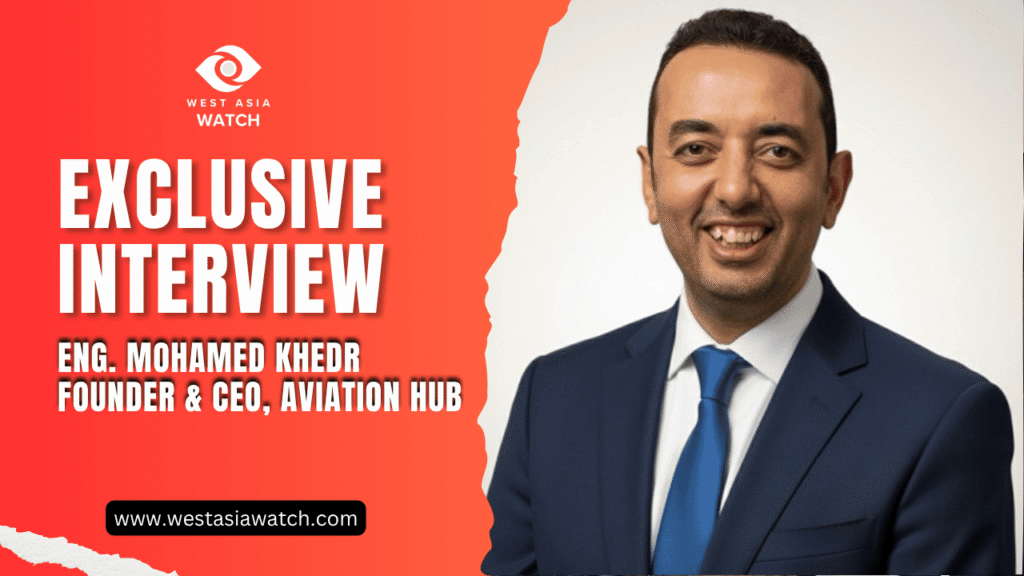
To explore these developments, West Asia Watch spoke with Eng. Mohamed Khedr, Founder and CEO of Aviation Hub, an aeronautical engineer with more than 25 years of experience across aircraft maintenance, technical training, airline operations, and MRO management. In this interview, he discusses Egypt’s aviation modernization, the role of EgyptAir, airport capacity, safety and training requirements, tourism growth, and the opportunities and challenges likely to shape the sector over the coming decade.
Q1. How do you assess the current transformation of Egypt’s civil aviation sector, especially in terms of infrastructure, fleet modernization, and passenger services?
It is real change, not just talk. Egypt is building a new Terminal 4 at Cairo Airport, upgrading airports in Luxor, Alexandria, and El-Alamein, and building new airports in Saint Catherine and Al-Arish for Sinai tourism. EgyptAir is also growing its fleet fast — from 72 planes now to about 125 in the next few years, with new A350s already flying. This is the biggest fleet renewal the airline has done in a long time. My concern, as an engineer, is that growing this fast puts pressure on maintenance, spare parts, and training. Buying planes is easy. Building the support system behind them takes longer.
Q2. Egypt has been working to position itself as a regional aviation hub. What key steps are being taken to strengthen its connectivity between Africa, the Middle East, Europe, and Asia?
Egypt’s location has always been a strength — between Africa, the Gulf, Europe, and Asia. Now the country is finally building the flight network to use that location. New long routes to Los Angeles and Chicago, more flights to Delhi and Mumbai, Kuwait flights restarted, and Hurghada being developed as a real transit hub, not just a beach destination. Air Cairo is also growing fast as the low-cost partner. This is the same model Gulf airlines used — one full-service airline plus one low-cost feeder airline working together. But route announcements are not enough. Airport capacity, ground handling speed, and flight agreements between countries matter just as much.
Q3. How important is airport modernization for Egypt’s aviation growth, particularly at Cairo International Airport and other regional airports?
This is the real bottleneck. You can buy planes faster than you can build airport capacity. Cairo has been near its limit for years. Terminal 4 is the big project, but the new AI systems for baggage and ground handling — shown at the IATA conference in Cairo this year — matter just as much. Faster turnaround means more flights can use the same airport. Regional airports matter too, because a lot of Egypt’s tourism growth depends on the Red Sea and Sinai, and that traffic needs airports outside Cairo. Letting private companies help manage airports is also a big change for Egypt.
Q4. What role is EgyptAir playing in supporting the country’s wider aviation ambitions, and how is the airline adapting to changing global travel demands?
EgyptAir is the center of this whole plan. The new planes, the new A350s, the cabin upgrades, the better website and booking system — all of this is EgyptAir trying to compete with Gulf and European airlines, not just regional ones. Moving up to 68th place in the Skytrax world rankings last year shows real progress. But here is my honest concern: growing from 72 to 125 planes in two or three years is not just a business challenge — it is a training challenge. Pilots, cabin crew, and maintenance staff need to grow at the same speed as the fleet, or safety and reliability suffer.
Q5. How is Egypt improving safety, regulatory standards, and operational efficiency in its civil aviation sector?
Egypt’s aviation authority has followed international standards (ICAO, EASA) for a long time. That is why EgyptAir stayed in Star Alliance and keeps a good safety record. What is improving now is the operations side — AI baggage systems, faster ground handling, electronic passport gates, less paper. From my own years in training, I would say the real safety question is whether training capacity grows as fast as the fleet. New planes need trained people, not just numbers on paper.
Q6. With tourism being a major part of Egypt’s economy, how can the aviation industry further support tourism growth and attract more international travelers?
Aviation and tourism depend on each other completely. Egypt wants 30 million tourists a year by 2030, and that is impossible without enough flights to bring them. Direct routes are the biggest tool — every new nonstop flight removes a stopover that used to make Egypt less competitive against Gulf hubs. Making Hurghada a real European gateway, and connecting Sharm El-Sheikh and the new Sinai airports well, matters just as much as the exciting long-haul routes, because leisure travelers are still the biggest number.
Q7. Looking ahead, what major opportunities and challenges do you see for Egypt’s civil aviation industry over the next five to ten years?
The opportunity is strong: good location, fast-growing fleet, strong tourism goals, and real investment now. If this works, Egypt becomes the connection point between Africa and the rest of the world — like Gulf airlines became the connection point between East and West. The challenges are less visible: building maintenance and training capacity fast enough, handling new aircraft types like the A350 without straining the supply chain, making sure airports keep up with new routes, and managing currency and financing risk while buying dozens of planes during regional instability. The plan is good. Execution over the next few years will decide if it succeeds.




Leave a Reply