


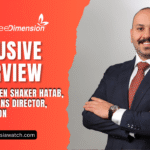
Ahmed Aloraij is a prominent leader in the global health tourism sector, with more than two decades of experience across healthcare, tourism, and investment. He currently serves as Chairman of the Saudi Health Tourism Association and Vice President of the Global Healthcare Travel Council, contributing to efforts aimed at strengthening Saudi Arabia’s position as an international destination for health, wellness, and medical tourism in line with Vision 2030.
In an exclusive interview with West Asia Watch, Aloraij discussed the development of Saudi Arabia’s health tourism sector, the opportunities created by Vision 2030, and the Kingdom’s potential to emerge as a global health and wellness destination. He also shared his perspective on international partnerships, investment, technology, patient experience, and the need to build an integrated health tourism ecosystem connecting healthcare, tourism, hospitality, insurance, and other key sectors.
How would you assess the current development of Saudi Arabia’s health and medical tourism sector, and what progress has been made in recent years?
I would assess Saudi Arabia’s health and medical tourism sector as a rapidly developing sector that is moving from potential to structured market readiness. The important distinction is that Saudi Arabia has already built many of the underlying capabilities required for health tourism; the next stage is to integrate these capabilities into a coordinated, internationally competitive destination.
How does health tourism fit within Saudi Vision 2030, particularly in relation to economic diversification, healthcare transformation, and the growth of the tourism sector?
Health tourism fits very naturally within Vision 2030 because it sits at the intersection of three major transformations: healthcare, tourism and economic diversification.
From the healthcare perspective, the Health Sector Transformation Program is creating a more integrated, preventive and technology-enabled system rather than focusing only on treating illness.
From the economic perspective, health tourism can create value beyond the hospital itself. An international patient generates demand for healthcare, accommodation, aviation, transportation, hospitality, pharmaceuticals, insurance, technology and other services.
And from the tourism perspective, Saudi Arabia is developing a much broader tourism proposition. The Kingdom can offer international visitors not simply a medical procedure, but a complete health and wellbeing journey—combining treatment, rehabilitation, wellness, hospitality, culture and destination experiences.
This is why I believe we should think beyond the traditional concept of “medical tourism.” The opportunity is to build a Saudi Health Destination Economy. And from the tourism perspective, Saudi Arabia is developing a much broader tourism proposition. The Kingdom can offer international visitors not simply a medical procedure, but a complete health and wellbeing journey—combining treatment, rehabilitation, wellness, hospitality, culture and destination experiences.
This is why I believe we should think beyond the traditional concept of “medical tourism.” The opportunity is to build a Saudi Health Destination Economy.
What competitive advantages could position Saudi Arabia as a leading destination for medical and wellness tourism in the Middle East and globally?
I see at least six major advantages.
First, healthcare capability. Saudi Arabia has invested heavily in sophisticated hospitals, specialized centers, medical technology and highly qualified professionals.
Second, investment capacity. The Kingdom has the financial resources and Vision 2030 framework to develop large-scale healthcare, wellness and tourism projects. The Ministry of Health has identified medical tourism, digital health, research and innovation and biotechnology among important healthcare investment opportunities.
Third, technology. Saudi Arabia has an opportunity to differentiate itself through AI, virtual care, digital patient journeys, data and advanced medical technologies. The 2025 Vision 2030 report highlights the expansion of virtual healthcare, unified health records, AI and advanced therapies.
Fourth, destination diversity. Riyadh, Jeddah, AlUla, the Red Sea, Taif, the Eastern Province and other destinations can eventually support different health and wellness propositions.
Fifth, cultural and religious significance. The Kingdom has a unique position at the intersection of spirituality, hospitality and wellbeing, particularly in relation to Makkah and Madinah.
And finally, Vision 2030 itself is a competitive advantage. Few countries have simultaneously undertaken such large-scale transformation in healthcare, tourism, infrastructure, technology and investment.
What role can the Saudi Health Tourism Association play in building an integrated ecosystem connecting hospitals, healthcare providers, hotels, airlines, tourism companies, insurers, and government stakeholders?
The Association can act as a neutral ecosystem integrator.
Health tourism is not something that a hospital can develop alone. A patient travelling internationally needs a journey that starts before the flight and continues well after returning home.
The Association can therefore help connect:
Government → hospitals → physicians → insurers → airlines → hotels → tourism companies → facilitators → technology companies → investors → international partners.
Our role should include developing standards, facilitating partnerships, supporting international patient pathways, developing professional capacity, conducting research and promoting Saudi Arabia internationally.
For example, the Association is already positioning accreditation and quality assurance, professional development, research, investment attraction and international partnerships as important elements of its work.
I would describe the Association’s role as “connecting the dots.” We don’t need to replace existing institutions; we need to make the ecosystem work together.
Which areas of healthcare and wellness do you believe have the strongest potential to attract international patients to Saudi Arabia, such as specialized treatments, rehabilitation, wellness, preventive care, or advanced medical procedures?
I would avoid positioning Saudi Arabia as a destination for everything. The Kingdom should develop a portfolio of areas where it can achieve genuine international differentiation.
I see particularly strong potential in:
- Advanced and specialized medical care
- Oncology and precision medicine
- Cardiology and cardiovascular care
- Orthopedics and rehabilitation
- Rehabilitation and post-acute care
- Genetic and cell therapies
- Fertility and reproductive health
- Preventive health and screening
- Digital and personalized healthcare
- Wellness, longevity and healthy aging
- Medical wellness and rehabilitation resorts
The opportunity is particularly interesting when we connect medical excellence with wellness.
For example, a patient could receive advanced treatment in Riyadh, followed by rehabilitation and recovery in another Saudi destination, supported by hospitality, nutrition, wellness and digital follow-up.
That creates something much more distinctive than a conventional medical tourism model.
What are the main challenges currently facing the growth of health tourism in Saudi Arabia, and what policy, regulatory, infrastructure, or marketing initiatives could help address them?
The biggest challenge is not necessarily the absence of healthcare capacity. It is integration and international visibility.
I would highlight five priorities.
1. A unified health-tourism framework
Saudi Arabia needs clear policies defining the roles of healthcare providers, facilitators, insurers, tourism companies and other stakeholders.
2. International patient pathways
Patients need a seamless process covering enquiry, medical records, second opinions, visa, travel, treatment, accommodation, payment, insurance, rehabilitation and follow-up.
3. Quality and transparency
International patients need confidence in clinical quality, accreditation, pricing, outcomes, patient rights and complaint mechanisms.
4. International insurance and financing
Insurance companies and international payers need mechanisms that make Saudi Arabia an easy and trusted destination for treatment.
5. Global marketing
Saudi Arabia should move from simply promoting hospitals to promoting Saudi Arabia as a health destination.
The message should be based on evidence: clinical outcomes, quality, technology, patient experience, accreditation, specialist capabilities and destination advantages.
This is where the Saudi Health Tourism Association can contribute significantly by bringing stakeholders together and developing common standards and international partnerships. The Association’s existing work includes quality assurance, international patient support, training and cooperation with insurance and healthcare-financing organizations.
Looking toward 2030 and beyond, what is your vision for Saudi Arabia’s position in the global health tourism market, and what international partnerships or investments will be important to achieving that ambition?
My vision is that by 2030 Saudi Arabia should not simply be known as a country that receives medical tourists.
It should be recognized as a global health destination.
That means creating an ecosystem where a person can come to Saudi Arabia for advanced medical treatment, preventive health, rehabilitation, wellness, longevity or recovery—and experience one integrated journey.
I would like to see Saudi Arabia develop a Saudi Health Destination Index, measuring dimensions such as:
quality of care + patient experience + accessibility + innovation + sustainability + hospitality + wellness.
This could eventually become an international benchmark for health destinations.
International partnerships will be essential. Saudi Arabia should partner with leading hospitals, universities, accreditation organizations, insurers, medical tourism facilitators, wellness brands, technology companies, airlines and investment institutions.
We should also encourage FDI and joint ventures, not simply import expertise. The objective should be to create knowledge transfer, research, clinical trials, innovation, local employment and Saudi capabilities.
Ultimately, the ambition is bigger than medical tourism.
Saudi Arabia has the opportunity to build a Health Destination Economy—where healthcare becomes connected with tourism, wellness, technology, investment and hospitality, creating value for patients while contributing to the diversification objectives of Vision 2030.



Leave a Reply