

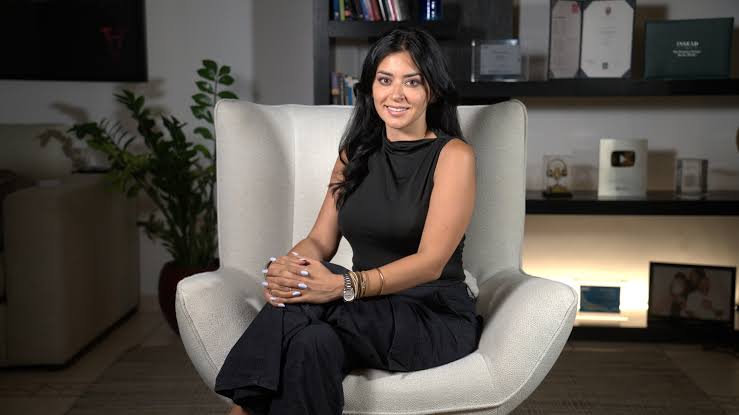
Rasha Hamzeh is a marketing and business strategist with more than 15 years of experience across the MENA region, spanning media, brand strategy, performance marketing, entrepreneurship, and commercial growth. She spent nearly a decade at OMD, where she rose to the position of Regional Strategic Marketing Director and worked with some of the region’s leading brands. Her career has also included leadership roles across startups and entrepreneurial ventures, giving her a perspective that combines strategic marketing expertise with the practical realities of building, scaling, and positioning businesses in competitive markets.
Today, Hamzeh is the Founder and Managing Partner of The Inhouse Agency, a specialist marketing consultancy built around a flexible, embedded model of senior marketing expertise. She also serves as Executive Producer of Luca’s Insight Track, overseeing the platform’s strategic and commercial development. In an interview with West Asia Watch (WAW), Hamzeh shared her insights on the evolving marketing landscape in the UAE and wider GCC, including the impact of artificial intelligence, changing client expectations, creator-led communications, market localization, and the growing importance of connecting creativity and brand building with measurable commercial outcomes.
You built The Inhouse around an embedded marketing model rather than the traditional agency-client relationship. What market gap did you identify, and why do you believe this model is becoming increasingly relevant to businesses today?
I think the traditional agency model is under increasing pressure. Businesses are being asked to do more with less, particularly now with AI changing the economics of how marketing is delivered. At the same time, agencies are carrying significant overheads, large teams and increasingly compressed margins, which can ultimately translate into higher costs for clients without necessarily delivering better output.
The Inhouse was built around a different idea: give businesses access to highly specialised senior talent without asking them to carry the cost of building that talent in-house or the overhead of a traditional agency. Our model is contractual and flexible, so clients can bring in the right expertise for the right project or period of time, rather than paying for a large agency structure around them.
I also believe commitment is different. When you work closely with a business, rather than sitting several layers removed from it, you understand its commercial challenges, culture and ambitions much more deeply. That allows you to become more of a strategic partner than simply a supplier. Ultimately, it gives businesses more experienced talent, more transparency, more flexibility and, in many cases, better output at a lower overall cost.
The UAE has developed into one of the region’s most competitive business, media and marketing markets. What factors have contributed most to the growth of its creative and communications ecosystem?
The UAE’s biggest advantage, in my opinion, is its diversity of talent and perspectives. You have people coming from virtually every corner of the world, bringing different cultural references, experiences and ways of thinking into one market. That creates a very interesting environment for creativity.
There is also an incredible concentration of global brands, ambitious local businesses and regional headquarters here, which creates demand for sophisticated marketing and communications capabilities. Add to that the UAE’s investment in technology, infrastructure and digital transformation, its appetite for innovation, and the fact that it acts as a gateway between East and West, and you have a very unique ecosystem.
The market is also incredibly fast-moving. Businesses can test ideas, adopt new technologies and move quickly, which creates an environment where marketers are constantly challenged to evolve.
And I think the competitiveness of the market itself has raised the bar. You can’t really afford to be average here anymore.
From your experience working with brands across different sectors, how have expectations from marketing agencies changed over the past five years? Are clients becoming more focused on measurable commercial outcomes rather than visibility alone?
Without a doubt. The conversation has moved significantly from “How many people did we reach?” to “What did this actually do for the business?”
Clients are much more focused on the bottom line, ROI, ROAS, leads, sales and short-term commercial returns. And I understand why. Businesses are under pressure, and marketing budgets are constantly being scrutinised.
Where I think we need to be careful is becoming too short-term focused.
There is sometimes a tendency for people to optimise for what protects their own position internally rather than what builds the strongest business over time. If you only measure what happened this quarter, you can easily make decisions that hurt the brand six, twelve or twenty-four months from now.
I really believe you need to hold both perspectives simultaneously: what will drive the business today, and what are we building for tomorrow?
We know it from “The Long and the Short of It” by Les Binet and Peter Field and Simon Sinek talks about this very well in The Infinite Game, businesses need to think beyond the immediate win and build for long-term sustainability. I think marketing should work the same way. The best marketers know how to connect brand building with commercial performance, rather than treating them as opposing objectives.
Artificial intelligence is rapidly changing content creation, advertising, search and audience discovery. Where do you believe AI will create the greatest value for marketing teams, and where should brands remain cautious?
I actually see AI as an incredible opportunity for marketing teams because it can remove so much of the operational pressure and repetitive work that consumes people’s time.
There is a huge amount of marketing work that is urgent but not necessarily important. Reporting, data manipulation, content adaptations, research, administration, optimisation and many other operational tasks can consume the time that marketers should be spending thinking about the business, the consumer and the next big idea.
If AI can take some of that pressure away, it gives people something incredibly valuable back: time to think.
And I think creativity has suffered because of how busy marketing teams have become. Innovation and big thinking often take a back seat to whatever needs to be delivered by 5pm. AI has the potential to change that.
But the caution is equally important. We shouldn’t outsource the human part of marketing to machines.
If everything starts sounding, looking and feeling like AI, brands will lose the very thing that makes communication effective: human connection. Consumers can already see through content that feels manufactured or generic.
That’s why I love the thinking behind Luca Allam’s newly launched book, Talk Human. His whole philosophy is essentially a reminder that in an increasingly AI-driven world, being human becomes even more valuable.
AI should help us communicate better, not make us communicate less humanly.
The Inhouse has worked across areas ranging from branding and performance marketing to podcasts and influencer co-creation. How important is an integrated approach when building brands in an increasingly fragmented media environment?
There are more touchpoints than ever before, but I don’t believe the answer is to simply be everywhere.
In fact, being everywhere can dilute your focus and your budget.
The first question should always be: Where is my audience actually spending its attention, and what is their mental availability in that environment?
Someone might be discovering a brand from a billboard on the street, researching it on YouTube, validating it through a creator on Instagram and eventually converting through Google or a website. Those are very different moments, and treating them all as the same communication opportunity is a mistake.
Integration, therefore, isn’t about putting the same message everywhere. It’s about understanding the role of each touchpoint within the consumer journey.
Awareness needs to create attention. Consideration needs to build relevance and credibility. Conversion needs to remove friction. And loyalty needs to create a reason to come back.
The channels should work together, but the communication needs to evolve depending on where the consumer is in the funnel and what they need from the brand at that moment.
The UAE attracts both international companies and ambitious local businesses. What are the most common mistakes brands make when entering or expanding within the UAE and wider GCC market?
The biggest mistake is assuming that the UAE or GCC is simply another market where you can take a global strategy, translate it and launch it.
You can’t.
There are huge nuances in culture, consumer behaviour, language, purchasing behaviour and media consumption across the region.
And even within the GCC, every market has its own dynamics. The UAE in particular is quite unique because it is heavily expatriate-driven. You’re marketing to an incredibly diverse population, with different cultural backgrounds, languages and motivations, all living within the same market.
I’ve seen international brands bring in creative that might have worked beautifully somewhere else but simply doesn’t translate culturally here. It’s not necessarily “bad creative”; it’s often just tone-deaf to the context.
The answer isn’t always to completely localise a global brand either. It’s about understanding what should remain consistent globally and what needs to flex locally.
You need local insight before local execution.
How is the relationship between creators, influencers, traditional media and brands evolving in the region, particularly as audiences demand more authentic and less conventional forms of communication?
I think we’re actually redefining what an influencer is.
You don’t need to be a traditional lifestyle influencer with millions of followers to influence people. Influence can come from expertise, credibility, community, relevance or simply the ability to create something that people genuinely want to watch and share.
We’re seeing brands move away from looking purely at follower numbers and increasingly looking at quality of content, audience relevance and authenticity.
People are much better at seeing through the fluff now. They know when someone genuinely uses or believes in something and when they’re simply reading a script because they’ve been paid.
As a result, creators are becoming much more integrated into the actual strategic brief. They’re not simply an amplification layer that comes at the end of a campaign.
The smartest brands are asking:
What can this creator bring to the idea that the brand couldn’t create itself?
That’s a much more interesting question.
Looking toward the next five years, how do you expect the UAE’s marketing and creative industry to evolve, and what skills or capabilities will distinguish the most successful agencies and marketing professionals?
I think relationships, transparency and credibility are going to become increasingly important.
I’m an optimist, so I actually believe AI will create more opportunity for good marketers rather than simply replace them.
As AI takes away more of the operational workload, consultants, strategists and creative professionals should have more time to do what humans are actually good at: think, challenge, connect the dots, innovate and create.
But that also raises the bar. If AI can produce a decent piece of content in seconds, simply producing content is no longer a differentiator.
The value will increasingly sit in the thinking behind the work.
Who understands the business? Who understands the consumer? Who can identify the right problem? Who can turn insight into an idea? And, critically, who can connect creativity back to a commercial outcome?
I think the industry will move further away from vanity metrics and towards proving that creativity actually contributes to the business — whether that’s through brand equity, consideration, revenue, retention or ROAS.
The marketers who can bring strategy, creativity, technology and commercial thinking together will be the ones who stand out.
And ultimately, I hope we get back to valuing something that can sometimes get lost in an industry obsessed with performance: good ideas, good relationships and good people.


Leave a Reply