

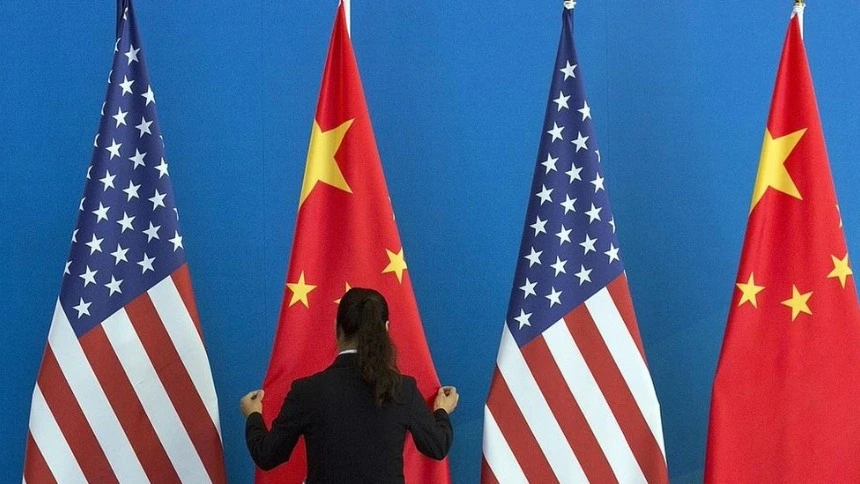
In today’s global system, power is no longer measured only by military strength or economic size. It is increasingly shaped by how a country is seen, followed, and trusted around the world. Because of this shift, public diplomacy has become a very important part of international relations. It is fundamentally how countries communicate with foreign publics to influence opinions, build relationships, and improve their global image. Among global powers, China and the United States are two of the key players in public diplomacy. Both aim to expand their global influence, but their methods are quite different due to their political systems, values, and strategic priorities. The United States largely relies on openness, cultural appeal, and value-based communication, while China follows a more structured, state-driven, and strategic approach.
The United States has traditionally based its public diplomacy on ideas and values. It promotes democracy, freedom of expression, human rights, and individual liberty as central elements of its global identity. Through these principles, it presents itself as a model for governance and development. Education is one of its strongest tools, as American universities attract a large number of international students and create long-term intellectual and cultural ties that go beyond national borders. Cultural influence is another major strength of the United States. Hollywood films, television, music, and digital platforms play a powerful role in shaping global views. This cultural reach enables the U.S. to influence how people around the world think about its society, values, and lifestyle. Unlike official diplomacy, this form of influence works indirectly but is often more effective in building emotional connections.
A key feature of the U.S. model is its openness. Independent media, public debate, and freedom of expression allow a diversity of voices to be heard. Even criticism of the government is visible at the international level. While this can sometimes reveal internal divisions or weaknesses, it also strengthens credibility. Many global audiences view transparency as a sign of trust, which ultimately reinforces the United States’ soft power.
However, the United States also faces several challenges in its public diplomacy. One of the main issues is inconsistency, as there is often a gap between the values it promotes and its actual foreign policy actions. Military interventions, political polarization, and domestic social issues can all affect its global image. In today’s digital age, such contradictions spread quickly and can strongly influence international perceptions.
By contrast, China follows a different approach to public diplomacy. Its strategy is more unified and closely managed by the state. Instead of promoting political values, China focuses on presenting itself as a stable, peaceful, and development-oriented global power. Its main goal is to shape international perceptions and gain broader acceptance as a rising power in the global system. Economic diplomacy is one of China’s most important tools. Through large-scale infrastructure projects, international trade partnerships, and global investment initiatives, China builds strong economic relationships across Asia, Africa, and other regions. These efforts not only expand its influence but also strengthen its position as an important development partner in the global economy.
China also invests in cultural and media outreach. It promotes its language, traditions, and cultural identity through educational institutions, international broadcasting, and cultural programs. These efforts aim to create a more positive global image and increase cultural understanding between China and other countries. However, China’s public diplomacy model is more controlled compared to that of the United States. Communication is carefully managed to ensure consistency and alignment with state policies. While this creates a unified message, it also limits openness and public debate. As a result, China’s growing global presence does not always translate into strong emotional or trust-based connections with foreign audiences.
Despite their influence, both countries face important challenges in public diplomacy. For the United States, the main issue is maintaining consistency between its values and actions. Internal political divisions and foreign policy decisions sometimes create contradictions that weaken its global credibility. Although its openness is a strength, it can also expose weaknesses that are amplified internationally. For China, trust remains a major challenge. Many countries remain cautious about its intentions due to concerns about transparency, governance, and communication style. Although China’s economic contributions are widely recognized, doubts about its broader strategic goals continue to shape how it is perceived.
Another challenge for China is its communication style. Its structured and controlled messaging ensures clarity, but it often lacks the flexibility and openness needed to build deeper connections with global audiences. In contrast, more open systems allow direct engagement, which can strengthen trust and mutual understanding.
The comparison between China and the United States highlights two distinct models of public diplomacy. The United States relies on cultural influence, openness, and values-based engagement, while China depends on economic partnerships, strategic communication, and controlled narratives. Both approaches are effective in different ways, but each also has its limitations.
In conclusion, public diplomacy in the modern world is not just about visibility or communication. It is about credibility, consistency, and trust. A country’s influence depends not only on how strongly it communicates, but also on how it is genuinely perceived. In the long run, the most successful global power will be the one that aligns its actions with its message and builds lasting trust with international audiences.

Mahnoor Nadeem
Mahnoor Nadeem is currently pursuing her bachelor’s in international relations from Fatima Jinnah Women’s University. Her interests are Public Diplomacy, Global Politics, and international security.



Leave a Reply