

In this article, there comes an interesting insight. We all have mostly noticed this thing when the United States wants to negotiate a trade deal it forwards a diplomat to negotiate. When it wants to enforce a no-fly zone where specifically any drones are prohibited to fly in the designated territory it sends an aircraft carrier. But most importantly when it wants to modify the thinking pattern of a teenager like how they view the world it brings a movie to shape their minds. We all think that watching movies is only about entertainment and fun, but Hollywood is not merely an entertainment. It’s the crucial public diplomacy tool the United States has basically introduced, and it works without any soldier or an agreement or treaty.
Hollywood as an economy tool:
The popular definition of public diplomacy is as “negotiating directly with foreign publics to inform, influence, and build trust.”
According to the Motion Picture Association (MPA), the global box office in 2023 reached US $77.1 billion, with U.S. films accounting for roughly 64% of that total outside of China. In markets like the United Kingdom, Australia, and Spain, American films hold over 75% of screen share. No other nation enjoys this kind of popularity even close to this cultural infiltration.
The Hollywood box office gains its revenue from international markets over 70%. Also, the total number of films produced by Hollywood is 500 per year. But this revenue tells only half of the story.
A 2022 study published in the Journal of Soft Power Studies shows that 82% of international viewers from all the over the world could name at least three American film characters like Superman, Indiana Jones, James Bond though Bond is British but the films he shoots are U.S produced however the few number than 15% could name a single political figure in the U.S State Department. This shows how huge the impact of Hollywood movies has on people.
It has been that Hollywood majorly highlights and introduces America before the State Department ever does. Hollywood movies invest higher and generates revenue in maximum profits. Even from the foreign audiences, the revenue generated for blockbuster movies percentages 67-75%.
Deliberate propaganda of public diplomacy
This strategy of using Hollywood as a public diplomacy tool is not an accident. The U.S government has actively fostered this relationship since World War II. It has been stated that in 1942, when President Franklin D. Roosevelt created the Office of War Information which coordinated hand by hand with studios to produce films like Why We Fight which is actually a series shown to millions of soldiers and foreign civilians as a public diplomacy implementation.
During the Cold War, the strategy became more refined. The United States Information Agency (USIA) which remained under process from 1953 to 1999 efficiently investigated scripts and facilitated international distribution for films in which American democracy has been given its role to play favourably. US majorly opt soft power and culturally influenced people through movies and shows like Zootopia 2 crossed $1 billion and broke animation records and appeals globally with themes of diversity, governance, and social harmony among people.
Declassified documents from 1967 show that during cold war USIA officers advised Hollywood studios on how to “avoid reinforcing Soviet stereotypes of American racism” while still showcasing American freedoms. This show that Hollywood uses movies and television shows as a tool of cultural diplomacy and soft power to influence how the world sees your country, especially during the Cold War.
In today’s world, this collaboration even continues through programs like the American Film Showcase (AFS), funded by the U.S. State Department’s Bureau of Educational and Cultural Affairs. Between 2012 and 2024, the AFS sent over 300 American filmmakers to more than 80 countries, including Vietnam, Ukraine, and Colombia. It comes up with 2 goals.
The stated goal is to build mutual understanding and highlight shared values. The unstated goal is to export the American narrative structure where the individual hero triumphs, where freedom is the default, and where government and policy making is ultimately good.
The Pentagon’s Hollywood Liaison
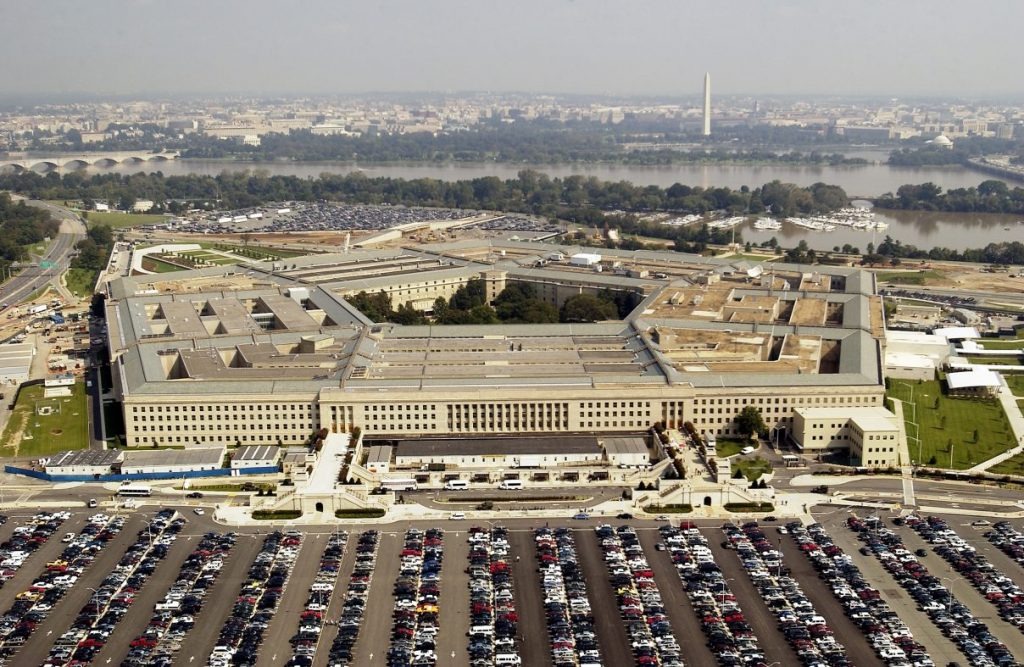
The most controversial side of this diplomacy is the Department of Defense’s Entertainment Media Office which is a full-time unit based in the Pentagon that reviews over 500 scripts and film projects annually. When the military let exchange for lending aircraft carriers like F-16s and any other military expert than they ask the Pentagon to make some script changes. This is not conspiracy; it is public policy.
A 2019 academic study by the University of Southern California’s Annenberg School found 200 military cooperation films from 1984 to 2018 like Top Gun, Transformers, Captain Marvel. The study says that films supported by Pentagon were four times more likely to show the U.S. military positively and don’t depict war crimes realistically. This means that when an outsider watches a Hollywood war film, they are not watching the actual reality they are only seeing a State Department approved advertisement for the American armed forces.
The most famous Top Gun crossed almost $1.4+ billion in which movie boosted U.S. military image and even increased recruitment interest viewed as classic example of Hollywood Pentagon collaboration.
A Tool for Regime Perception, Not Just Recruitment
Except the military recruitment, Hollywood also shapes how foreign public thinks about the entire nations. A 2024 study by the Oxford Internet Institute critically ranked the sentiment of people in 12 million social media posts about the United States image before and after the major film releases. The researchers found that after the release of Top Gun Maverick (2022), positive people’s opinions toward the U.S. Navy increased by 34% among 18- to 25-year-olds in Japan and South Korea.
The Necessary Counterargument
But this tool is not always progressive. Critics rightly note that this power is not always beneficial. Scholars like Professor Matthew Fraser (author of Weapons of Mass Distraction) in his literatures argues that Hollywood’s dominance through its movies gives raise to “cultural imperialism” the removal of local storytelling traditions.
Moreover, it’s also visible that when Hollywood gets geopolitics wrong, it damages the American credibility. The 2012 film Argo which portrayed the CIA’s role in rescuing six Americans from Iran, was widely celebrated in the U.S. but condemned in Iran and even in allied nations like Turkey for historical inaccuracies. Public diplomacy built on fiction can falls when the truth comes out.
The Invisible Armada Endures
Despite these risks and challenges Hollywood always acts as the United States most durable public diplomacy tool. The State Department’s annual budget for all cultural exchange programs is roughly $700 million. It has been estimated that the global marketing budget for a single Marvel movie is often $150–200 million and that money comes from private studios, not taxpayers. The Hollywood economically contributes to US financial development.
China as a competitor
As the world becomes more multipolar and China’s film industry grows. A rough chart shows that China’s box office reached $7.7 billion in 2024, second only to the U.S so America cannot afford to lose this tool.
Conclusion:
So, keeping in view all statistics mentioned above in article, it has been proven that Hollywood is not only for entertainment purposes, but it serves a huge role in public diplomacy, shaping people’s mind without any resistance with movies of their favourable content.
This proves that Hollywood also helps much in boosting US economic well-being by generating revenue from international audiences and through movies, it spreads American values like freedom, individuality, success and justice which does not come from other policies than this.
Hollywood also collaborates with pentagon, USDD and AFS to use film to influence global audience. We also come to know about that the use of Hollywood to influence public is not always effective. Some movies can damage credibility instead of building trust if the movies promote false narratives. Also, these movies can overshadow the local culture as well but along with these challenges, US still get benefits economically and diplomatically through Hollywood. Movies can modify public opinions more than any other policy.
Now, it is realised that if the next time we watch a Hollywood movie, which was a blockbuster in a foreign cinema, remember we are not just watching a movie, we are watching the United States make its case to the world one reel at a time.

Noor ul Safa
Noor ul Safa is an undergraduate student of International Relations at Fatima Jinnah Women University, with a keen interest in intersection of culture and power in international politics. She focuses on public diplomacy and soft power tools. Through research driven analysis, she examines how media and narratives shape global perceptions and influence foreign policy outcomes.



Leave a Reply