

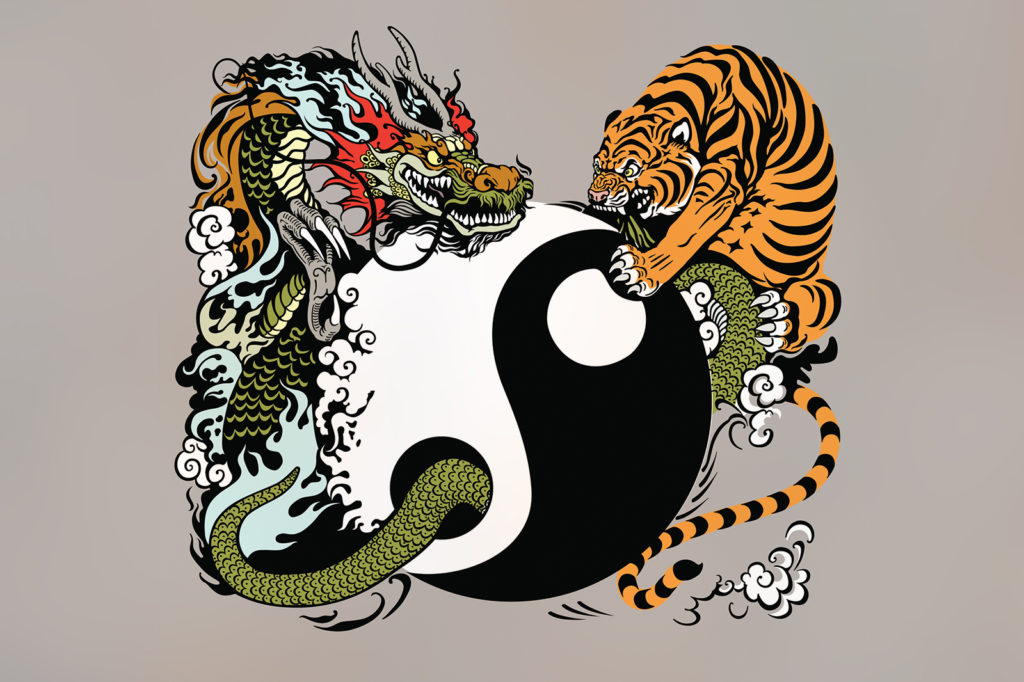
Globalization has radically altered the concept of diplomacy because now it is no longer a government-to-government deal, but a matter of opinion, culture and participation in the society. With this changing environment, states have turned to using more and more public diplomacy, rather than formal negotiations, to create perceptions, foster trust, and increase influence among strangers. Two giant Asian powers, China and South Korea have embraced unique but equally important models of public diplomacy in Pakistan, which can be appropriately described as the Dragon and the Tiger. Their methods can provide important lessons to Pakistan as it tries to maneuver in an intricate geopolitical context.
THE DRAGON’S APPROACH: INVESTMENT-DRIVEN PUBLIC DIPLOMACY IN CHINA
The public diplomacy that China experiences in Pakistan is an extension of its overall strategic, political and economic interests. Big-box projects in the last ten years with the China-Pakistan Economic Corridor (CPEC) as a flagship project of the Belt and Road Initiative (BRI) have put Beijing in the position of the most reliable partner of Islamabad. The transport networks, energy projects, and industrial areas have not only helped to develop the economy of Pakistan but have helped the image of China as a good ally who can provide visible outcomes. In the mind of an average Pakistani, there is a positive linkage with China as a result of the reduction in load shedding due to Chinese constructed power stations and better roads. It is this image of credibility that strengthens the confidence of the people and the leadership.
In-order to bolster its infrastructure outreach ,China has strategically invested in its cultural diplomacy. In major cities in Pakistan, there are Chinese language classes and cultural programs in Confucius Institutes. Pakistan also bilaterally exchanges thousands of scholarships with China to study in the country. The Chinese media, such as state-owned media like CGTN, has increased its Urdu-language coverage, and localized their content. The initiatives foster a positive image of the Chinese society, values, and governance. Nevertheless, it should be mentioned that some critics of Confucius Institutes in foreign countries have doubtingly regarded them as a tool of soft power regulated by the state. This criticism is downplayed in the context of Pakistan due to overwhelmingly visible and positive economic contributions of China. However, this consideration helps to make any sincere analysis stronger.
THE TIGER IN THE STRAIT: CULTURE-LED PUBLIC DIPLOMACY OF SOUTH KOREA
South Korea is a very different case study a country that is characterized more by cultural magnetism and not huge infrastructure investment. The popular culture of Korea, commonly known as the Hallyu or Korean Wave, has contributed to the public diplomacy of Seoul around the world. Bands like BTS and BLACKPINK, television shows such as Descendants of the Sun and Squid Game, movies, fashion, and even food have become a massive hit in Pakistan, especially among the youth in Pakistan, especially in urban areas. It is rumored on social media that fan communities are alive and well and courses in the Korean language in universities such as NUML and the University of the Punjab are becoming over-subscribed.
South Korea has been able to utilize this cultural excitement in fostering people to people relationships. Korean government provides scholarships like Global Korea Scholarship (GKS) which takes Pakistani students to Korean universities. In Islamabad, Lahore and Karachi regular cultural festivals, K-pop cover dance competitions, and Korean language contests are held. Korean-studying Pakistani alumni become informal ambassadors who share good experiences and help to build bilateral relationships. South Korea’s is a more society-based, grassroots model, unlike the state driven, top-down model of China, which uses emotional and psychological ties, and not quantifiable economic results.
PAKISTAN LESSONS: THE BALANCING OF THE DRAGON AND THE TIGER
The key distinction between the two approaches is in their approaches and priorities. China has a state-led investment-driven approach based on a concrete development product: roads, ports, power plants, and industrial zones. This is attractive to governments and policy makers and also to the ordinary people as they see the changes manifested in day to day lives. When a Pakistani commuter is driving on a Chinese-constructed motorway or is being fed power by a Chinese-funded plant he is connected instantly and physically.
Conversely, the strategy of South Korea focuses on culture, education and innovation. It invests in the creative industries and learning exchanges, which slowly influence the long-term perceptions. A Pakistani teenage boy who aspires to learn the Korean language to be able to read the lyrics of BTS without subtitles is engaging in the work of public diplomacy as well as a policy writer signing a trade agreement. The culture of South Korea bridges and creates common experiences as opposed to physical infrastructure. This in the long run builds goodwill which can be converted into tourism, educational cooperation and even economic cooperation.
To Pakistan, both strategies present good opportunities and lessons. The contributions of China can greatly enhance economic growth, better infrastructure and make the area more connected. The completed projects by CPEC have already contributed thousands of megawatts of electricity to the national grid of Pakistan and have provided employment. Nonetheless, relying on one partner is associated with risks, such as issues of debt sustainability and weak bargaining power. Albeit on a smaller scale, South Korea has opportunities to interact culturally, innovate technology and develop human capital. The emphasis of Korea on education, vocational training and creative industries may motivate Pakistan to invest more in its youth and culture.
It is important to strike a balance between these relations. Pakistan can implement a more diversified and resilient foreign policy framework by leveraging the economic potential of China and cultural and educational efforts of South Korea. This equilibrium minimizes the susceptibility to the strategic changes of one power and maximizes the unique advantages that each has. Pakistan does not have to decide between the Dragon and the Tiger but it can study both.
In addition, the two models exhibit the functioning of modern diplomacy in a connected world at multiple levels. Today, influence is not attained by economic power alone or political affiliations. It is also influenced by culture, ideas, education, and the opinion of the people. China demonstrates that trust is created through tangible results. South Korea demonstrates that emotional connection is inspirational and creates enduring affinity. Ideally, effective public diplomacy would entail both: the visible development victories as well as profound cultural resonance.
These two models are informative as Pakistan is attempting to fit into a world order that is undergoing tremendous change. Through emulating them, Pakistan will be able to empower its own approach towards public diplomacy and improve its image internationally. It may cease being a passive receiver of the outreach of others and become an active and critical actor in international relations- forging meaningful connections which transcends conventional diplomatic frames. By so doing, Pakistan will be respecting the fact that in the twenty-first century, the most successful countries are not just powerful but also convincing, relatable, and trusted. Both the Tiger and the Dragon in their own manner shine the way ahead.

Eman Khann
Emaan Khan is currently pursuing her bachelor's in international relations from Fatima Jinnah Women's University, Rawalpindi. Her areas of interest are governance, public policy, and foreign policy.


Leave a Reply