

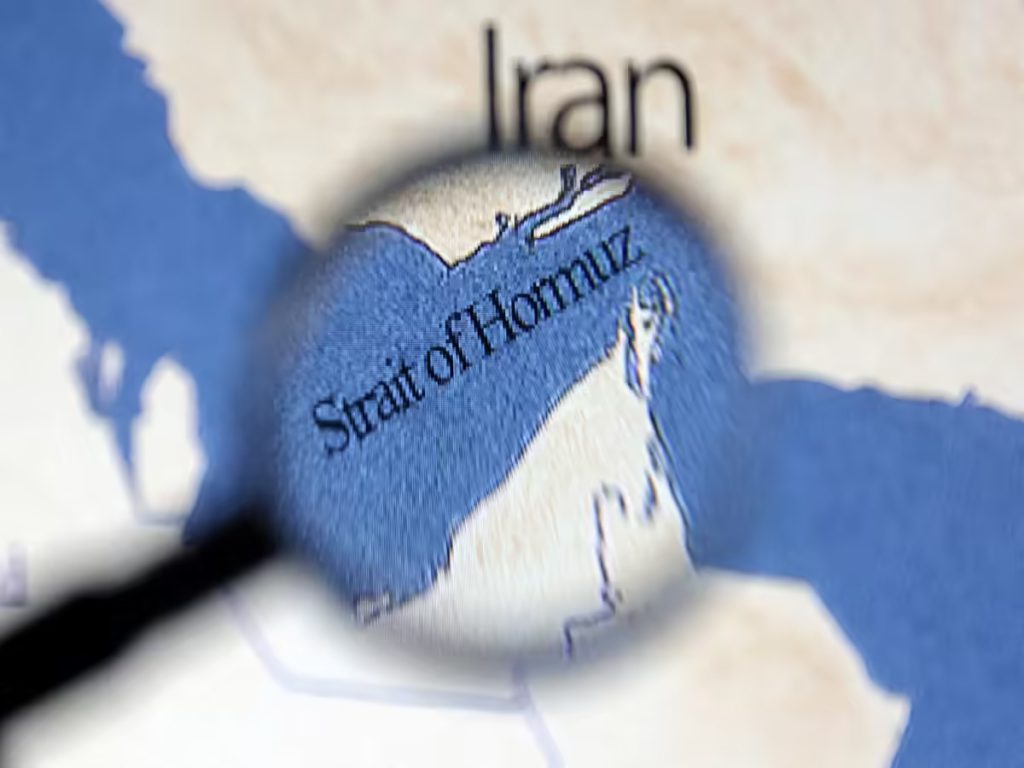
The initial missile passes through the Strait of Hormuz. There is a 20 percent entrapment of the traded oil in the world within hours. Tankers drop anchor. Insurance rates explode. And somewhere in Islamabad a planner understands there is the nightmare scenario.
The current war between Iran and Israel is a new focus on the most dangerous maritime chokepoint in the world. Iran has threatened the Strait of Hormuz, which is only 21 miles across at its narrowest point, since decades. In 2012, Tehran threatened to close the strait as retaliation to sanctions. In 2019, there were alarming mysterious tanker attacks. The unthinkable can no longer be unthinkable now that the missiles are flying between two belligerent parties. It is a conceivable circumstance.
The U.S. Energy Information Administration estimates that about 17 million barrels of oil are passed through Hormuz every day, which makes up about 20 percent of world petroleum consumption. Oxford Institute of Energy Studies modelled that a complete shutdown would take oil prices above 200 barrels per day within ten days and cause global recession within three months. Hormuz has been severally listed by the International Energy Agency as the most vulnerable point in the global energy supply chain.
But in this vulnerability there is another silent alternative. The Gwadar Port in Pakistan, which has been viewed as a failed Chinese project since time immemorial or a far off fantasy, is now the sole way out on land. The Iran Israel war has accomplished what years of diplomacy failed to achieve it has turned Gwadar into a conceptual Plan B into a strategic necessity.
The Hormuz Structural Vulnerability.
We need to be very specific and focused what is at risk. In addition to oil, the strait also carries almost a third of the global liquefied natural gas. Iran has shown the ability to launch mines, small boats swarming, antiship missiles and one way attack drones, which can even overwhelm the U.S. Fifth Fleet stationed in Bahrain. With Iran and Israel at war, the United States has to either take sides or not to engage in the war at all.
Rather than being only a choke point, Hormuz reveals deeper structural weakness. And the world is sorely lack of other choices.
Hormuz: A Critical Structural Vulnerability
Gwadar is located on the coast of Arabian Sea, about 400 kilometers west of the Strait of Hormuz, located in Pakistan. In contrast to all other major ports in the Gulf, Gwadar has a full overland network through the China-Pakistan Economic Corridor (CPEC). The port is connected with the Xinjiang province of China and, therefore, with Central Asia and the rest of the world by paved highways, railway lines and energy pipelines.
When loaded at Gwadar, no navy can interdict goods that have been unloaded. A truck train is vulnerable to security threats on the ground, yet it cannot be downed by a lone missile that is shot down a shipping route.
This is a practical reality with real consequences. As shown in Pakistani port authority statistics, there is a small amount of Chinese trade passing through Gwadar. The Middle East and African containers come to the port, are loaded into trucks and then shipped northwards to the Chinese border in about 10-15 days. A normal 45-60 days journey along the same sea route Hormuz to Shanghai is made possible under the normal conditions, and utterly invalid when there is a blockade.
Those figures are decisive in a Hormuz closure. Time becomes money. Certainty becomes gold. Gwadar offers both.
Addressing the Skeptics
No fair case in favor of Gwadar can disregard its major issues. Utilization of port is not high- Gwadar is currently serving only a tiny fraction of the cargo traversing Karachi or Port Qasim. The M-8 highway that links Gwadar with the national road system in Pakistan is incomplete in many areas. There is actual security concern in Balochistan and both separatist groups and Islamist militants are active in the region. And instability on the other side of the border in Afghanistan implies that the northern transit routes can be blocked without any prior notice.
Skeptics will also cite an even greater reason, the political instability of Pakistan. Governments change. Civil-military tensions persist. Corruption is real. Why would any sane shipper invest in Gwadar when Pakistan cannot be predicted?
This is necessary and justified question to consider. However the right framework is not the absolute risk, but relative risk. Will a truck convoy over Balochistan be more perilous than a tanker passing the Strait of Hormuz when Iran and Israel are trading missiles? The solution is not obvious. Chatham House study in 2024 shows that imperfect overland diversification makes system more resilient by reducing dependency on single sea route. Diversification has nothing to do with creating an ideal path. It is regarding risk aversion to one point of failure. Gwadar does not require being perfect. It just has to be viable.
What Pakistan Should Do Now
This opportunity is time bound and requires timely action. To have Gwadar prepared in time to counter another crisis, which will come, Pakistan needs to do it now. There are four steps that are necessary.
First of all, make Gwadar an energy security zone. This would expedite the process of clearing customs, security approval and visa processing of international shippers. A major hurdle is Bureaucratic inertia that needs to be cut. Second, finish the rest of the unfinished parts of the M-8 highway in 12 months. In case civilian contractors are unable to deliver, then use the military engineering corps. It is not just an ordinary development project. It is important for country’s security.
Lastly, conclude a neutral trade corridor agreement with Iran. Gwadar has to be operational even when Iran is at war with Israel. Pakistan requires Tehran to assure it that it will not attack infrastructure that is related to Gwadar. In its turn, Pakistan will be able to provide Iran with the guaranteed access to overland delivery of the Iranian non-military goods. Pakistan is unable to prevent a war between Iran and Israel. But it is able to make a road. And that highway can be the most useful infrastructure in the area.
Conclusion
The Iran-Israel conflict can be terminated in weeks or years. Nevertheless, the old moral will still be there. The Strait of Hormuz is a single point of failure of global economy. It is not a strategy to depend on it solely. It is gambling.
Gwadar is not just the port of Pakistan. It is a vital unwanted redundancy to world energy security. The question is not whether or not it will be used. The issue is whether it will be prepared at the time the missiles fly. Pakistan has little time to respond to that question. It should start today.

Bisma Yaqoob
Bisma Yaqoob is currently pursuing her bachelor's in international relations from Fatima Jinnah Women's University, Rawalpindi. Her areas of interest are governance, public policy, and foreign policy.


Leave a Reply