
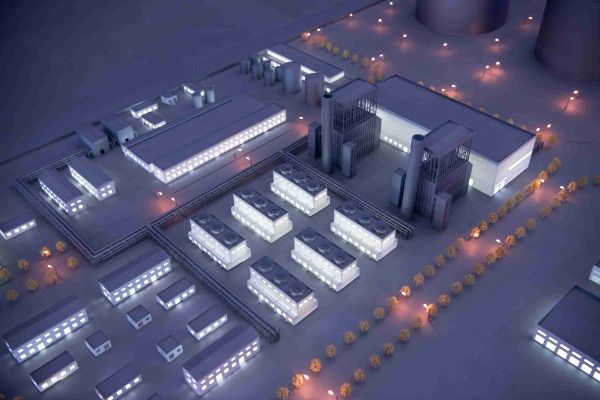
Vertiv has identified artificial intelligence (AI), digital twins, and advanced liquid cooling technologies as the primary forces redefining the design, deployment, and operation of next-generation data centers, according to its newly released Vertiv™ Frontiers report.
The report examines how accelerating AI adoption, combined with increasing compute density and rapid deployment requirements, is fundamentally transforming global data center infrastructure—trends that are becoming increasingly relevant for the UAE and wider Middle East, where large-scale digital transformation and AI investments are underway.
AI Workloads Driving Structural Change
Vertiv notes that AI and high-performance computing (HPC) workloads are placing unprecedented demands on power and thermal management systems. Traditional hybrid AC/DC power architectures are reaching their operational limits as rack densities increase, prompting a gradual shift toward higher-voltage DC power systems that offer improved efficiency, reduced conversion losses, and greater scalability.
“The data center industry is rapidly evolving to address the density and speed requirements of AI-driven facilities,” said Scott Armul, Chief Product and Technology Officer at Vertiv. He emphasized that advanced power architectures and liquid cooling solutions are becoming critical enablers of gigawatt-scale AI deployments.
Distributed AI and Sector-Specific Requirements
The report further highlights the emergence of distributed AI environments, particularly in regulated sectors such as defence, finance, healthcare, and government. In these domains, organizations often require private or hybrid data center infrastructure to meet data sovereignty, security, and latency requirements.
Vertiv assesses that flexible, modular power and cooling solutions will be essential to support both new data center developments and the modernization of existing facilities—an area of growing importance across the Gulf region.
Energy Autonomy and Infrastructure Resilience
Energy availability and grid constraints are identified as major challenges influencing future data center planning. As a result, Vertiv points to the growing adoption of energy autonomy strategies, including on-site power generation, microgrids, and “Bring Your Own Power and Cooling” models.
These approaches are increasingly viewed as necessary to ensure resilience and operational continuity for AI-intensive data centers, particularly those supporting mission-critical workloads.
Digital Twins and Intelligent Cooling Systems
The Vertiv™ Frontiers report underscores the role of digital twin technology in accelerating deployment timelines and improving operational efficiency. By enabling virtual design, integration, and testing, digital twins allow data centers to be deployed as prefabricated, modular units—reducing deployment time by up to 50 percent.
In parallel, adaptive liquid cooling is emerging as a mission-critical capability for high-density environments. AI-enabled monitoring and predictive analytics are expected to enhance cooling system reliability, optimize performance, and protect high-value computing assets.
Strategic Implications for Global and Regional Markets
Operating in more than 130 countries, Vertiv delivers power, thermal management, and IT infrastructure solutions to data centers, communication networks, and industrial facilities worldwide. The company’s findings highlight how AI is not only transforming digital services, but also redefining the infrastructure foundations required to support national digital economies.
As demand for AI-ready data centers continues to rise, Vertiv positions advanced power architectures, digital twins, energy autonomy, and intelligent liquid cooling as essential components of future-proof digital infrastructure.

Leave a Reply