

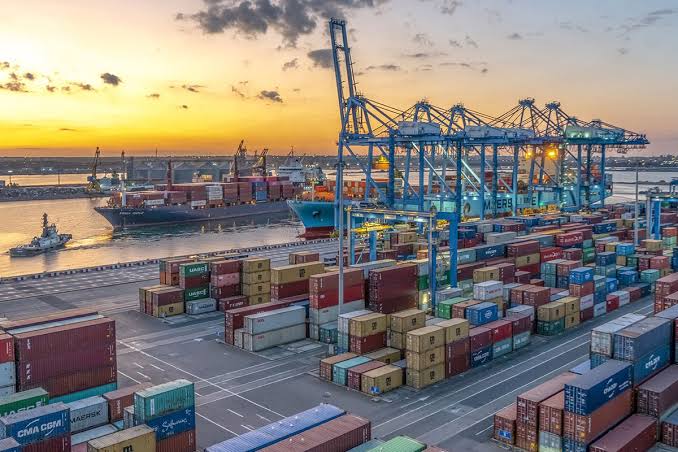
Jebel Ali is more than one of the world’s largest ports. It is a critical node connecting global trade, Gulf economic strategy, energy flows, manufacturing, logistics, and regional security.
Located in Dubai, the Port of Jebel Ali sits between Asia, Africa, and Europe, giving the United Arab Emirates a powerful position along some of the world’s busiest maritime trade routes. Its importance comes not only from the volume of cargo it handles, but from the wider logistics and industrial ecosystem built around it.
A Gateway Between Asia, Europe, and Africa
Jebel Ali’s geography is one of its greatest strategic advantages.
The port lies close to major shipping routes linking Asian manufacturing centers with markets in the Middle East, Africa, and Europe. Cargo moving from China, India, Southeast Asia, and other Asian economies can enter Jebel Ali before being redistributed across the Gulf and beyond.
This has made Dubai an important transshipment and re-export hub.
Rather than serving only the UAE economy, Jebel Ali functions as a regional distribution center. Goods arriving by sea can be stored, processed, repackaged, or transferred before continuing to destinations across the Middle East, Africa, Central Asia, and Europe.
The Port Is Part of a Much Larger Logistics Ecosystem
Jebel Ali’s strategic importance cannot be understood by looking at the port alone.
The surrounding infrastructure includes Jebel Ali Free Zone, or JAFZA, industrial facilities, warehouses, logistics companies, road networks, and connections to Dubai’s wider transportation system.
JAFZA allows international companies to establish regional operations close to one of the Gulf’s most important ports. This creates a system in which shipping, manufacturing, storage, distribution, and trade services are concentrated within the same economic zone.
The result is an integrated logistics platform that reduces the time and cost required to move goods through the region.
Jebel Ali Supports Dubai’s Role as a Global Trade Hub
Dubai’s economic model has long depended on connectivity.
Unlike economies that rely mainly on domestic consumption or natural resources, Dubai developed itself as an intermediary between markets. Ports, airports, free zones, financial services, tourism, and logistics became central pillars of this strategy.
Jebel Ali is one of the foundations of that model.
The port allows Dubai to participate in global supply chains far beyond the size of its domestic market. Companies can use the emirate as a regional headquarters, warehousing center, manufacturing base, or redistribution point.
This strengthens Dubai’s position as a commercial bridge between East and West.
Why Jebel Ali Matters to Global Supply Chains
Modern supply chains depend on a small number of highly connected ports.
Jebel Ali is important because it combines container handling capacity with access to regional consumer markets, industrial zones, air cargo networks, and international shipping services.
For businesses, this creates flexibility.
A company can import components through Jebel Ali, assemble or modify products inside the free zone, and then export them to another market. Companies can also maintain regional inventories in Dubai rather than shipping every order directly from Asia or Europe.
That makes Jebel Ali particularly valuable for industries that depend on fast distribution and predictable logistics.
The Dubai Logistics Corridor Adds Another Layer
One of Jebel Ali’s most significant advantages is its connection with Al Maktoum International Airport and the broader Dubai South logistics network.
The concept is simple: cargo can arrive by sea, move through a nearby logistics corridor, and then continue by air.
This sea-air connectivity can significantly reduce delivery times compared with traditional maritime shipping while remaining more economical than transporting the entire shipment by air.
For time-sensitive goods, high-value products, spare parts, electronics, pharmaceuticals, and other specialized cargo, this connectivity gives Dubai an important competitive advantage.
Jebel Ali and UAE Economic Diversification
The UAE has spent decades reducing its dependence on hydrocarbons by expanding sectors such as logistics, aviation, finance, manufacturing, technology, tourism, and international trade.
Jebel Ali is central to this diversification strategy.
The port enables industrial production and international commerce while attracting multinational companies into the UAE. It also supports downstream economic activity, including warehousing, shipping services, maintenance, distribution, and manufacturing.
This means that Jebel Ali contributes not only through port revenues but also by supporting a much broader commercial ecosystem.
A Strategic Industrial Base
The area surrounding Jebel Ali has also developed into an important industrial center.
Companies operating near the port can import raw materials and machinery, manufacture or assemble products, and then export them through the same logistics network.
This is particularly valuable for sectors such as metals, chemicals, automotive products, food processing, electronics, machinery, and construction materials.
For the UAE, such industrial activity helps strengthen domestic production capacity while increasing the country’s role in regional supply chains.
Why Jebel Ali Matters for Energy Trade
The Gulf remains one of the world’s most important energy-producing regions.
Although Jebel Ali is primarily associated with containerized and commercial cargo, its broader location within the Gulf gives it strategic relevance to energy-related trade and industrial activity as well.
Equipment, machinery, spare parts, petrochemical products, and industrial supplies used across the Gulf can move through the port and its logistics ecosystem.
This reinforces Dubai’s wider role as a commercial support center for energy-producing economies across the region.
A Critical Link to African Markets
Africa is becoming increasingly important to Gulf economic strategy.
The UAE has expanded commercial, logistics, investment, and infrastructure relationships across the continent. Jebel Ali provides an important platform for supporting those ties.
Goods from Asia and elsewhere can be consolidated in Dubai before being shipped to African markets. At the same time, companies operating across Africa can use Dubai for financing, distribution, procurement, and regional management.
This gives the UAE an important intermediary role between Asian manufacturing centers and African consumer markets.
The Role of DP World
Jebel Ali is also strategically important because of its relationship with DP World, one of the world’s major port and logistics operators.
DP World’s international network gives the UAE influence across a much wider logistics system involving ports, terminals, warehouses, freight corridors, and supply-chain services.
Jebel Ali therefore functions not simply as an isolated port, but as the home base of a global logistics network.
This creates commercial advantages for Dubai while also increasing the UAE’s importance within global supply chains.
Strategic Importance During Supply-Chain Disruptions
Recent global disruptions have demonstrated how vulnerable international trade can be to war, maritime insecurity, port congestion, sanctions, pandemics, and political tensions.
In such an environment, large logistics hubs become even more strategically important.
Jebel Ali offers companies the ability to maintain inventory close to major markets and redirect shipments when disruptions occur elsewhere.
Its scale and connectivity make it an important resilience hub for regional trade.
Jebel Ali and Regional Security
Major ports are economic assets, but they are also strategic infrastructure.
A disruption at Jebel Ali could affect shipping, trade, industrial production, food supply chains, commercial inventories, and regional distribution networks.
Protecting the port therefore forms part of the UAE’s wider national security architecture.
Maritime security in the Gulf, freedom of navigation through the Strait of Hormuz, protection against drones and missiles, cyber resilience, and critical-infrastructure security all have implications for Jebel Ali.
This demonstrates how closely economic security and military security are connected in the Gulf.
Why the Strait of Hormuz Still Matters
Jebel Ali is located inside the Gulf, meaning maritime access ultimately depends on vessels passing through the Strait of Hormuz.
The strait connects the Gulf with the Arabian Sea and the wider Indian Ocean.
Any major disruption to maritime traffic through Hormuz could therefore affect Jebel Ali and other Gulf ports.
This geographical reality explains why freedom of navigation, regional stability, and maritime security remain core strategic interests for the UAE.
More Than a Port
Jebel Ali’s importance ultimately comes from the combination of several factors:
- Strategic geography between Asia, Africa, and Europe
- Large-scale maritime infrastructure
- Integration with Jebel Ali Free Zone
- Strong road, air, and logistics connectivity
- Access to regional consumer markets
- Support for manufacturing and re-export activity
- Connections with DP World’s international network
- Importance to UAE economic diversification
- Growing links with African and Asian markets
Together, these factors make Jebel Ali much more than a container terminal.
The Bigger Picture
Jebel Ali illustrates how infrastructure can become an instrument of national power.
The UAE does not need to control major global manufacturing centers to play an important role in international trade. Instead, it has built infrastructure that connects producers, consumers, logistics companies, investors, and markets.
That connectivity creates economic influence.
As global trade becomes increasingly shaped by geopolitical competition, supply-chain diversification, maritime insecurity, and the search for reliable logistics corridors, Jebel Ali’s strategic importance is likely to remain significant.
For Dubai and the wider UAE, the port is therefore not simply a commercial asset. It is a pillar of the country’s economic model, regional connectivity, and long-term strategic position.


Leave a Reply