

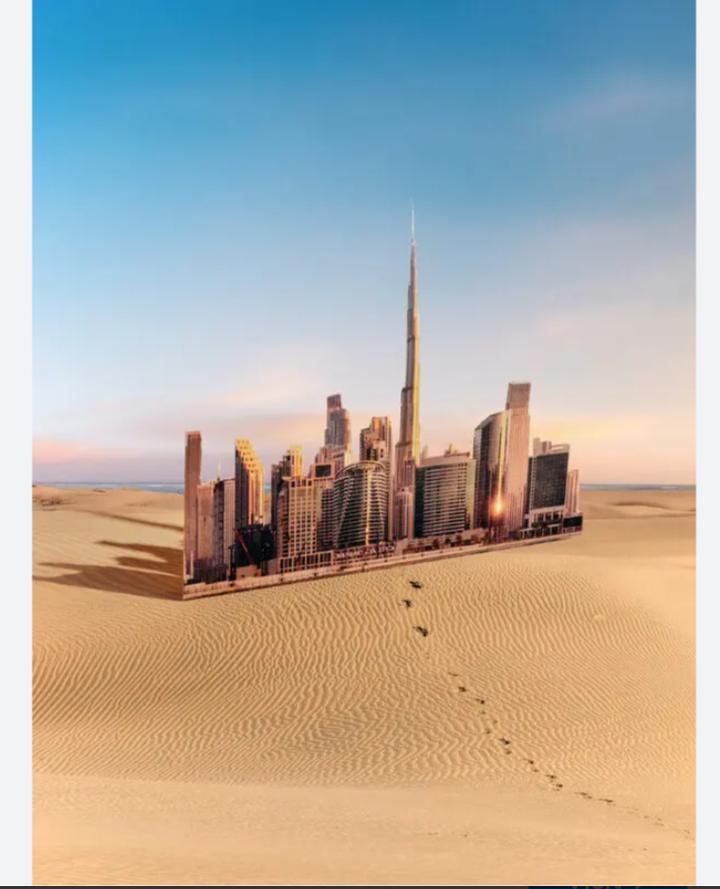
We sometimes pay too much attention to power and too little to vision. For a long time, many nations with big militaries, ancestral heritage and long histories took their global influence for granted. Meanwhile, a desert country proved them wrong. The United Arab Emirates did not start with a legacy of world power, nor with the benefits of large population or geography. But now it is attracting attention in business, diplomacy, tourism, climate and the international media. That is not luck. That is strategy, hard work and vision.
Still many affiliates United Arab Emirates with oil producing country and high-buildings. This is one of the most obsolete attitude of the 21st century. Oil may have been used to start the journey, but oil never makes countries great. There are a lot of resource countries that are still poor, unstable and dependent. Without strategy Resources dissipates. Resources without transparency create corruption and misconduct. Resources without a perception create pause in progress. The UAE took the other route. It made the best of its natural resources, but did not limit itself to them. It created ports, airports, cities, theme parks, universities, clean cities and partnerships while others languished in political uncertainty
The UAE got it right when many countries still don’t understand that we live in a world where trust is currency. If a country wants to attract money, it should make its environment attractive to investor. Country can earn a lot of money from tourism. For this, it should presents its security situation in a positive way. Along with this if we want business should remain in our country, it needs strong rules and regulations should be implemented .The UAE got this right.
The most adventurous symbol of this accomplishment is Dubai. It has been criticized as being artificial, but this is wrongheaded. Dubai is not artificial, it is planned. All great cities were created by human ambition, innovation and risk. New York, Singapore, and London have been built by man. Other cities took centuries, but Dubai built it in couple of decades. . It transformed a desert trading post into a tourism, financial, logistics and business hub. That should not be ridiculed.
Meanwhile, Abu Dhabi exuded a different kind of power, one that was more measured, less showy. The well-presented and meaningful educational institutes, art galleries, cultural centers, fiscal strength and external investment helps to project its dynamic image to show the world. Because of Dubai and Abu Dhabi, UAE transform its style. Disciplined nation with ambitions, value tradition with a modern substance. A nation that many would envy.
But the UAE’s real strength is public diplomacy. Governments still tend to view diplomacy as speeches, handshakes and meetings. This is because the UAE knows that diplomacy is experiential. When millions of people travel, work, study, invest or participate in global events in the UAE, they do not just read or hear about it they experience it. This has a greater impact than direct marketing. UAE marketing skills has another level. A tourist who visits and feels welcome in a country becomes a brand ambassador. A entrepreneur who got platform to deliver idea promotes country image worldwide. Expo City Dubai is a great example of UAE diplomatic strategies. From around the globe, innovators participated and promoted their ideas. In return they portray UAE soft, peaceful and welcome image around the world.
While some countries are telling the world what to do, the UAE is inviting it. UAE focuses on action, rather than just debating. While others were trapped under ideologies, UAE focuses on real conditions. This is how it climbed more quickly than others thought possible. It made itself a bridge between the East and West, the North and South, the developed and emerging economies. UAE took a great advantage, being a connector in a fragmented world.
Admittedly, no nation is perfect. Rapid growth creates pressure. National identity must be protected. Labor systems must continue improving. Regional tensions remain a challenge. But criticism should be fair. In some nations which have weak governance system, unfairness, disparity exists and limited opportunities are not examined properly because they accepted the failure. The UAE is sometimes judged more critically because it is a success story.
The UAE may have won a psychological war. UAE bring new interpretation for smaller states. Earlier smaller states believed they had only three options to survive in a polarized world like reliance on others, anarchy and economic slowdown. The UAE added a fourth choice strategic proficiency. UAE give confidence to smaller nations that if you are productive, effective, credible, goal oriented and visionary you can matter and succeed. That lesson is important not just in the Gulf, but in Asia, Africa, and all emerging parts of the world looking for a better way to gain influence.
In a world of hyperbole, the UAE did what it said it would. It developed airports that work, it brought people and jobs, it thought long term, it invested in technology and it kept up its diplomacy. And that is the real influence. Let’s face it, many older, bigger, and wealthier countries should be ashamed that a country once a “just desert” became the symbol of success and quality.
The United Arab Emirates is a great example of effective public diplomacy in today’s world. It has improved its international standing through effective nation branding, cultural marketing, international events, humanitarian efforts and global connectedness. UAE adopts soft power rather than using hard power. They build trust, partnership and attract the international audience which help them to shape their image as a peaceful and progressive nation. They focuses on long term engagement with the international community. This has enabled it to become a respected global player. But there are still criticisms and problems, which need improvement and transparency. In short, the UAE demonstrates how small countries can become global players through successful public diplomacy.

Hamna Noor Sadaqat
Hamna Noor Sadaqat is currently pursuing her Bachelors in International Relations from Fatima Jinnah Women University, Rawalpindi. Areas of interest are South Asian strategic stability, diplomacy, soft power, nuclear deterrence.
Leave a Reply