

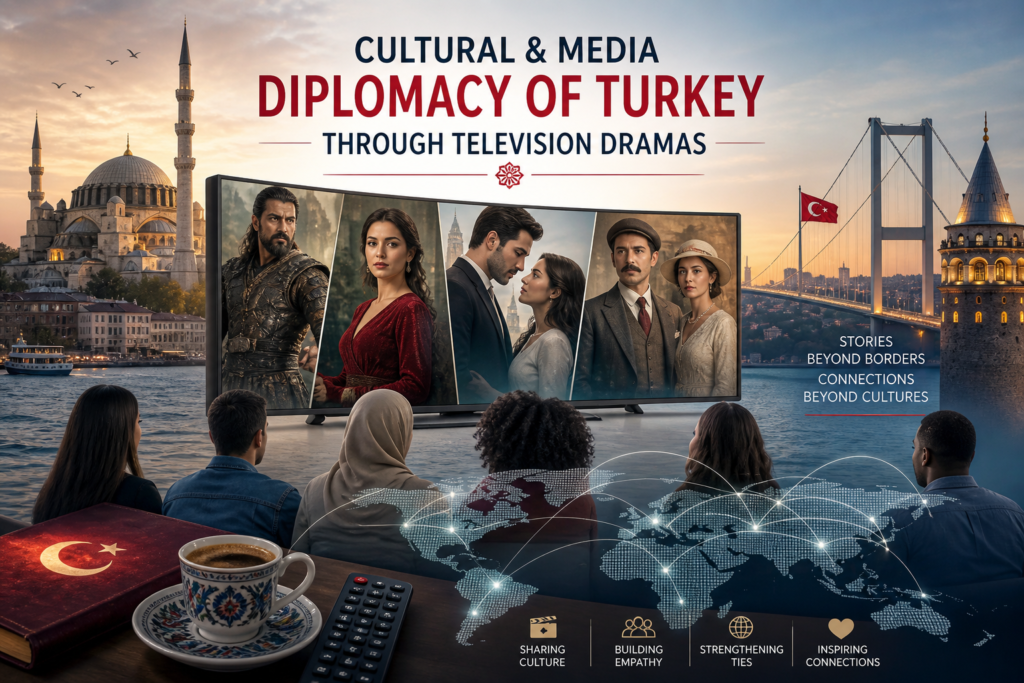
Today, power is no longer only about military strength or economic control. Countries are now using culture to influence others in a more indirect but effective way. This idea is known as soft power, a term introduced by Joseph Nye. Instead of forcing influence, soft power works by attracting people and shaping their opinions. A strong example of this can be seen in how Turkey uses its television dramas over the last twenty years, Turkish dramas have grown from simple local shows into something much bigger. They are now watched in many countries and have become a global trend. These dramas have helped change how people around the world see Turkey. Without directly talking about politics, they create a positive image through storytelling.
One of the main reasons for their success is their emotional connection with the audience. Turkish dramas focus on topics like love, family, trust, betrayal, and ambition. These are things that people everywhere can relate to. When viewers watch these dramas, they feel connected to the characters and their struggles. It does not feel like they are watching a foreign show. Instead, it feels personal and real. This emotional attachment plays a big role in making the dramas successful.
Another important point is how Turkish culture is shown in these dramas. They often highlight family values, respect for elders, and strong relationships. Many scenes show large family gatherings, emotional conversations, and support between family members. At the same time, these dramas also show modern life, busy cities, and changing lifestyles. This mix of tradition and modernity makes Turkey look balanced and relatable. For people in countries like Pakistan and others in South Asia and the Middle East, this feels very familiar. Historical dramas have also played a big role in spreading Turkish influence. Shows like Dirilis: Ertugrul and Muhtesem Yuzyıl have become very popular worldwide. These dramas show the history of the Ottoman Empire in a dramatic and engaging way. They focus on leadership, bravery, and strong values. Many viewers, especially in Muslim countries, feel a deep connection to these stories. They remind people of a shared history and create a sense of pride.
The reach of Turkish dramas is very wide. They are broadcast in more than 150 countries and translated into many languages, including Urdu, Arabic, Spanish, and English. In Pakistan, Turkish dramas have gained huge popularity. Sometimes they are even more popular than local shows. This proves that good storytelling can cross language and cultural barriers. People are willing to watch content from another country if it feels meaningful and interesting.
These dramas have also brought economic benefits to Turkey. One clear example is tourism. Many people who watch these dramas become interested in visiting the places they see on screen, such as Istanbul and other beautiful locations. As a result, tourism in Turkey has increased. People want to experience the culture and places in real life.
At the same time, Turkey’s entertainment industry has grown a lot. The quality of production has improved, with better acting, strong scripts, and high-quality visuals. Turkey has now become one of the leading exporters of television content in the world. Actors and producers have gained international recognition, and they represent Turkish culture globally. Another important thing about Turkish dramas is how they influence people in a subtle way. They do not directly promote political messages. Instead, they focus on storytelling. This makes the message more natural and acceptable. When people develop positive feelings for the characters, they also start to feel positive about the country. This kind of influence is stronger because it does not feel forced.
However, there are also some criticisms. Some people believe that Turkish dramas show an ideal version of society that is not completely real. They often focus on beauty, wealth, and dramatic situations. Others say that historical dramas sometimes present a one-sided view of history or make the past look more perfect than it was. These points show that media is not always neutral and can reflect certain ideas. Despite these criticisms, the overall impact of Turkish dramas is still very positive. They have helped make Turkey more visible and understandable to people around the world. Even when countries have political differences, cultural connections can still bring people closer. These dramas help build that connection. Another interesting effect is how these dramas influence daily life. In some countries, people have started following Turkish fashion styles, using Turkish words, and even copying wedding traditions. Some people name their children after famous characters from these dramas. This shows how strong the influence of media can be in real life.
Turkish dramas have also opened discussions about social issues, especially about the role of women. Many dramas show strong female characters who are independent, educated, and confident. They work, make decisions, and stand up for themselves. At the same time, family values remain important, which keeps the stories balanced and relatable. This allows the dramas to connect with both modern and traditional audiences.
The growth of digital platforms has made Turkish dramas even more popular. People can now watch them anytime through streaming services. Social media has also helped in spreading their popularity. Fans from different countries share their opinions, discuss episodes, and connect with each other. This creates a global community around Turkish content.
Turkey’s success in using television dramas as a tool of influence gives an important lesson. It shows that countries do not always need strong military power or huge wealth to make an impact. Creativity, storytelling, and understanding people’s emotions can be just as powerful.
In today’s world, people are more open to learning about different cultures. Television and media give them an easy way to do this. By watching dramas, people can understand another country’s traditions, values, and lifestyle without even visiting it. This helps reduce misunderstandings and builds a sense of connection between different societies.
In conclusion, Turkish television dramas are a strong example of soft power in action. They have entertained millions of people while also shaping opinions, building cultural connections, and supporting economic growth. Even though there are some criticisms, their overall influence remains strong and positive.
At the end of the day, these dramas remind us of something very simple. Influence does not always come from power or control. Sometimes, it comes from telling stories that people truly understand, feel, and remember.




Leave a Reply