

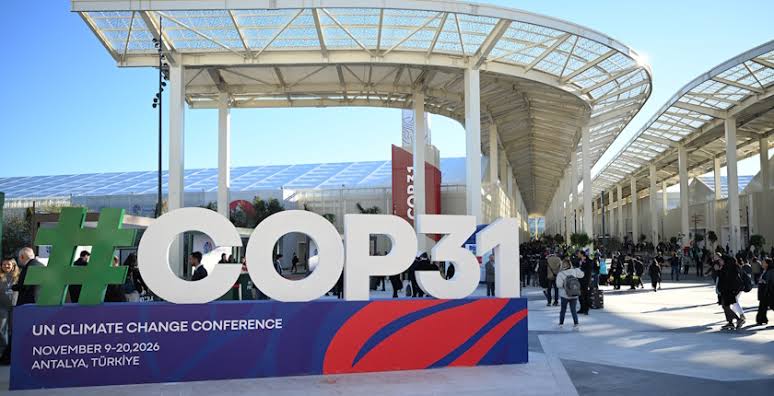
COP31 is being held in Antalya, Türkiye, from 9 to 20 November 2026. Climate summits have a habit of making big promises and leaving the follow-up to the next summit. So before asking what COP31 can do for nuclear energy, it is fair to ask what happened to last year’s promises.
What happened to COP30’s promises?
The record so far is mixed. The Belém summit’s main promise was to triple adaptation finance by 2035 and mobilise $1.3 trillion a year for climate action. That deadline is still nine years away, so it is too early to call it a failure. But the history is not encouraging. A pledge from COP26 to double adaptation funding by 2025 was missed. Even if the new target is met, it would cover only 20 to 29 per cent of estimated needs.
The biggest disappointment was fossil fuels. More than eighty nations backed a roadmap, but the final decision did not mention fossil fuels at all. The idea survived only as a voluntary effort. A first conference on the transition away from fossil fuels was then planned in Santa Marta, Colombia, and it was held in April. The presidency has said the roadmap will be presented at COP31.
There were real steps too. 122 countries presented new national climate plans at COP30. The tropical forests fund was launched with an initial 5.5 billion US dollars. So the process moved forward, while the money and the hard decisions mostly did not.
What COP31 can bring for nuclear energy?
Nuclear has the same problem as every COP30 promise. The pledge to triple capacity by 2050 now has 39 supporting countries, up from 22 at COP28. But signatures do not build reactors. Reactors take a decade or more, so decisions on sites, designs, finance and workforce must be made by 2030.
COP31 can help in three practical ways.
First, it can link nuclear to the fossil fuel debate. This is the strongest argument available. Countries cannot be asked to move away from coal and gas unless they are told what will replace them. Renewables will do much of the work, but electricity demand is expected to rise by around 40% by 2035, and grids need steady power. Nuclear can supply that, along with heat for heavy industry. A fossil fuel roadmap without a firm-power plan is only half a roadmap.
Second, it can push for cheaper finance. Nuclear plants cost a lot upfront, and poorer countries pay more to borrow. If banks and governments are serious, COP31 is the place to announce funding terms that developing countries can actually use. Otherwise tripling will remain a rich-country goal.
Third, it can support newcomer countries. Türkiye is about to start its first plant and is a useful host for this. Countries starting from zero need independent regulators, trained people and public trust. The more than 650 million people who still lack reliable electricity are the ones who gain most if this works.
COP31 will be judged by whether it avoids what happened in Belém. A strong result would be named financing deals, dates for new projects, and training programmes for newcomer states. A weak result would be another declaration with more signatures and no money behind it.
For Pakistan, the lesson is simple. Nuclear energy can strengthen energy security and bring stable power to ordinary households, but only if promises turn into projects. COP30 showed how easily they do not.

Hira Bashir
Hira Bashir is an Associate Research Officer at the Center for International Strategic Studies, Azad Jammu & Kashmir. Her research focuses on the peaceful uses of nuclear technology. She can be reached on X at @HiraBK5090 and on Linkedln Hira Bashir



Leave a Reply