

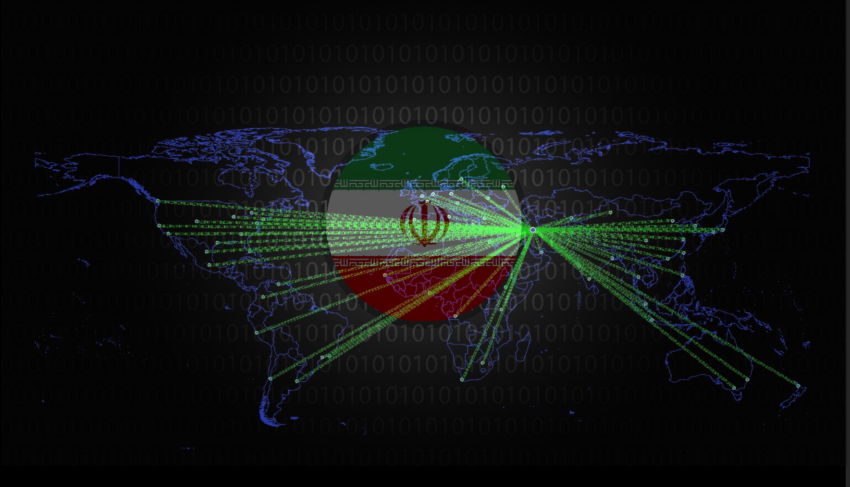
More than two millennia ago, long before the invention of the internet, smartphones, or social media, the Chinese military strategist Sun Tzu warned that the greatest weapon in war was not force alone but deception, perception, and strategy. In ‘The Art of War,’ he famously wrote:
“All warfare is based on deception.” Sun Tzu
The domain of conflict had been completely transformed from traditional conventional war to hybrid and information warfare. Now wars are not only fought with missiles, tanks, or large numbers of troops, but also through mobile phones, technology, and social media. One of the most relevant and recent examples is the Iran-Israel confrontation, where even before the war started, the main agenda of each side was to shape public opinion, influence political decisions and weaken the morale of the opponent.
Information warfare refers to changing people’s minds, ideas and perspectives using technology, media, information or psychological operations to achieve strategic or political goals. Different ways like official statements, social media post and news are used by state to promote their ideologies and weaken the adversaries. By a single click misinformation, and propaganda can be spread across millions of people at a time, and this doesn’t stop with the end of military operations.
The contest for influence, however, extends far beyond social media and official statements. Over the past two years, Iran and Israel have been in persistent conflict using covert methods such as sabotage, targeted assassination, a bunker in Beirut, a guesthouse in Tehran,n and even a machine gun smuggled into Iran in pieces to target officials. Israel is more focused on weakening them psychologically, making them lose their confidence and making them feel that nowhere is beyond their reach. One of the most striking examples was the assassination of nuclear scientist Mohsen Fakhrizadeh in 2020 through a remotely controlled automated machine operated from a distance. In September 2024, thousands of pagers used by Hezbollah operatives exploded across Lebanon. Although Israel never officially claimed responsibility, the demonstration of the attack clearly shows the capabilities of Israeli intelligence. Such operations are carried out to weaken rivals’ confidence and to create a sense of insecurity.
Israel’s campaign against Iran didn’t end here. In June 2025, they launched Operation Rising Lion, a twelve-day military campaign that combined air strikes, sabotage and intelligence operations into a single coordinated attack on Iran. Israeli forces struck nuclear facilities including Natanz, missile production and storage sites, military headquarters, air defense systems and command and control infrastructure. This operation showed the deep extent of Israeli intelligence penetration inside Iran, demonstrating that Israel had gathered critical information before the first strike.
All of these attacks clearly show how a nation can be weakened by killing its leaders and the mental disturbances the people of the country have to endure. Executing these types of attacks requires months of planning to decide the right place and time. This highlights how important information has become nowadays: after an attack, building a narrative becomes as important as the attack itself. Each side portrays itself as a victim and blames the other one. For instance, Israel perceives any regional developments as a threat to its national security and justifies its operations. These operations do not only have physical consequences but also, they create fear, anxiety, trauma and insecurity among the people. In modern era, stopping the spread of misinformation and building public perception has become as difficult as winning a war.
The impacts on Iran were beyond the battlefield. The death of senior military leaders and nuclear experts raised some serious concerns about Iran’s security and counterintelligence system, forcing it to reorganize its command structure during the conflict. Internally, surveillance and security measures were increased to find out the culprit present inside area. These attacks also increased nationalism and public support for the government. Across the region, the operation further weakened Iran’s influence and raised doubts among its allies about its capacity to protect itself.
Information warfare has also changed the meaning of strategic success by having more influence in international media, gaining public support, weakening the enemy’s morale, and dominating the narrative have become as important as winning a war.
The role of information warfare is no longer limited to one region; it has spread across the world. All states are seeing information warfare as a central part of modern conflicts. Now they are modernizing their cyber capabilities, intelligence gathering, strategic communication, and social media monitoring. Many countries have set up dedicated institutions to track misinformation or disinformation, for example, National Cybersecurity and Information security agencies in countries like the United Kingdom and the US. Scholars and politicians made this point before the current wave of conflict.
“The supreme art of war is to subdue the enemy without fighting.” Sun Tzu
The quote clearly shows that the best way to achieve victory is without even starting a war. A very suitable example of this can be seen around 2010: instead of bombing Iran, which was building nuclear weapons, the US and Israel used a different approach. Stuxnet virus was penetrated in their system which made the enrichment of uranium too fast. While this was happening, Iranian computers were showing a normal pattern, so they had no idea that anything was wrong.
From all the examples given above – the pager attacks, the killing of Mohsen Fakhrizadeh and the Stuxnet attack- the same conclusion can be made: wars today are fought not only with guns and missiles but also with information. From Operation Rising Lion, the importance of spying and gathering secret information to fight a war in today’s world becomes clear. Another lesson we can learn is that killing a state’s supreme leader doesn’t stop the nation; it may increase nationalism, and the system keeps running to counter future difficulties. Every post, video and image showed a different story about the war. This proves that protecting information and keeping the trust and loyalty of one’s own people is as important as building missiles.




Leave a Reply