

For decades, the confrontation in the Middle East was not characterized by open conflicts between nation-states, but instead by a continual, vague struggle carried out in the shadows. This method of conflict, also known as “Grey Zone” warfare, consisted of state actions that were intentionally structured so as not to exceed the threshold of full-scale war while achieving strategic, political, and military objectives. The tensions involving the U.S., Iran, and Israel provided a clear example of this behavior. Although both Washington and Tel Aviv were vastly superior in conventional military capabilities, they continued in a cycle of proxy attacks, covert operations, and Strategic Ambiguity, which prevented effective deterrence based upon exact and defined “red lines”. After many years of Grey Zone operations, they reached a climax and were transformed into overt conflict in February of 2026.
The roots of Grey Zone conflict in the Middle East began with the Islamic Revolution of 1979, in which Iran was christened as a revisionist power committed to the overthrow of U.S. and Israeli influence. Instead of pursuing its objectives through direct confrontation with the U.S. and Israel, Iran developed indirect means of pursuing its objectives through the establishment of a proxy network including Hezbollah in Lebanon, Hamas in Palestine, the Houthis in Yemen, and various Shia militias in Iraq and Syria. Iran has been able to project power on multiple fronts while maintaining a degree of plausible deniability, an approach shaped by the trauma of the Iran–Iraq War of the 1980s, which killed nearly a quarter-million Iranians and instilled a determination to never again endure conventional war.
Iran’s grey-zone approach encompassed various key elements: combining tactical flexibility with strategic uniformity; utilizing (sometimes relying on) ambiguity and time, and calibrating escalation to create costs for adversaries without prompting a decisive retaliation by them. The proliferation of drone technology, missile capabilities, cyber-attacks and maritime pressure tools heralded a new phase of confrontation beyond that applicable to traditional warfare. The strategic significance of the Strait of Hormuz provided further corroboration of this concept. The direct military engagement required to shut down one of the most important energy chokepoints in the world would cause economic anxiety, disrupt global markets, and increase inter-state pressure, all while achieving Iran’s goal of imposing long-term strategic costs on adversaries, and at the same time avoid direct engagement with them.
Israel has developed its own grey-zone approach through the “Campaign Between the Wars” doctrine, carrying out hundreds of covert military operations against Iranian targets throughout Syria and Lebanon to degrade Iran’s ability to carry out and support acts of aggression without provoking a full-scale war. In January 2020, the US execution of Qasem Soleimani was another illustration of the grey-zone approach’s effectiveness and its limitations. Both countries have experimented with different abilities to probe and exert pressure, and although the deterrent architecture strained, it has yet to lead to a larger scale conflict.
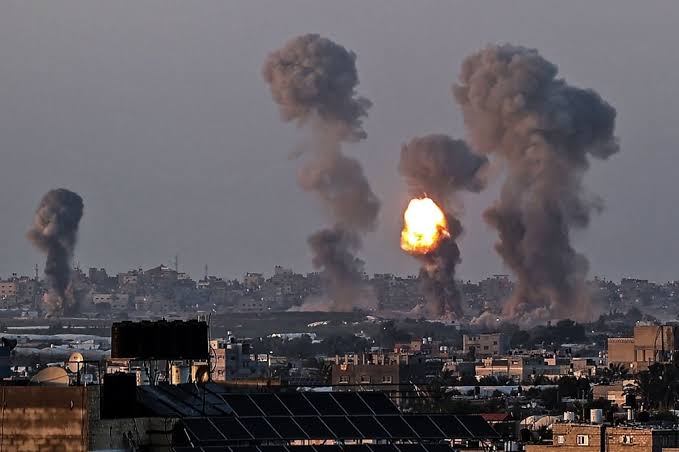
On February 28th 2026, this foundation was destroyed as the United States and Israel conducted nearly 900 attacks within 12 hours against Iranian military capability, leadership, and nuclear facilities, which ultimately resulted in the death of its Supreme Leader, Ali Khamenei, as well as dozens of other senior officials. After decades of latent conflict in the grey zone, conflict erupted into full, declared war. Iran retaliated with missile and unmanned aerial vehicle (UAV) attacks against Israel, US bases, and Gulf Arab states. The oil supply through the Strait of Hormuz was halted, creating a supply disruption unprecedented in the history of the global oil market. Over 1,500 Iranian civilians were killed in the fighting, including approximately 170 killed in an attack on a school near Bandar Abbas; an estimated millions were displaced. Thirteen servicemembers from the US died in the conflict. Conflict in the grey zone, which had previously allowed for the rivalry that existed between Iran and the US and Israel to remain at manageable levels, was never a truly sustainable balance.
The war of 2026 represented an important turning point in the futures of both regional and global conflict. This war revealed the significance of Iran’s capability to weaponize the Strait of Hormuz with great effect was not with conventionally conducting warfare, but to “weaponize” the economic force of the Strait of Hormuz, for a wide range of purposes. The war’s effect also demonstrated how weak and ineffective existing rules of conduct will become as it relates to “conducting business in the international arena.” Furthermore, many countries reexamining their nuclear weapons doctrines and negotiating new approaches, will likely attempt to follow in the path of Iran’s use of the Strait of Hormuz as a weapon against the global economy would give them a “cause” to acquire nuclear weapons. Grey-zone strategies, have become a dominant form of engagement through political and economic means; however, the introduction of conventional military superiority is no longer, with large-scale, sustainable conflict viewed as an acceptable means of ensuring continued military force against non-4th Generation warfare. Even though the “grey-zone” in the Middle East was considered “officially” over February 2026 this war defined the rationale for current and future regional security dilemmas as well as continuing influence on the future of international relations and balancing forces around the world.

Najaf Zahra
Najaf Zahra is a passionate student of IR at National Defence University, Islamabad, with a keen interest in geopolitics, security studies, foreign policy analysis, human rights, and youth movements. With a good grip in debates, she brings clarity by balancing, writing, and presenting the complex topics in an understandable way.
Leave a Reply