

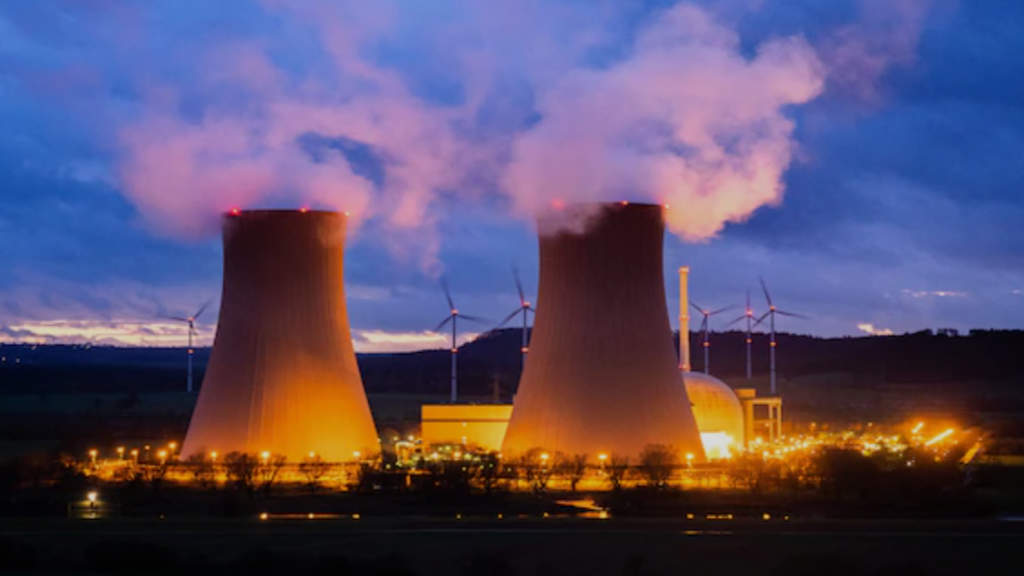
India is rapidly advancing its nuclear energy program. Holtec International, a US nuclear company recently announced plans to build 200 Small Modular Reactors (SMRs) in India. Most components and assembly will happen locally that will reduce costs and speed up the construction. This is possible because India’s SHANTI Bill (2025) allowed nuclear sector for private projects and foreign investment.
The benefits of SMRs are clear. They are faster to build, cheaper, flexible, and scalable. Units can be added gradually, shipped easily, and used for electricity, desalination, research, or remote industry. They are safe, reliable, and long-lasting. By attracting foreign investment, building local supply chains, working with China, and fast-tracking SMRs, Pakistan can modernize its nuclear infrastructure, reduce reliance on fossil fuels, and meet growing energy needs.
SMR technology is advancing worldwide. China is building HTR-PM (two 250 MWe reactors) and ACPR100/50S with passive cooling and 60-year lifespan. China National Nuclear Corporation is also designing floating reactors like Ling Long/Nimble Dragon. Argentina is building CAREM-25, a 27 MWe reactor suitable for electricity, research, or desalination. The UK is evaluating Rolls-Royce SMRs to replace old plants. The US and other countries are developing around 50 SMR designs supported by the International Atomic Energy Agency (IAEA) through Technical Working Groups. SMRs are cost-competitive, producing electricity at about £60 per MWh, similar to wind energy (~£58 per MWh) making them affordable for developing countries
If India can expand nuclear energy, why can’t Pakistan? India is moving ahead, but its nuclear program has faced international controversies including cases of nuclear technology theft and illegal procurement. Pakistan however, is not a member of the NPT or NSG but has maintained a reputation as a responsible nuclear state. Its nuclear safety and regulatory standards are recognized worldwide. Recently, IAEA Director General Rafael Grossi said that Pakistan is “well placed” to help other countries use nuclear technology for peaceful purposes. This shows that Pakistan is trustworthy and can work with other countries in nuclear energy.
Pakistan already collaborates with China on nuclear energy, including Karachi’s expansion. Extending this partnership to SMRs would give Pakistan access to proven technology, design expertise, and shared investment. SMRs could help fill the 4,000–5,000 MW shortfall, diversify energy sources. But funding remain a big challenge. Because Pakistan is not a member of the NSG it cannot access some civil nuclear technologies. Even though SMRs cost less than large nuclear plants, building the first units still requires a lot of money. This can make investors or developing countries hesitant. A step-by-step approach, government support, and partnerships with other countries can help overcome this challenge.
But linking nuclear energy to the Sustainable Development Goals (SDGs) can help attract funds. Nuclear energy supports clean energy, climate action, water security, and sustainable industrial growth. The United Nations provides money, grants, and technical help for projects that support these goals. By showing that nuclear energy helps achieve SDGs, countries like Pakistan can get international support while improving energy and development.
The World Bank Group (WBG) has also opened new opportunities. In 2025, WBG ended its long ban on funding nuclear projects, which had been in place since 2013. That same year, President Ajay Banga signed an agreement with the IAEA to support safe and responsible nuclear energy. This allows WBG to provide loans, grants, and technical help for building SMRs and extending the life of existing reactors.
Pakistan can take the advantage of these opportunities. It joined the SDG framework in 2015, and its parliament has aligned national development priorities with global goals. Nuclear energy is included in this strategy to help meet challenges in energy, health, agriculture, water, and climate. During a recent visit to the IAEA, Pakistan’s Prime Minister emphasized the country’s commitment to SDGs and the role of nuclear energy in sustainable development. By connecting SMR projects to SDG goals, Pakistan can attract international funds, improve energy security, and support long-term development.

Hira Bashir
Hira Bashir is an Associate Research Officer at the Center for International Strategic Studies, Azad Jammu & Kashmir. Her research focuses on the peaceful uses of nuclear technology. She can be reached on X at @HiraBK5090 and on Linkedln Hira Bashir



Leave a Reply