


Why Jebel Ali Is Strategically Important? | West Asia Watch
The nature of contemporary conflict is no longer confined within any singular territory and has consequently evolved into a hybrid pattern reflecting a calculated shift in modern warfare, pivoted around economic diplomacy, extensive sanctions, cyber operations, disruption of global supply chains, and a strategic upper hand over energy resources. This gradual development posits a challenging paradox through targeting trade, finance, energy and economic interdependence, transposing conventional military warfare, a distinct economic character. This is precisely evident in the context of West Asia where even the slightest of systematic disturbance can destabilize the broader economic equilibrium in the overall structure of the international market.
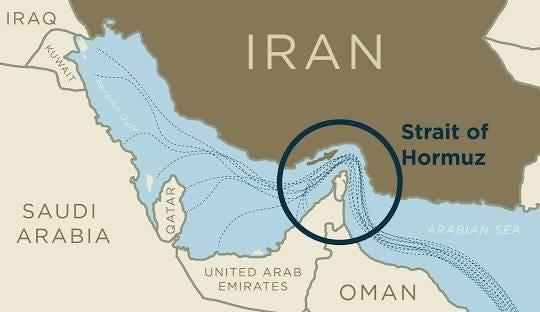
Following the February 28th, 2026 escalation of hostilities between the United States, Israel, and Iran, the narrow maritime conduit of the Strait of Hormuz has emerged as the most critical global flashpoint. Geographically, this Strait exhibits paramount importance, operating as a vital energy chokepoint located between Iran in the north and UAE and Oman in the south. Before the conflict, approximately 20 million barrels of oil per day, which constituted roughly one-fifth of global consumption and about a quarter of seaborne oil trade, passed through this maritime waterway. However, with the global disruption coupled with the subsequent damage to the infrastructure in Iran and neighbouring regional countries, this unfolding trajectory has inadvertently created the largest oil supply crisis with prices skyrocketing at an unprecedented rate.
According to OPEC, Global oil demand is expected to rise by 1.17 million barrels per day, an average of 104.57 million bpd in the second quarter down from 105.07 million bpd. Global oil supply will plunge below the rising demands with the cumulative supply losses exceeding 1 million barrels with more than 14 million barrels per day and supplies being cut short. The closure of the Strait of Hormuz exaggerated by the soaring prices of oil have triggered economic shockwaves across large scale businesses and consumers, prompting various countries to undertake measures to conserve the supplies at hand. Brent crude has surged sharply by almost 40% raising tensions around macroeconomic stability especially for nations dependent on imported oil. Thus, the strategic importance of this chokepoint is indispensable where even the anticipation of any disruption is sufficient enough to unsettle the entire global market.
The economic geography of war has stiffened global energy expectations and created a broad spectrum of uncertainties ranging from cascading insurance premiums, contested export routes, mounting infrastructural risks, rising freight charges and associated fiscal fragility for import dependent nations. Economic Interdependence which was once considered as the safeguard of promoting cooperation and stability, has unilaterally capitalized itself as an instrument of coercion. The impact of this oil crisis is not uniform since it has redistributed economic pressures, reallocated power and redefined vulnerability generating a windfall for exporters. On May 1st 2026, the United Arab Emirates withdrew from the core OPEC and the allied OPEC+ groups whereas Saudi Arabia has been facing shipping insurance costs. Israel’s economic posture and development trajectory reveals how defence spending and security imperatives have superseded civilian priorities despite a limited dependence on Gulf oil flows. Countries such as Iraq, Egypt, and Jordan deal with export constraints, climbing insurance costs, and increasing refugee pressure, highlighting the persistent dislocation manifested in uncertain trade disruptions, straining social interaction among various transit economies.
The Strait of Hormuz has been steadily transformed into a politically contested zone, a militarized corridor susceptible to global vulnerability. China has gradually advanced sustained awareness, especially with the pre-existing Malacca Dilemma and the dependence on the Strait of Hormuz, underscoring a geopolitical approach premised on developing resilience around sea based routes. Considered as a “time of considerable flux in international relations”, by External Affairs Minister, S. Jaishankar at BRICS 2026, this economic ripple effect of the oil crisis has amplified energy insecurity, and the bloc’s reinforced reliance on West Asia. Brent crude prices remained above $100 per barrel for 29 days until May 6th, when the prices went up to $118 due to the ongoing situation.
India’s overall inflation has heightened upto 8.3% in April underscoring its fastest pace in the last three and a half years. India is the third largest importer of crude oil, fourth largest importer of LNG, with roughly 90% of LPG imports sourced from West Asia. India’s energy vulnerability is characterized by both structural reliance and price transmission. India’s strategy of energy supply diversification towards Russia, Latin America, or even the United States costs higher procurement charges and longer shipping routes. Rising crude price and weakening of rupee has furthered India’s susceptibility towards economic volatility. India faces a conundrum in terms of LPG requirement, a key household cooking fuel imported largely through the Strait of Hormuz, affecting its domestic availability. A research by Bank of Baroda underscored how the shocks endured from rising oil prices are typically short lived, yet the prolonged surge in crude oil prices can increase inflation and weigh negatively on India’s growth perspective.
West Asia has always acted as the epicenter of instability and the theatre for contested ambitions. The Strait of Hormuz crisis has highlighted the overt dependence of economies on a handful of narrow waterways and underscored the limited instability that can transmit macroeconomic stress across all advancing economies. Short-term measures and temporary ceasefire are insufficient to address this issue in the long run. For the international community, the effects of this conflict are immediate, tangible and longstanding, manifested in soaring import prices, currency volatility, and widening fiscal pressures. This illustrates the nature of the modern international community where increased access over energy flows and adjacent trade routes has increasingly redefined war as an economic phenomenon.
WORKS CITED:
- 2026 Iran War. (2026, May 24). Britannica. https://www.britannica.com/event/2026-Iran-war
- Ap. (2026, May 14). BRICS Foreign Ministers meet in India as Iran war, oil prices, internal divisions test bloc’s unity. The Hindu. https://www.thehindu.com/news/international/brics-foreign-ministers-meet-in-india-as-iran-war-oil-prices-internal-divisions-test-blocs-unity/article70977220.ece
- Global reaction to US, Israeli attacks on Iran. (2026, February 28). Reuters. https://www.reuters.com/business/aerospace-defense/global-reaction-israeli-us-attacks-iran-2026-02-28/
- Strait of Hormuz Factsheet. (2026, February). IEA.org. Retrieved May 25, 2026, from https://www.iea.org/about/oil-security-and-emergency-response/strait-of-hormuz
- Dahan, M. E. (2026, February). Global reaction to US, Israeli attacks on Iran. Reuters. https://www.reuters.com/markets/commodities/uae-says-it-quits-opec-opec-statement-2026-04-28/
- Bhardwaj, H. (2026, May 25). Oil shocks hit wholesale inflation harder than retail prices: BoB study. Business Standard. https://www.business-standard.com/economy/news/oil-shocks-hit-wholesale-inflation-harder-than-retail-prices-bob-study-126051301678_1.html
- Arshad Khan. (2026, March 9). Market meltdown as crude prices soar 25% on West Asia conflict; Sensex crashes 2,500 points. The New Indian Express. https://www.newindianexpress.com/business/2026/Mar/09/market-meltdown-as-crude-prices-soar-25-on-west-asia-conflict-sensex-crashes-2500-points

Aakansha Sengupta
Aakansha Sengupta is currently a third-year undergraduate student from the Department of International Relations at Jadavpur University. Her research interests include the Middle East, India-US Strategic Partnership, and India’s Foreign Policy.