

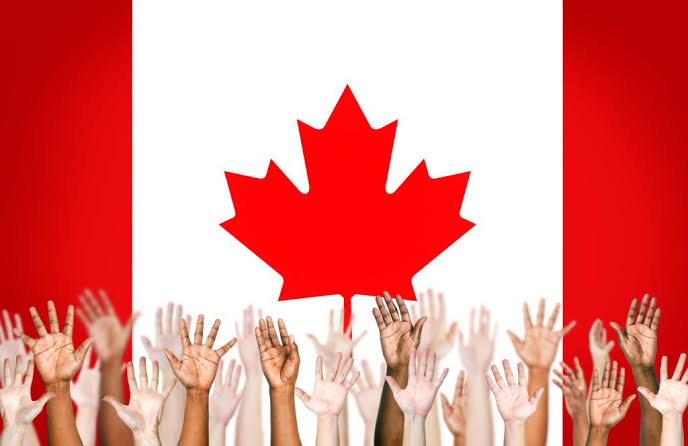
In today’s interconnected world, states compete through influence, values and image, without only relying on military or economic power. This is how public diplomacy shapes how a nation is perceived globally. Among those countries that have effectively leveraged public diplomacy. Canada stands out for promoting its multiculturalism as a core national identity. Canada’s multiculturalism is not a domestic social framework but a powerful public diplomacy strategy to enhance its global reputation, attracts talent and immigrants and strengthens international relationships.
Multiculturalism became Canada’s state policy officially in 1971, making Canada one of the first countries in the world to adopt this approach. This policy welcomes and celebrates cultural diversity rather than forcing assimilation into single dominant culture. Multiculturalism has become deeply embedded in Canadian society, shaping Canada’s laws, institutions and public attitudes. The Canadian Multiculturalism Act of 1988 further institutionalized this commitment by promoting equal participation of all cultural groups in society. This internal policy is serving as model for diversity and inclusion worldwide, and has had profound external implications.
Multiculturalism as a public diplomacy means Canada provides the image of open, tolerant and inclusive society. While other countries are mired in immigration debates or racial tensions, Canada a more welcoming country where diversity is virtue. This is good for Canada’s soft power power that persuades based on attraction, not coercion. Southern European governments are more likely to see skilled migrants, international students and refugees opting for Canada. This, in turn, contributes to economic growth and innovation within the country.
Canada’s multiculturalism plays an equally significant role in making its diplomatic relations firm. With that diversity at home, Canada has a greater ability to interact with multiple cultures and countries around the world. It has a diverse population from just about every corner of the globe, with cultural and linguistic cross-connections getting very natural. They enable trade, diplomacy, and cultural exchange. So, if we look at something like diaspora communities in Canada, those groups often keep strong ties with their countries of origin: this contributes to building the sort of informal networks that can help advance foreign policy goals. This people-to-people diplomacy complements traditional state diplomacy and enhances Canada’s global engagement.
Another important aspect of Canada’s public diplomacy is its focus on human rights and equality. Multiculturalism is closely tied to Canada’s commitment to these values, which are consistently emphasized in its international messaging. Canada promotes gender equality, minority rights, and refugee protection in global forums. By connecting its domestic policies with its international efforts, Canada builds credibility and trust. This consistency is vital for effective public diplomacy; countries are more persuasive when their actions match their words.
Education and cultural exchange programs also have a key role in promotion of multicultural image of Canada. Each year, Canadian universities enroll thousands of students from different countries, most of whom get a first-hand experience of the country’s diversity. These students invariably become Canada’s informal ambassadors when they go back, sharing positive impressions and validate Canada’s image in the world. In a similar fashion, cultural festivals, media, and tourism campaigns present Canada’s diversity to the international community thus ensuring that the country is identified as a multicultural society.
However, it is important for one to recognize that Canada’s multiculturalism comes with its own challenges. There are still issues with systemic racism, Indigenous rights, and integration difficulties. Critics argue that the policy of “multiculturalism” as promoted by Canada encourages social fragmentation and inhibits full social integration, thus preventing the achievement of a common national identity. Also, the multicultural narrative of Canada is questioned with regard to its inclusiveness, which is associated with the treatment of indigenous people in the country. Social challenges to Canada’s multiculturalism prove that multiculturalism is a continuing process rather than a perfect system.
Another strength of Canada’s multiculturalism as a public diplomacy tool is its economic dimension. Diversity has helped in economic development by promoting innovation, entrepreneurship and global competitiveness. They bring international contacts, new technical skills, and innovative ideas that increase the level of productivity and help in identifying new markets for trade and investments. “Cities like Toronto and Vancouver have become global hubs, attracting multi-national companies and international talent as a result of vibrant diversity” (ibid). Through linking multiculturalism with economic success, Canada is able to further enhance its image as a country, where diversity is not just accepted in a social context but is also recognized to be of economic benefits. This further strengthens its allure on the global stage and buttresses its broader diplomatic objectives. This further strengthens its appeal on the global stage and supports its broader diplomatic objectives.
In conclusion, Canada’s multiculturalism goes beyond domestic policy and acts as a tool for public diplomacy that strengthens its image on the world stage. By embracing diversity, inclusion, and human rights, Canada has been able to develop an authoritative and positively-perceived reputation in the international community. Furthermore, Canada’s multicultural society is capable of attracting not only individuals, but also talented people and building bridges with countries all around the world. Despite a range of issues that can be addressed, Canada’s multiculturalism remains an inspiration for others, a source of soft power. With global diversity ever-increasing, Canada shows that an embracing attitude toward multiculturalism can strengthen both its social cohesion and diplomatic relations.




Leave a Reply