

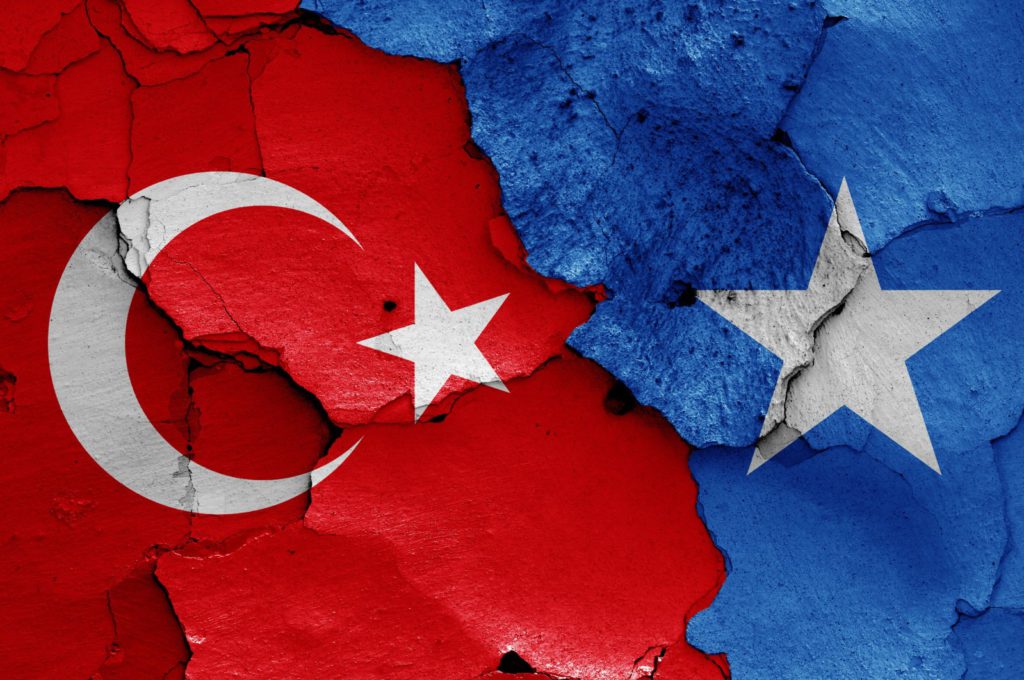
Turkey’s engagement with Somalia shows the potential of humanitarian diplomacy as a means for higher-level public diplomacy. It started as a response to the crisis of famine and state collapse and now developed into a partnership for humanitarian assistance, development, security cooperation and political dialogue. Turkey’s engagement with goes beyond the relief phase and in 2026 it is doing more than just providing relief.
One of the main takeaways from this case is that public diplomacy is more effective when based on actions, not rhetoric. Trust is created when you’re visibly present, are consistent, and you continue over time. Turkey has gained trust in Somalia because it continued its operations after the initial crisis, while many actors stopped their operations after the immediate crisis situation stabilized.
Turkey’s Somalia policy was brought into the spotlight in 2011 during a period of severe famine in the Somali city of Mogadishu, the moment when President Recep Tayyip Erdoğan visited the city. The trip took symbolic and strategic form, as most leaders stay away from the area. It was a milestone in Turkey’s image in Africa as a partner that is ready to face Africa head on. This early intervention was successful to build up strong emotions and political capital in Somalia, where Turkey had taken action first, while others were hesitating. With continuous engagement, Turkey confirmed this first impression.
Since the beginning, Turkey expanded its involvement beyond emergency situations. Turkish institutions did investments in hospitals, schools, infrastructures and trainings. The Erdoğan Hospital in Mogadishu is a tangible expression of this pledge. Even when things were unstable, Turkish Airlines operated regular flights to the city, connecting with the outside world. Long-term development projects were carried out by organizations like the Turkish Red Crescent, TİKA, AFAD. Turkey also supported in the management of the port and airport in Mogadishu which contributes in the revenue generation and institutional capacity building.
The relationship upgraded to a more strategic level by 2025–2026. Thousands of Somali soldiers were trained at Turkey’s overseas military base, Camp TURKSOM. Cooperation in the field of maritime security and exploration of the waters for energy has been expanded through agreements signed in 2024, especially since Turkey has been increasingly involved in maritime activities in Somalia in the economic and security areas. This continuum highlights potential ways in which humanitarian engagement can contribute to enhanced state-to-state relations.
In Somalia, humanitarian diplomacy can be a catalyst for complex international partnerships. But, the goal was not to provide aid, but to build trust and a greater spirit of cooperation. In addition to messaging, Turkey’s strategy indicates that making a real contribution is more effective in building foreign perceptions, such as infrastructure, services.
Turkey-Somalia relations are multi-dimensional, both strategic and moral, by 2026. Cooperation is in the areas of state building, counterterrorism, maritime security and economic development, and Turkey remains committed to Somalia’s sovereignty. This is because Somalia is both a country that relies on aid and a country that is a sovereign nation dealing with internal issues and regional competition.
Turkey’s involvement, however, is not solely a humanitarian one. It is consistent with the Africa Policy, which aims at increasing the continent’s diplomatic presence and global impact. It is a general pattern in international relations that states may seek to achieve moral ends as well as national ends. Humanitarian diplomacy and strategic considerations go hand in hand in this scenario.
Several reasons that account for the success of Turkey. It was responsive in a crisis and was involved on a long-term basis. It did not take a paternalistic approach, instead focusing on partnership, respect and win-win. There was also an extensive feeling of its presence on the ground, as the Turkish professionals were able to be seen in Somali society and the infrastructure projects were concrete evidences of commitment.
One is Turkey’s “flexibility” regarding the conditionality. It’s been perceived as being pragmatic and less assertive than many outsiders, which diminishes local resentment and fosters acceptance in a delicate political climate.
The model has some drawbacks, however. Humanitarian diplomacy can easily get embroiled in geopolitical rivalry, particularly in conjunction with influence-building. Somalia has become an increasingly geopolitically important space for regional and international actors looking to gain strategic advantage and even for humanitarian operations, where power politics may play a role.
Critics say the policy is not neutral but a mixed-bag one and that it is a Turkish policy in disguise to serve Turkish and Somali interests. This amalgamation is an indication of the current international relations, where the difference between altruism and strategy is not always clear. The main issue is that strategic goals do not conflict with the humanitarian principles.
The key issue for Somalia is that whether external partnerships will strengthen domestic institutions. The difficulty is maintaining credibility with ongoing and significant contributions for Turkey. It has done well to date in striking a balance.
To conclude, the involvement of Turkey in Somalia is an example of how a humanitarian operation can be translated into a full public diplomacy. The concept of emergency relief is now being expanded to become a strategic partnership in the fields of development, security and economic cooperation, demonstrating that humanitarian action can be principled and political.

Kashaf Zahreer
Kashaf Zaheer is an undergraduate student of International Relations whose academic interests include public diplomacy, foreign policy, humanitarian affairs, security studies, international developments.
Leave a Reply