

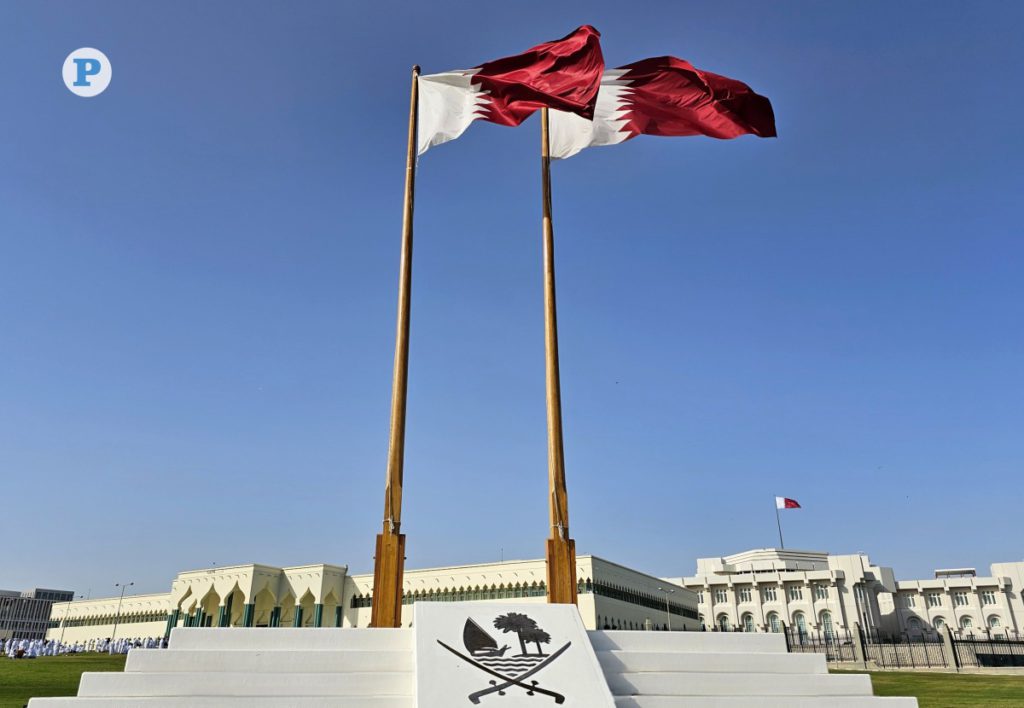
Traditionally, the global world was dominated by major superpowers but the rise of Qatar as a major diplomatic actor portrays how public diplomacy transforms power. Qatar has successfully placed itself as a globally significant state, regardless of its geographic size and small-scale population, through its designed approach that combines media influence, sports diplomacy, and conflict mediation. Since every rose has its thorn, Qatar’s public diplomacy is not without controversy and challenges. Therefore, Qatar’s international image stands at the crossroad of pivotal breakthrough and continuous criticism. In addition to its excellence in the fields of media, sports and mediation, Qatar has widened its public diplomacy into digital, humanitarian and energy diplomacy, producing a more diversified global strategy. Being the world’s leading exporters of liquefied natural gas (LNG), Qatar manages its international relevance beyond symbolic soft power through its energy partnerships. Moreover, Qatar’s humanitarian efforts and aid initiatives in conflict-prone areas showcase its image as a responsible global actor.
At the heart of Qatar’s public diplomacy are its visionary objectives and strategic goals. First, Qatar seeks to improve its global recognition and legitimacy. In a Middle Eastern hotbed, embracing recognition as a stable and influential actor is vital for survival and relevance. Second, Qatar intends to launch a soft image of modernity, progress, and global connectivity. This plays an important role for attracting foreign investment, tourism, and partnerships. Third, and most significantly, Qatar desires to position itself as a neutral facilitator and diplomatic bridge in international conflicts. By doing so, it not only uplifts its international image but also achieves a role in shaping regional and global political outcomes.
Qatar has acquired a set of inventive and multi-faceted strategies. Media diplomacy is one of the most influential weapons primarily through the global network Al Jazeera. Unlike traditional government-controlled media, Al Jazeera has allowed Qatar to shape perceptions and influence public opinion beyond its borders. This has lifted Qatar’s voice in international affairs, making it prominent and more visible than its size would suggest.
Sports diplomacy is another cornerstone of Qatar’s strategy. Qatar hosting the 2022 FIFA World Cup was a turning point for the country’s global image. It was not about football only but it also showcased Qatar as modern, competent, and globally integrated. By investing a huge amount in infrastructure and global branding, Qatar used the World Cup to shift itself from being “unknown” to achieving “global prominence”. This highlights Qatar’s sports diplomacy role in reshaping regional identity and geopolitical positioning. By organizing and staging international sports events like the 2022 FIFA World Cup, Qatar did not just showcase its capability but also exemplified how Middle East is worthy enough of hosting inclusive, world-class events. This move challenged the long-standing stereotypical nature of the region and making Qatar a bridge between the Global South and the West, highlighting how a platform like sports can influence entire regions and not just individual states.
Additionally Qatar has also massively invested in education and cultural diplomacy. Education City initiative and collaborations with international universities portray Qatar’s desire to be seen as a hub of knowledge and innovation. These attempts help Qatar to build a soft image, further strengthening its global appeal. Another facet of Qatar’s cultural and education diplomacy lies in its efforts to place itself as a knowledge hub in the Global South while balancing cultural hybridization with global interdependence. Instead of simply promoting Western education and cultural models, Qatar aims to become a producer of dialogue between civilizations, staging forums, cultural exchanges and intellectual debates that emphasize cross-cultural awareness. As a result, Qatar portrays itself as a moderate, intellectually engaged state that shapes global conversations on culture and education rather than absorbing external narratives.
However, Qatar’s active role in mediating conflicts is what truly makes its public diplomacy stand out. Qatar has played a prominent role by providing a neutral platform for dialogue along with negotiating matters between conflicting parties. For instance, Qatar facilitated negotiations between the Taliban and the United States, which led to the Doha Agreement. Similarly, Qatar also played an active role in the political crisis in Lebanon, resulting in the Doha Agreement. Moreover Qatar’s peace efforts in Darfur and in ceasefire negotiations involving Israel and Hamas also hold prominent significance. These facilitating attempts strengthen Qatar’s image as a peace broker and responsible international actor.
In the face of these outstanding achievements, serious challenges have emerged in its public diplomacy, undermining its global image. Human rights issues is one of the most prominent issues, particularly raising questions on migrant workers during preparations for the 2022 FIFA World Cup. This has further raised questions concerning whether Qatar’s polished international image accurately reflects its domestic realities. Reliable media diplomacy is yet another serious challenge. Despite Al Jazeera’s wide popularity and authenticity, critics have raised concerns about bias and selective narratives arguing that it sometimes reflects Qatar’s political interests. As a result, Qatar struggles in its image as a promoter of free media and accusations of strategic communication for political gain.
In conclusion, Qatar’s case study reflects that public diplomacy is a powerful yet complex tool. Qatar has powerfully instrumentalized media, sports, education and mediation to build a strong and influential global image. This portrays that even a small state can gain international significance through strategic soft power. However, this case study also reveals that image building is not enough. For public diplomacy to be efficient and long term, it must be supported by credibility, consistency and alignment between domestic regulations and international messaging.
Looking forward, the future of Qatar’s public diplomacy will heavily depend on its ability to adapt to a highly fragmented and combative international environment. With increasing conflict polarization and intensification of information warfare, Qatar’s policy of neutrality and mediation may face new challenges and criticisms. Evolving spaces like climate diplomacy, digital governance and AI-driven communication ecosystems will potentially form the next phase of its international engagement. To maintain its influence, Qatar will need to meet its rising expectations for transparency, consistency and accountability. Conclusively, its success will rely on its ability to transform short-term visibility into long-term credibility and faith in rapidly evolving international order.

Iqra Nadeem
Iqra Nadeem is currently pursuing her bachelor’s in International Relations from Fatima Jinnah Women’s University. Her interests are Public diplomacy, Global politics and International security.


Leave a Reply