

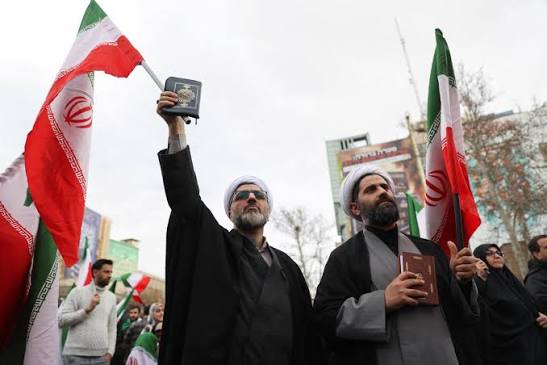
The unrest that is currently being experienced in Iran, especially in its capital, may turn out to be one of the most dramatic in the modern history of this country, as the reports suggest that a great number of civilian fatalities have already been witnessed , the authorities seek to contain mass protests taking place all over the city. Although, the current protests seem to be unprecedented, dissatisfaction among the people of Iran has not manifested out of thin air. Since the student uprisings of the 1990s, through the November 2019 protests, the 2022 demonstrations following the death of Mahsa Amini and the latest unrest, which began on December 28, 2025, initially as a result of economic hardship, increasing prices, and worsening living conditions, Iranian society has been sporadically voicing their dissatisfaction through mass mobilization.
As much as the present turmoil has definite domestic causes, it is also occurring in a wider geopolitical context. There is an argument among many observers that the instability of Iran cannot be entirely assessed without taking into account the involvement of outside forces, with the United States being chief among them with their strategic interests in the region being majorly in energy routes and control of the region being a major factor in the relations between the country and Tehran. The 1953 CIA -staged overthrow of the elected Prime Minister of Iran, Operation Ajax, still lingers in the collective memory and view of foreign intervention.
Still, the outside pressure is not the only reason to understand the intensity and continuity of the ongoing turmoil. Major structural issues, such as economic pressure due to sanctions, inflation, population pressures, and social expectation changes, have piled more and more pressure on state institutions. The convergence between the structures of governance and a society that is evolving very fast has created increasing state-society tensions. Competition in the regional security and economic isolation adds to these pressures.
Even though Iran officially has electoral institutions and a parliament the political system serves under constitutional mechanisms that govern candidacy and political participation. Those opposing the mechanisms claim that they discourage competitive political pluralism, whereas its proponents claim that they uphold ideological coherence and institutional stability. Whichever the view taken, the centralization of power in certain institutions implies that the process of political change takes place within a well-coordinated structure. These systems can introduce uncertainty and division of the elite, because of unexpected changes in power.
This brings critical concerns to the demand of immediate regime change. In a high centralized political system, the transitions are not always linear and predictable. The lack of well-established oppression systems, independent judiciary, or completely autonomous networks of civil societies can lead to the risk of the vacuum of power in the case of sudden change. The experience in the rest of the Middle East shows that a regime change effort led by external from outside forces can actually lead to long term instability instead of instant democratization.
There are also changing attitudes in the society as shown by the survey data. The findings of a study by the Group of Analyzing and Measuring Attitudes in Iran (GAMAAN) propose further social diversification whereby, there would be more people who claim to not be religious, and a significant percentage of the interviewed saying that they do not like the status quo of the Islamic Republic. Although the views of people in a repressive setting should be viewed with seriousness, the results are directional towards changing societal tastes and a growing disconnect between the segments of the society and the state ideology.
The consequences of the internal instability of Iran do not only affect the country but more specifically, Pakistan.
In Balochistan, Pakistan borders on Iran. The long-term unrest in Iran may have a direct impact on security of the border, cross-border trade, migration, and sectarianism. Increased instability can open access to militant groups based in the Iran-Pakistan border which hinders the process of counter-terrorist coordination between the two nations. Moreover, the unstable position would interfere with energy collaborations and the long-awaited project of Iran-Pakistan gas pipelines has already been challenged by sanctions and geopolitical limitations.
Iran is strategically located in the region concerning connectivity programs. It is also significant in trade routes between Central Asia, the Gulf region and South Asia. The growing instability or an extended political turmoil may disrupt the routes that overlap with the overall economic objectives of Pakistan, such as its involvement in the China-Pakistan Economic Corridor (CPEC) and its participation in Belt and Road connectivity systems. Moreover, escalating relations between Iran and the western nations would put Pakistan in a precarious diplomatic state, since Islamabad would want to ensure that she balances her ties with Tehran, Riyadh, Washington and Beijing at the same time.
There are also sectarian implications that have to be taken into consideration. The regional sectarian polarization has been a sensitive issue in Pakistan in terms of internal stability. Any Iranian escalation that has an ideological or sectarian aspect can be reflected in Pakistan domestic environment.
The main question, thus, is not whether Iran is submerged with instability, but how the course of the instability can outline a new momentum of regional relationships.
To sum up, the Iranian turmoil can be viewed as an intricate interplay between the domestic structural factors and the geopolitical conflicts that have been existing over an extended period of time. The past intervention of foreign countries has led to long term mistrust but the economic factors of the economy of the countries, social change, and institutional design have also played a role in the present. Sudden change of regimes, especially those brought by outside forces, can pose a threat of creating power gaps and spillover effects in a region instead of stability itself. To Pakistan, there is a lot at stake. Border management, energy cooperation, regional trade and balancing strategies are all directly influenced by stability in Iran. A more restrained strategy that is concerned with gradual institutional adjustment, economic stabilization and regional dialogue can be more favourable to long-term stability than abrupt systemic shock.

Fatima Bashir
Fatima Bashir is a student BS International Relations at the University of Central Punjab. Her work examines climate change, gender, geopolitics, and contemporary political issues. fatimabasheerrr@gmail.com


Leave a Reply