
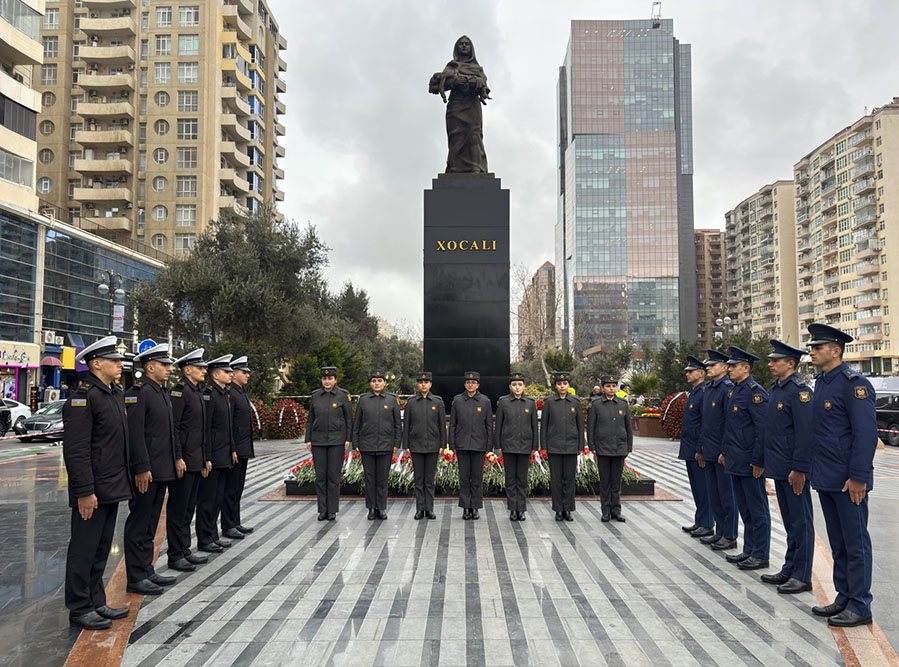
On February 26, 2026, Azerbaijan commemorates the 34rd anniversary of the Khojaly genocide, one of the most tragic events of the Karabakh conflict.
On the night of February 25–26, 1992, the Azerbaijani town of Khojaly was attacked by Armenian armed formations, with the involvement of the 366th Motor Rifle Regiment of the former Soviet army, amid the escalation of the conflict in and around Karabakh. As a result, 613 civilians were killed, including 63 children, 106 women and 70 elderly people. Hundreds were wounded, and many families were displaced. These figures are not abstract statistics but a human catastrophe that reshaped thousands of lives and left a lasting scar on the national memory of Azerbaijan.
Responsibility for the massacre lies with the Armenian forces that carried out the assault and with the political leadership of the time that justified or failed to prevent violence against civilians. The issue of accountability has remained central to understanding the tragedy. Particular attention is often drawn to remarks made by former Armenian president Serzh Sargsyan in an interview, in which he stated that the events in Khojaly “broke the stereotype” that Armenians would not raise a hand against civilians. These words have been widely cited as an indication of the deliberate nature of the attack and continue to resonate in discussions about responsibility and justice.
Over the years, legislative bodies in a number of countries — including Pakistan — have adopted resolutions recognizing the Khojaly massacre as genocide or condemning it as a crime against humanity. In addition, the Organization of Islamic Cooperation officially recognized the events as genocide and has repeatedly called for international acknowledgment of the tragedy.
While international legal terminology may vary across jurisdictions, the essence remains unchanged: civilians were deliberately targeted and killed. For Azerbaijan, recognition of the Khojaly genocide is not a matter of diplomatic rhetoric or political positioning. It is a question of historical justice, moral accountability and respect for the memory of innocent victims.
Today, as Azerbaijan and Armenia are engaged in negotiations toward a comprehensive peace agreement, the question of historical accountability remains central. A durable and sustainable peace cannot rest solely on political documents, border delimitations or diplomatic formulas. It must also be grounded in moral clarity and an honest reckoning with the past. Recognition of the Khojaly genocide by the Armenian side would represent an essential step toward genuine reconciliation. Acknowledging the suffering of civilians and accepting responsibility for past atrocities could help lay the foundation for trust between two societies that have endured decades of conflict.
A significant role in raising international awareness has been played by the “Justice for Khojaly” campaign, initiated and actively promoted by Leyla Aliyeva, Vice-President of the Heydar Aliyev Foundation. Through conferences, exhibitions, publications and youth outreach initiatives across multiple countries, the campaign has sought to ensure that the victims’ stories are not forgotten and that the humanitarian dimension of the tragedy remains visible to global audiences.
Yet beyond diplomacy and advocacy, the Khojaly tragedy is also a story of national resilience. In the decades that followed, hundreds of thousands of Azerbaijanis lived as internally displaced persons. Communities were uprooted; entire districts remained beyond reach. And yet, the nation endured. Families supported one another, state institutions consolidated, and a new generation grew up carrying both the trauma of loss and the determination to return.
Following the 2020, 44-Day Patriotic War and subsequent developments, Azerbaijan restored control over territories including the area where Khojaly is located. What followed was not only a military or political shift, but the beginning of a large-scale reconstruction process. Across Karabakh and Eastern Zangazur, roads, airports, schools and residential areas are being built, infrastructure is being restored, and former residents are gradually returning to their homeland after nearly three decades of displacement.
In this context, the inauguration of the Memorial to the Victims of the Khojaly Genocide in the city of Khojaly — attended by President Ilham Aliyev and First Lady Mehriban Aliyeva — carried profound historical and moral significance. It was more than a formal ceremony. It was a moment of national remembrance on land that had long been inaccessible.
Thirty-four years on, the message remains clear: justice for the victims, dignity for the survivors, and a commitment to a future in which such tragedies are never allowed to happen again.

Anastasiya Lavrina
Political analyst, famous journalist, research fellow at the Institute for Development and Diplomacy of ADA University



Leave a Reply