

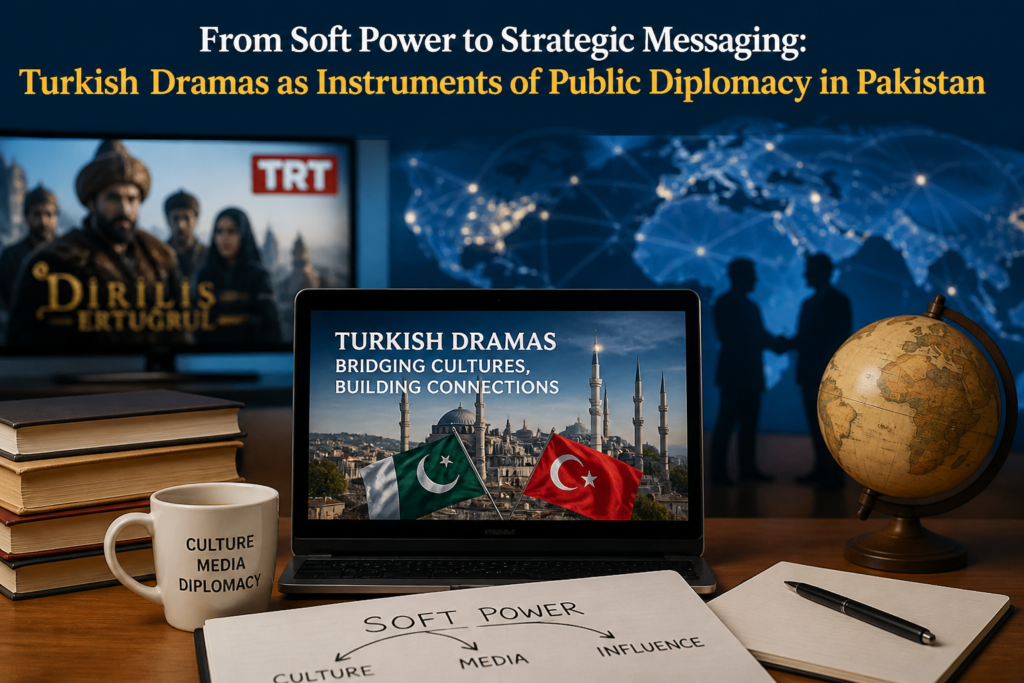
In today’s world, diplomacy has moved beyond just embassies, meetings, and official talks. Now, things like TV shows also play a big role how countries are seen by others. So, media has became a quiet but strong way to influence people views. Turkish dramas have become really popular in Pakistan in the last ten years. This isn’t just about entertainment; it’s part of a bigger picture. It shows how Turkey is trying to build better relationships through culture and public diplomacy. These shows use emotional stories, history, and values to connect with people, their impact goes beyond just what’s on screen.
This article says that Turkish dramas in Pakistan act as tools of soft power and storytelling. They help create a positive image of Turkey and make people more familiar with its culture. But their effect is mostly symbolic and not directly political, which shows both the power and the limits of using culture as a tool in diplomacy.
Turkish Dramas as Soft Power Tools
Turkish dramas have become a key part of a larger effort to share Turkish culture with the world, supporting the country’s diplomatic and political goals. In international relations, soft power refers to a nation’s ability to influence others through its culture, values, and ideas rather than through force or coercion. Turkish dramas help shape how other countries view Turkish society by highlighting themes like historical pride, strong moral values, leadership, and cultural identity. Many of these shows focus on Ottoman history or Islamic heritage, which helps create a sense of connection between the past and the present.
Media analysis and cultural broadcasting efforts show that these dramas are more than just entertainment; they are an intentional way to spread Turkish identity. In places like Pakistan, people have become more familiar with Turkish culture, language, and historical perspectives because of these shows. This way, Turkish dramas act like quiet diplomacy, influencing how people think and feel about Turkey through stories rather than official statements.
Strategic Messaging Beyond Entertainment
Turkish dramas go beyond just being entertaining by including deeper symbolic messages in their stories. Experts in media and cultural diplomacy say that storytelling is often used as a gentle way to share values and show a country’s identity. Common themes in Turkish dramas include justice, fighting against unfair treatment, loyalty, sacrifice, moral
leadership, and the importance of family and faith. These themes aren’t chosen by accident they follow a pattern that matches TÜRKİYE’s broader efforts to show its culture to the world.
In Pakistan, these themes connect strongly with people’s emotions and cultural background. Viewers who already share similar social and moral ideas are more likely to relate to these stories. This makes the impact of Turkish dramas stronger when it comes to shaping values and how people imagine leadership and history. In short, these dramas don’t just tell stories they help shape how audiences feel about important ideas like history, morality, and leadership.
Why Pakistan Is a Receptive Audience
The popularity of Turkish dramas in Pakistan can also be explained by how the audience connects with the content. Cultural influence works best when the receiving society is willing to accept and engage with the message. Pakistan has strong historical, religious, and cultural ties with Türkiye, which naturally makes people feel more connected. This reduces the gap between cultures and makes Turkish content easier to understand and relate to compared to many Western shows, which are sometimes seen as not matching local values.
In Pakistan, there’s a growing trend of watching media that focuses on family, morality, and emotional stories. Turkish dramas fit well into this kind of storytelling, which is one of the main reasons they are so popular. As often talked about in media discussions and seen in cultural outreach efforts linked to TRT, Turkish content doesn’t create demand from nothing. Instead, it taps into existing feelings and cultural links that people already have. This match between what the content offers and what the audience expects is what keeps the influence strong at a cultural level.
Limits, Criticism, and Reality Check
Despite their popularity, Turkish dramas have clear limitations when it comes to real-world influence. In media and diplomacy studies, it is widely accepted that cultural appeal does not automatically lead to political or strategic alignment. In Pakistan, for example, viewers may strongly enjoy Turkish dramas, but this emotional and symbolic appreciation does not necessarily influence political thinking or shape foreign policy preferences in a structured way. Cultural influence can shape perceptions, but it does not directly impact decision-making.
Another key limitation lies in how history is portrayed. Like most dramatized content, Turkish series often simplify complex historical realities to create more emotionally engaging narratives. While this can boost their popularity, it may also lead to selective or distorted interpretations of the past. There is also a structural concern related to local media industries, which face intense competition from high-budget foreign productions. This raises questions about cultural balance and the long-term sustainability of domestic entertainment sectors.
In summary, Turkish dramas are influential, but their impact is limited. They shape imagination and cultural connections, but they do not translate into institutional power or significant policy change.
Conclusion
Turkish dramas in Pakistan show how cultural content has become a key part of modern public diplomacy. Unlike traditional diplomacy, this kind of influence works through stories, emotions, and the meanings people attach to them. Turkey has effectively used its media to increase its cultural presence and create a positive image among Pakistani viewers. Shared themes like history, morality, and identity help build a sense of connection and familiarity between the two countries. However, this influence is mainly about perception, not strategy. While Turkish dramas shape how Turkey is seen, they don’t directly affect political decisions or policies. This shows an important truth about international relations today: cultural power can inspire ideas, but lasting influence depends on stronger economic, political, and institutional foundations. In the end, Turkish dramas in Pakistan show that in the twenty-first century, global influence isn’t just about policies and power it’s also about the stories countries share and the meanings people decide to believe in.

Bushra Mansha Khan
Bushra Tabassum is a student of International Relations from Pakistan. Her academic interests include public diplomacy, soft power, media influence, and contemporary international relations. She writes on global politics, strategic communication, and cultural diplomacy.


Leave a Reply