
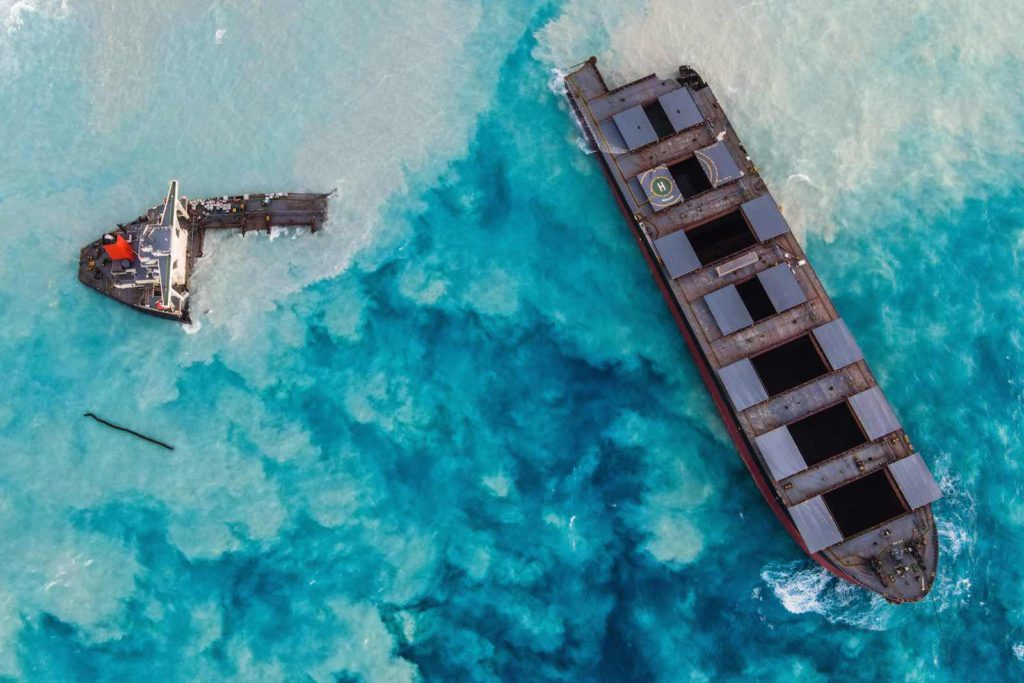
The Indian Ocean has traditionally played crucial role in shaping the geopolitical environment of South Asia. The region sits astride one of the world’s most vital maritime spaces, through which nearly 80 percent of global seaborne oil trade and a substantial share of containerized cargo transit annually. Stretching from the Antarctic Ocean in South to Australia in East and Africa in West, Indian Ocean covers approximately 27 percent of global maritime space and is the third largest ocean after Pacific Ocean and Atlantic Ocean. This ocean hosts some of the world’s most critical maritime chokepoints, including the Strait of Hormuz, Bab el-Mandeb, and the Strait of Malacca. These chokepoints serve as gateways for global maritime trade and shape the globalized world we see today.
Climate change, however, is rapidly transforming this maritime space. Rising sea levels, increasingly intense cyclones, ocean warming and acidification is leading to resource depletion, population displacement, and shifts in global trade routes. Currently the Indian Ocean is the most rapidly warming ocean in world. Its temperature has increased by 1.6°F over past century due to global warming and is projected to accelerate at the rate of 1.7 °C–3.8 °C per 100 years by end of this century. At regional scale, the Indian Ocean is indispensable to South Asian nations including India, Pakistan, Bangladesh, Sri Lanka, and the Maldives. South Asia also has one of the world’s densest coastal populations, with approximately 450 million people living within 100 kilometers of the coastline. This population density significantly increases vulnerability to climate-related calamities. These abrupt changes are not only re-shaping traditional security calculus but also generating new climate-related non-traditional risks, forcing South Asian states to reevaluate maritime security approaches that have historically prioritized development of traditional naval capabilities.
Among the most severe long-term challenges is sea-level rise, which threatens both human security and the legal foundations of maritime sovereignty. The Intergovernmental Panel on Climate Change (IPCC) Sixth Assessment Report projects that under high-emissions scenarios, global mean sea levels are likely to rise by approximately 15–20 centimeters by 2050, with parts of South Asia facing grave consequences due to land subsidence, deltaic geography, and Himalayan glacial melt. At the same time, extreme weather events are becoming more frequent as well as unpredictable, both in terms of timings and intensity. The Arabian Sea, once considered relatively less prone to climate induced effects, has witnessed a marked increase in rapidly intensifying storms, a trend linked to rising sea-surface temperatures that are warming faster than the global ocean average. These changes are disproportionately affecting coastal states such as Bangladesh and island nations like Sri Lanka and Maldives, which are facing existential threat from rising sea-level in longer run.
Environmental degradation is increasingly translating into non-traditional security threats, particularly through resource scarcity. According to IPCC and FAO, ocean warming and acidification are projected to reduce fish stocks in tropical waters by 20-40 percent by mid-century, thus posing severe risks to South Asia’s fisheries sector, which employs millions and remains a critical source of affordable protein. As fish stocks decline or shift geographically, fishermen are increasingly taking risk to push into neighboring Exclusive Economic Zones (EEZs), leading to fishermen arrests and vessel seizures. This issue has been repeatedly between India–Sri Lanka at the Palk Bay, Pakistan-India at Creek Areas, and India and Bangladesh near the Fairway Buoy off Mongla post in Bay of Bengal. Degrading this problem even further is illegal, unreported, and unregulated fishing (IUUF), often driven by industrial distant-water fleets, which accelerates resource depletion and undermines good-order-at-sea.
Climate-induced migration simple introduces another layer of complexity in maritime security paradigm. The World Bank’s Groundswell report estimates that up to 40 million people in South Asia could become internal climate migrants by 2050, with Bangladesh identified as one of the most severely affected countries due to sea-level rise and salinization. Cross-border migration pressures, particularly into India, have already become politically sensitive, contributing to tighter border controls and bilateral friction. As coastal displacement intensifies, irregular maritime migration routes may become more prevalent, increasing the likelihood of humanitarian crises at sea.
On global scale, the climate change is impacting the great-power competition. United States already has well established maritime presence while China is exponentially expanding its maritime footprint. Indian Ocean is one of the primary areas of maritime competition as it serves as medium of connectivity between Asia and Europe. However, with melting ice in Arctic, Northern Sea route is becoming more accessible to maritime traffic thus enhancing its strategic importance. This suggests that a great volume of trade via SLOCs passing through Indian Ocean to Red Sea to Mediterranean Sea and eventually to Atlantic Ocean will now shift to Pacific-Arctic-Atlantic route. New choke points, like Bering Straits, will emerge as node points for power politics, thus subsequently reducing the focus from Indian Ocean.
This transition will be good and bad at the same time. On one axis, the relative diversion of commercial traffic away from the Indian Ocean could reduce the intensity of great-power naval competition, ease pressure on IOR chokepoints, thereby creating diplomatic space for littoral states to focus on non-traditional maritime security challenges such as climate change. On the other axis, this could undermine the economic centrality and strategic leverage of South Asia’s southern maritime corridors. Consequently, while Arctic routes may redistribute global maritime focus, the Indian Ocean will continue to retain strategic relevance as an energy corridor, and connector of the Global South. But what is important to highlight is that how such a major geopolitical and geo-economic transition will be undertaken by climate change.
To timely mitigate the destabilizing impact of climate change on maritime security in IOR, it is prudent that South Asian must undertake pro-active unilateral and minilateral actions. Many steps are already being taken. Platforms like the South Asia Hydromet Forum (SAHF) and programs such as Climate Adaptation and Resilience for South Asia (CARE/iCARE) are ensuring data sharing, forecasting, and climate-smart solutions across South Asia.
But a lot more is required. Awareness and investment is needed regarding climate-resilient maritime infrastructure. Enhancing climate-related monitoring of maritime domain through satellites, unmanned systems, and predictive analysis through artificial intelligence can help in studying climate and weather patterns and also for mitigating consequences of climate-induced disasters. Deepening mutual cooperation through forums such as the Indian Ocean Rim Association (IORA) and the Indian Ocean Naval Symposium (IONS) for joint training and information sharing can also be helpful at multiple levels. Policy reforms promoting a blue economy can help in sustainable economic growth while correspondingly minimizing the carbon footprint of maritime industry for climate resilience.
In sum, climate change is no longer a peripheral environmental issue but is gradually becoming a common major security disruptor of South Asian maritime security. Therefore, proactive and collaborative actions are required for preserving the Indian Ocean as a channel for peace, stability, and prosperity in South Asia.

Muhammad Muzaffar
Mr. Muhammad Muzaffar is an Intern at Maritime Centre of Excellence (MCE), Pakistan Navy War College (PNWC), and a M. Phil scholar in International Relations at the Minhaj University Lahore.

Ahmad Ibrahim
Author is Research Associate at Maritime Centre of Excellence (MCE), Pakistan Navy War College (PNWC) Lahore.
Leave a Reply