
Pakistan’s neighbour Iran is currently embroiled in a war against the US-Israel coalition. Although Operation Epic Fury began with kinetic rage to subdue Iranian will, the events unfolded have shown the resilience of the Iranians, enduring bombing campaigns directed at their energy and water infrastructure. Tehran has hit back with ballistic missiles and drones, targeting Israel and the US bases in the Gulf region. Pakistan’s brotherly and cordial relations with all Gulf countries and Iran, puts it in a unique position to help foster dialogue and conversation, which is seen in practice as well.
Rather than getting drawn into the false binary of choosing sides and resorting to a facile narrative of portraying Pakistan as caught in the middle, it is imperative to understand Pakistan’s strategic leverage that can allow Islamabad to dampen tensions instead of letting the flames engulf the region. Uniquely positioned as maintaining cordiality with Tehran and Riyadh, Pakistan’s strategic posture thus far can be termed as a de-escalatory bridge, successfully acting as a buffer and an interlocuter. The mediatory role effectively played by Pakistan through the initiation of conversation and dialogue with all key regional players has borne fruit in terms of conciliatory efforts made by Iran towards the Gulf countries.
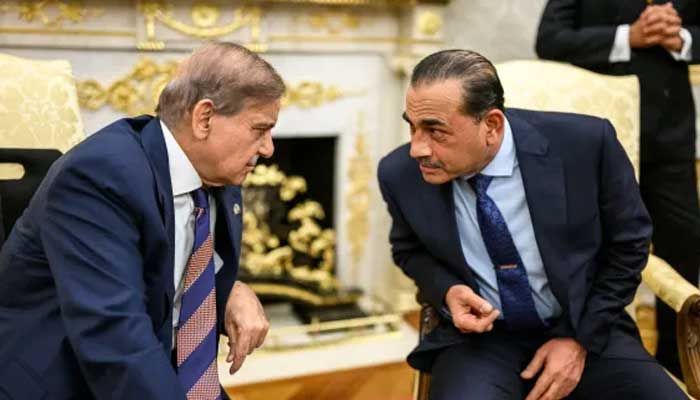
The ramped up diplomatic efforts are visible at Pakistan’s top tier leadership, where visuals confirmed the meeting between Pakistan’s Chief of Defence Forces Field Marshal Asim Munir and Saudi Arabia’s Defence Minister Khalid bin Salman Al Saud. They discussed joint measures needed to stop the Iranian missile and drone attacks on the Kingdom, under the ambit of the Strategic Mutual Defence Agreement (SMDA) inked by the two nations last year. Later, Prime Minister Shahbaz Sharif, in a restricted meeting with Saudi Crown Prince assured him of Pakistan’s full support and solidarity.
At the same time, it was hoped that wisdom and prudence would prevail to seek a peaceful settlement of the crisis. Concurrently, Pakistan’s Deputy Prime Minister and Foreign Minister Ishaq Dar reached out to Iranian Foreign Minister Seyyed Abbas Araghchi twice to express concerns pertaining to the deteriorating regional situation and emphasising the significance of maintaining communication despite escalating tensions, which both countries have agreed to. Pakistan also expressed profound grief on the martyrdom of Iran’s Supreme Leader Ali Khamenei, expressing solidarity with Iran during that difficult time, articulating his death to be a great loss, deeply saddening the Muslim world. Recently, FM Araghchi also voiced gratitude to Pakistan for its unwavering support extended to Tehran.
Moreover, the genius of Pakistan’s foreign policy was unveiled by its unequivocal condemnation of unwarranted attacks on Iran at the forum of the UNSC, calling them a violation of international law, highlighting that these attacks came when negotiations were underway to reach a peaceful solution regarding Iran’s nuclear programme. This development was positively viewed by the Iranian ambassador to the UN, stating that Pakistan was among the first countries, including Russia and China, that condemned the US-Israel attacks on Iran. This was seen in June 2025 as well, when Pakistan’s National Assembly unanimously passed a resolution condemning Israel’s aggressive campaign against Iran and reaffirmed Pakistan’s solidarity with its neighbour and underscored Iran’s right to self-defence as per Article 51 of the UN Charter. Pakistan’s present UNSC statement also condemned Iranian attacks against the Gulf states, underscoring Pakistan’s solidarity with its brotherly countries and emphasising the need for maximum restraint.
The aforementioned developments clearly showcase Pakistan acting in accordance with its historic ties with Iran and the Gulf states, prudently demonstrating its commitment to balance, restraint, and the preservation of regional stability. Navigating the convoluted geopolitical environment, Pakistan has illustrated that it is focused on preventing a broader regional conflict by clearly stating its stance: Pakistan does not want its closest partners to become further embroiled in a conflict that has the potential to undermine prosperity and stability, with repercussions for not only the region, but also affecting Pakistan’s own interests.
It should also be kept in mind that Pakistan signed SMDA fully cognisant of the geopolitical and strategic environment of the Middle East. While commentators and analysts are putting fallacious analyses of Pakistan being putatively “trapped” and raising questions regarding Pakistan’s neutrality, historical precedents should be looked at. Pakistan’s parliament unanimously passed a resolution to affirm neutrality in the Yemen conflict in 2015, refusing to join the Saudi-led military coalition to participate in fighting against the Houthis, whilst declaring full support to the Kingdom. Nevertheless, Pakistan did participate in two Arab-Israeli wars in 1967 and 1973 against Israel. This shows Islamabad’s very clear stance: it will not be participating in a war against any Muslim country.
To conclude, Pakistan ’s foreign policy in the current crisis is nothing short of a delicate balancing act, leveraging historic ties with both Iran and the Gulf states to de-escalate tensions and safeguarding regional stability.
\

Arooba Younas
Arooba Younas is a Research Assistant at the Centre for Aerospace and Security Studies (CASS), Lahore. She can be reached atinfo@casslhr.com.


Leave a Reply