
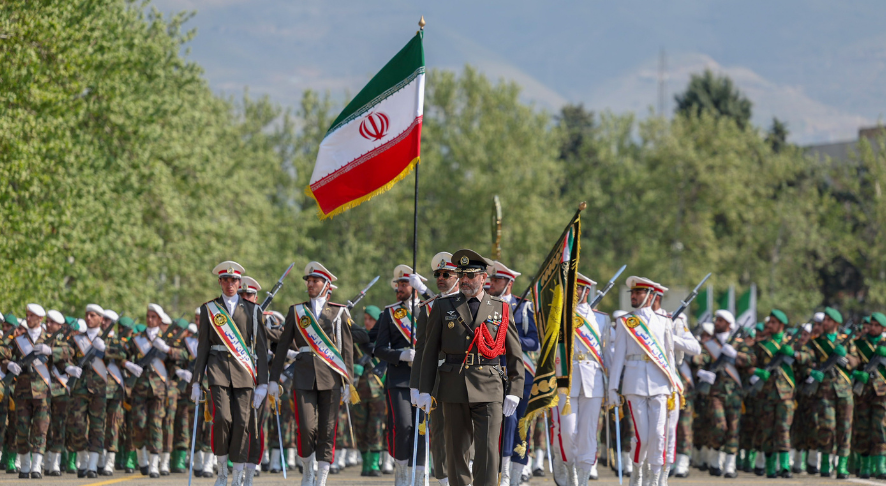
The Middle East has entered into a dangerous phase where violence is being justified as a preventive measure; however, it is only leading to a wider war. The Israel-Iran confrontation, now with the active involvement of the US, fits the classic security dilemma. When states find it risky to trust one another’s intentions, defensive actions are seen as preparations for attack, triggering retaliatory steps that leave everyone less secure. The dilemma is a mechanism that turns fear into policy and policy into escalation.
The current conflict has moved beyond strategic signalling and now involves sustained military attacks by both sides. Israeli and US attacks have hit Iranian military installations, nuclear facilities, and killed members of Iran’s leadership. Tehran has retaliated with missile and drone strikes on Israeli targets and US bases in the Gulf region. The assassination of Iran’s Supreme Leader Ayatollah Ali Khamenei, together with the damage caused to Iranian infrastructure, has made the conflict far more intense and reduced the room for restraint. A relationship once defined by strategic rivalry has now escalated into direct war with wider regional consequences.
Israel’s perception of danger is closely tied to the scale and reach of Iran’s missile programme, which has grown steadily during the past decade. Missile barrages fired by Iran during the June 2025 twelve-day war illustrated how these systems could be used to strike Israeli territory in sizeable numbers. Military planners usually do not make decisions based only on what another country says it intends to do. They also look closely at the weapons and capabilities that the adversary possesses. When a country possesses weapons that can cause serious damage, its rivals usually do not wait to see how those weapons will actually be used. Instead, they try to anticipate how that capability might grow or be employed in the future and take pre-emptive measures accordingly.
Additionally, Israel and the US view Iran’s advancing uranium enrichment programme as a major source of strategic concern. International Atomic Energy Agency (IAEA) reporting indicates that Iran accumulated hundreds of kilograms of uranium enriched to sixty per cent before the previous attacks on its nuclear facilities. Iran continues to insist that its programme remains peaceful and that enrichment is conducted within its legal rights under the Nuclear Non-Proliferation Treaty. Nevertheless, enrichment at that level inevitably raises concerns about the distance between civilian capability and potential weaponisation. Governments facing that situation tend to act on the possibility that political decisions could change quickly once the technical threshold has been crossed.
After earlier strikes on Iranian nuclear facilities, Western officials acknowledged that they could no longer clearly account for the exact location of some of the enriched material. IAEA has also noted that monitoring became more difficult after the attacks and the disruption of inspections. For Washington and its partners, the inability to track portions of enriched uranium raises fears that the material could be redirected for military purposes if political conditions change. Iranian officials reject that interpretation and maintain that enrichment remains within their legal rights under the Nuclear Non-Proliferation Treaty. Moreover, Tehran previously accepted strict limits on enrichment under the Joint Comprehensive Plan of Action, and negotiations mediated by Oman before the war indicated that Iran had signalled willingness to forgo the accumulation of enriched uranium under a renewed agreement.
In view of the present war, Iran now interprets these developments through a very different security lens. For Iranian policymakers, the assassination of their supreme leader and the strikes on nuclear and military facilities signal that the pressure directed at Iran is aimed at weakening the regime itself. That perception explains why Tehran continues to resist demands to abandon enrichment or other deterrent capabilities. Iranian officials believe that surrendering these capabilities would make the country more vulnerable to future intervention. The war has reinforced the belief within Iran that vulnerability invites attack while strategic capability offers the only protection.
Israel’s attacks on Iran and Tehran’s retaliation have pushed the conflict into a cycle in which military pressure is intensifying insecurity. Israeli and American leaders see Iran’s missile arsenal and nuclear threshold as dangers that must be removed before they mature further. The strikes on Iran and the loss of its leadership have reinforced the belief in Tehran that external actors are trying to topple the regime. When leaders hold that view, further military pressure rarely produces restraint and instead prolongs the conflict. The confrontation between Iran and Israel is likely to remain on an escalatory path unless diplomatic efforts return to address the fears pushing both sides toward the use of force. Without such engagement, regional stability is likely to remain fragile, making negotiated restraint increasingly difficult to restore.

Muhammad Aqib Zardad
Muhammad Aqib Zardad is a Research Assistant at the Centre for Aerospace and Security Studies (CASS) Lahore. He can be reached atinfo@casslhr.com.

Leave a Reply