The escalating tensions around the Strait of Hormuz have once again exposed the fragility of global energy supply chains—but for Pakistan, this disruption may represent something far more consequential: a structural turning point.
Roughly 20% of global LNG trade and nearly a third of seaborne oil flows through this narrow corridor. Recent instability, coupled with strikes impacting Qatar’s Ras Laffan facilities and a force majeure declaration by QatarEnergy, has triggered immediate supply concerns. For Pakistan—heavily reliant on Qatari LNG imports—the implications are severe, with analysts warning of potential shortages within days.
Yet beyond the immediate crisis lies a deeper, more strategic question: has Pakistan’s long-standing energy trap finally been disrupted?
A Structural Paradox: Resource-Rich, Import-Dependent
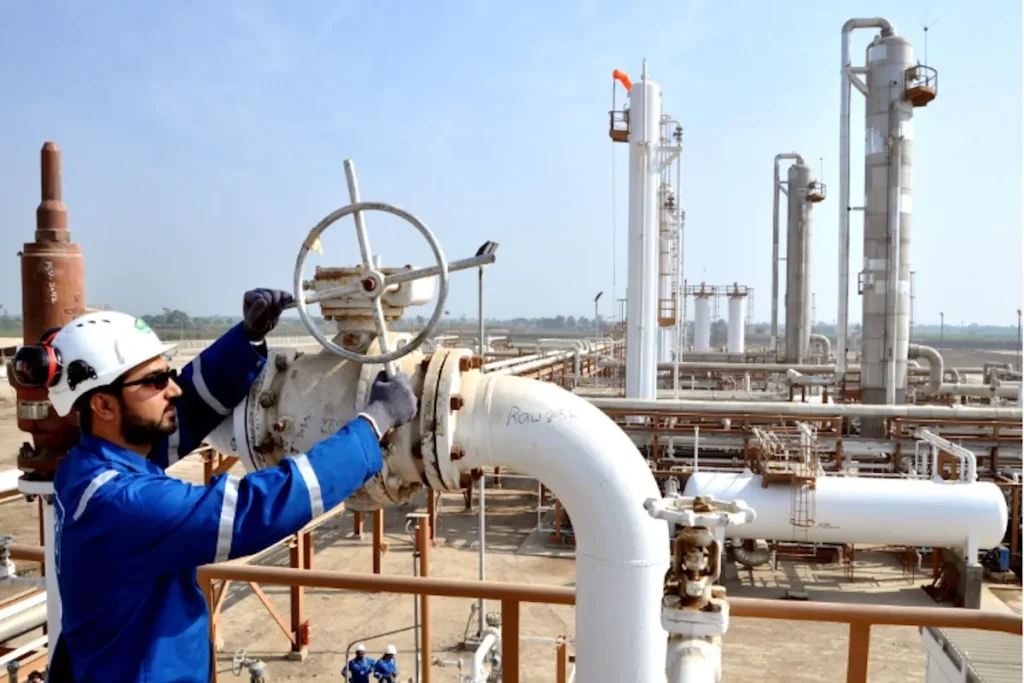
Pakistan’s energy landscape has long been defined by contradiction. Despite possessing approximately 19 trillion cubic feet of proven natural gas reserves and historically sustaining production above 3,000 MMCFD, the country has steadily drifted toward import dependency.
Long-term LNG agreements signed in 2016 and 2021 locked Pakistan into rigid “take-or-pay” commitments—primarily with Qatar—amounting to roughly 6.75 million tonnes per annum. While these contracts were designed to offset declining domestic production, they inadvertently created a structural imbalance.
Weak demand growth, rising LNG prices, and the rapid adoption of solar energy led to an oversupply situation by 2025. However, contractual obligations forced Pakistan to continue paying for LNG cargoes regardless of actual consumption.
The result was not just inefficiency—it was distortion.
The Hidden Cost: Suppressed Domestic Production
Perhaps the most damaging consequence of this import-heavy strategy has been the systematic suppression of indigenous gas production.
To accommodate imported RLNG, authorities curtailed domestic output by up to 400 MMCFD in certain periods. This policy eroded investor confidence, slowed exploration activity, and contributed to a broader decline in the upstream sector.
By FY2025, Pakistan’s natural gas production had fallen to a 20-year low, while crude oil output also declined sharply. Circular debt in the energy sector surged toward PKR 3.2 trillion, further compounding fiscal pressure.
In effect, Pakistan found itself in a self-reinforcing cycle: abundant reserves on paper, but increasing reliance on costly imports in practice.
Force Majeure: A Disruption That Changes the Equation
The declaration of force majeure by QatarEnergy has abruptly altered this dynamic. With LNG supplies disrupted and shipping routes uncertain, Pakistan has been forced to pivot—rapidly prioritizing domestic gas production.
Curtailments have been lifted, wells reopened, and RLNG allocations to industries reduced. Private exploration and production (E&P) firms, long constrained by policy bias toward imports, are now re-engaging with renewed interest.
This is more than a short-term adjustment—it is a structural reset.
The crisis has effectively removed the artificial ceiling imposed on domestic production, creating space for policy recalibration and market-driven investment.
Unlocking Indigenous Potential
Pakistan’s untapped energy potential extends well beyond conventional reserves. Tight gas and shale resources—previously sidelined—are now gaining renewed attention. Estimates suggest significant recoverable resources, with the potential to add hundreds of MMCFD if developed effectively.
Moreover, policy reforms allowing private buyers access to up to 35% of new gas output could further incentivize investment.
If supported by consistent regulatory frameworks and infrastructure upgrades, domestic production could increase by 500–1,000 MMCFD within the next two to three years—offsetting a substantial portion of import dependency.
Economically, the benefits are equally compelling. Indigenous gas is significantly cheaper than RLNG, offering relief to Pakistan’s strained fiscal position and reducing pressure on foreign exchange reserves.
Risks and Realities: A Fragile Transition
Despite its promise, the transition is not without risks.
In the short term, supply disruptions may trigger power shortages, industrial slowdowns, and economic strain. Infrastructure bottlenecks—particularly in pipeline capacity—remain a persistent challenge.
Additionally, geopolitical uncertainty in the Gulf could force Pakistan to seek alternative LNG supplies on the spot market, often at significantly higher prices.
More importantly, the sustainability of this shift depends on policy discipline. A return to import-heavy strategies once supply stabilizes would negate current gains and reinforce past vulnerabilities.
Strategic Imperatives for Long-Term Resilience
To convert crisis into opportunity, Pakistan must pursue a coherent and sustained strategy:
- Prioritize indigenous gas development through fiscal incentives and regulatory stability
- Invest in infrastructure modernization, including pipelines and storage
- Diversify supply sources to reduce reliance on a single supplier
- Integrate renewables and efficiency measures to moderate demand growth
- Encourage regional energy cooperation and flexible trading mechanisms
These steps are not optional—they are essential to building a resilient energy architecture.
A Defining Moment for Energy Sovereignty
The disruption in the Strait of Hormuz is a stark reminder of global energy vulnerabilities. But for Pakistan, it may also represent a rare moment of strategic clarity.
Years of contractual rigidity and import prioritization had constrained domestic potential. Today, those constraints are weakening. Domestic production is rising, investor confidence is returning, and the prospect of renegotiating or exiting costly long-term contracts is now tangible.
The question is no longer whether Pakistan can reduce its energy dependence—it is whether it will seize this opportunity to do so.
If policymakers act decisively, this crisis could mark the beginning of a new era: one defined not by dependency, but by energy sovereignty, economic efficiency, and strategic resilience.



Leave a Reply