

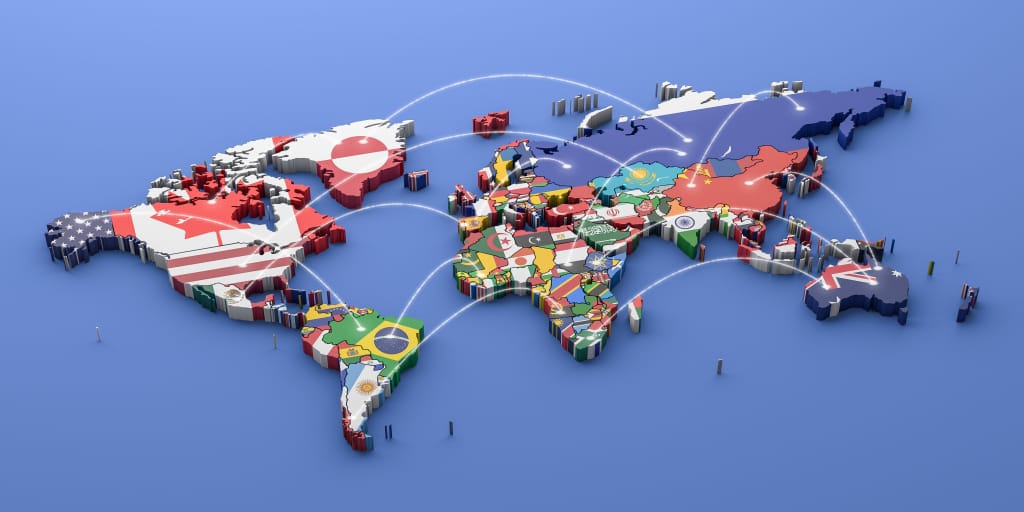
The world is not peacefully “evolving” into multipolarity; it is moving towards a more competitive and unpredictable order. The assumption that the decline of the United States will automatically create a fairer world is not only optimistic; it is analytically weak. In international politics, power does not simply redistribute itself; it is resisted, contested, and often produces instability.
The United States did not just become the strongest country after the Soviet Union fell apart in 1991; it became the rule-maker of the system. American interests were reflected in global governance from security alliances like NATO to financial institutions such as the World Bank. This was not neutral leadership, it was structured dominance. But here is the hard truth: that the power is fading, and nothing stable has replaced it. The real issue is not the decline of one power, but the absence of a stable replacement.
The End of One-Power Control
It’s not true that the world led by the US was perfectly stable. For example, the Iraq War in 2003 showed that one country could make big decisions that had an effect on the whole world. The wars in Iraq and Afghanistan lasted for a long time and cost trillions of dollars, hurting America’s reputation around the world. At the same time, problems inside the U.S, like political divisions and economic pressure made it harder for the country to stay dominant. So today, the U.S. is still strong, but it does not have full control anymore. And this is where the real story begins.
New Powers Are Changing the Game
China’s rise is not only economic; it reflects a carefully planned strategy to expand its global influence and reshape the balance of power. Through initiatives like the Belt and Road Initiative, China is building long-term connections across Asia, Africa, and Europe by investing in infrastructure, trade routes, and energy projects. While these efforts support development, they also strengthen China’s political and strategic presence in different regions. In this way, China is not just participating in the global system; it is actively trying to reshape it.
Russia, in contrast, maintains its global relevance primarily through military strength and strategic assertiveness. Despite its economic limitations, it continues to challenge Western influence, particularly through its actions in Ukraine. This reflects a broader attempt to resist a Western-led order and reassert itself as a major power. However, such actions also increase global tensions and make the international system more unstable and unpredictable.
India is taking a smart and flexible approach. It works with the United States, maintains relations with Russia, and competes with China at the same time. This is not a mix-up; it is a clear example of strategic diplomacy in a complex world where balancing relationships is necessary.
The European Union is also a significant player. It has influence on global trade, climate rules, and technology standards around the world, even though it has limited military power. All these players together are not making things simple. Instead, they are making the system crowded and harder to manage.
Is Multipolarity Really Better?
Many people assume that multipolarity will create fairness in the international system. The presence of multiple major powers increases the risk of competition, miscalculation, and conflict.
We can already see signs of it:
- Rising tension between the U.S. and China
- Ongoing conflict between Russia and the West
- Regional rivalries in different parts of the world
This system is not calm; it is busy and sometimes dangerous. The risk is not just competition, but miscalculation, where countries misunderstand each other’s actions and escalate conflicts.
History also gives us a warning. The world was also multipolar before World War I. There were many powerful countries, but they did not trust each other. That led to misunderstandings and eventually war. So multipolarity is not always safe. It depends on how countries handle their competition.
The Global South is Playing a Smarter Game
The Global South, which is made up of developing countries, has a different role today.
Countries in Asia, Africa, and Latin America are no longer just following the lead of big powers. They are making good decisions. For instance, they might get investment from China but still be close to the West when it comes to security. These countries want more choices and freedom, as shown by groups like BRICS. In short, they are no longer choosing sides: they are choosing what is best for them.
Pakistan: Big Opportunities, But Only With Smart Strategy
Pakistan stands at a critical point in this changing global order. It has important opportunities, but only if it adopts a clear and strategic approach. Projects like the China–Pakistan Economic Corridor can boost trade, infrastructure, and energy development, while strong ties with Gulf countries provide economic and financial support. However, Pakistan’s foreign policy has often been reactive rather than proactive, which is risky in a multipolar world.
Pakistan cannot rely on a one-sided strategy. Overdependence on any single power limits its options and weakens its position. Instead, it must pursue a balanced and multi-dimensional foreign policy by strengthening economic stability, expanding trade partnerships, and maintaining relations with both Western and regional powers. At the same time, internal political and economic reforms are equally important.
In today’s world, success depends not on size, but on smart and timely decision-making. If Pakistan fails to adapt, it risks becoming a space for great power competition rather than an independent and influential actor. In a multipolar system, strategic balance is not a choice; it is a necessity.
Conclusion:
A Safer World or a More Dangerous One?
It’s clear that the world is moving away from unipolarity. The United States is still strong, but now it is no longer the only one dominant force. The rise of China and other emerging powers is reshaping world politics.
But this does not guarantee a fair or peaceful world. In fact, it might create a more complicated world. More powers mean more competition. Without cooperation, trust and careful leadership multipolarity will become unstable.
The real question is not whether the world is becoming multipolar, it already is. The real challenge is whether states can manage this transition responsibly. If they fail, multipolarity may lead not to balance, but to greater instability and division. In a multipolar world, strategic balance is not an option; it is a necessity.

maha Sajid
Maha Sajid is pursuing a Bachelor’s degree in International Relations from Fatima Jinnah Women University. My areas of interest include diplomacy, current affairs, soft power, international politics, and global affairs.
Leave a Reply