

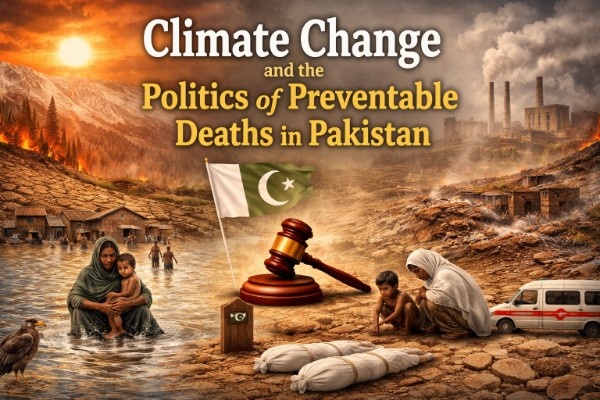
The calamity in Chitral is not a headline anymore, but the silence over such incidents makes it dangerous. In Serigal village of Lower Chitral, a family got buried inside their home as a result of an avalanche, which was set off by more than 20 inches of snowfall. As a result of that, nine people lost their lives, and only a nine-year-old boy survived the disaster. The disaster, as most considered, came as a sudden shock, but it was the consequence of the conditions that had been mounting for days. Winter calamities are not taken seriously in Pakistan, and like many other incidents, they would pass without triggering any scrutiny from the nation. The deaths of winter are treated as unfortunate acts of nature that are lamented for a brief period and are forgotten quickly instead of addressing them as serious warnings of our deeper failure.
Climate experts describe the condition that Pakistan is facing today as climate whiplash. The summers in Pakistan render deadly and destructive floods as well as unmerciful heat waves, whereas the winters are turning harsher, longer, and more deadly. The biting cold weather is no longer restricted to the cold mountainous regions. An example of this is Karachi, a city known for its mild winters. In Karachi, nearly 50 cold-related deaths were recorded in a single month as temperatures dropped below the occasional averages. These are the climate abnormalities that have been propelled by an impulsively changing environment.
Pakistan is on the edge of a global climate crisis, yet its policy response is still outdated. The floods are intensifying season by season, glaciers are melting, and the weather is becoming so unreliable, making it difficult for farmers and communities to plan their lives and guide agriculture. The response of the government towards these calamities consists of penning reports, assembling task forces, and creating donor-funded projects and treating cold, snow, and avalanches as inevitable inconveniences rather than foreseeable threats. As a result of which the disasters are growing more frequent and becoming more lethal day by day.
The lack of winter-specific emergency protocols veers harsh weather into a crisis and tragedy for humanity each year. Ghastly snowfall and landslides crippled routine life across Khyber Pakhtunkhwa, Balochistan, Gilgit-Baltistan, and Azad Jammu and Kashmir. Roads and highways stayed blocked for days; sometimes it took months, cutting off commutes and even making hospitals unreachable for people. Another grave issue is the power and gas outages turning homes into freezing shelters, forcing people to tolerate nights without water, heat, or light.
According to medical experts, cold weather increases the risk of heart attacks, strokes, kidney complications, hypothermia, and frostbite. These conditions are treatable with timely access to hospitals and healthcare centers. In areas like Gilgit Baltistan, prolonged closure of roads leads to limited access to food, fuel, and medicine, which ultimately becomes a reason for winter deaths. Many people think that these deaths are not preventable, but they are actually a failure and the direct result of insufficient planning and delayed response.
The damages to structure and human life due to mismanagement during winter are clearly visible across the country. In Tangir Valley, Diamer, a clock tower collapsed on a house, resulting in the death of four members of the family. A roof collapsed in Zhob, killing a child, and several other people are hospitalized due to accidents caused by slippery roads. These incidents are the evidence that winter brings destruction in Pakistan by ceasing routine life, destroying infrastructure, and exposing the incapacitation of the systems meant to protect citizens.
Many people argue that Pakistan is a developing country with limited resources, and because of that, conditions that arise due to harsh winters are unavoidable. But many global examples show that being prepared for difficult times saves lives, and it is really not about wealth. Countries like Canada and Russia undergo far more extreme winters; however, they still treat winter as a challenge to cope with and not as a seasonal shock. Canada, in this regard, has developed a national standard for coping with snow loads on buildings, ensuring roof safety, and managing regular removal of snow from the roads. Other countries, such as Finland, have a road classification system, whereas winter tires are compulsory in Germany and Sweden. These snow-heavy countries also show readiness by having insulated infrastructure and emergency shelters. This doesn’t mean that Pakistan needs expensive heated roads or advanced technology, but what it needs is a winter that is planned for, practiced for, and governed.
In Pakistan, the winter deaths are the failures of governance and not the acts of nature. Climate change in this age has altered the rules but the policies of our government towards it remains outdated. Without winter specific emergency protocols and frameworks, early warning systems, and road clearance schemes our country will keep on counting bodies every winter while regarding these disasters as unavoidable.
The tragedy of Chitral should not blur into memory as just another catastrophe. In summers where floods expose our unpreparedness so on the other hand winters expose our unwillingness to learn. It is time we start treating cold waves and snowfall as national emergencies rather than just some seasonal inconveniences. Pakistan’s security and human safety agenda should start integrating climate reactive governance, and winter protocols and SOPs. Because when winter kills, silence is not an excuse anymore.

Zoya Shoukat
Zoya Shoukat is a Communication and Media Studies graduate and Global UGRAD alumna. Her research interests include climate governance, human security, and development communication, with a focus on environmental resilience in Pakistan and the role of media in shaping public accountability.



Leave a Reply